Ovulation Cramps vs Period Cramps: How Timing Changes the Clue
Learn how timing, location, duration, flow, discharge, and red flags can help you compare ovulation cramps vs period cramps, plus when pelvic pain needs care.
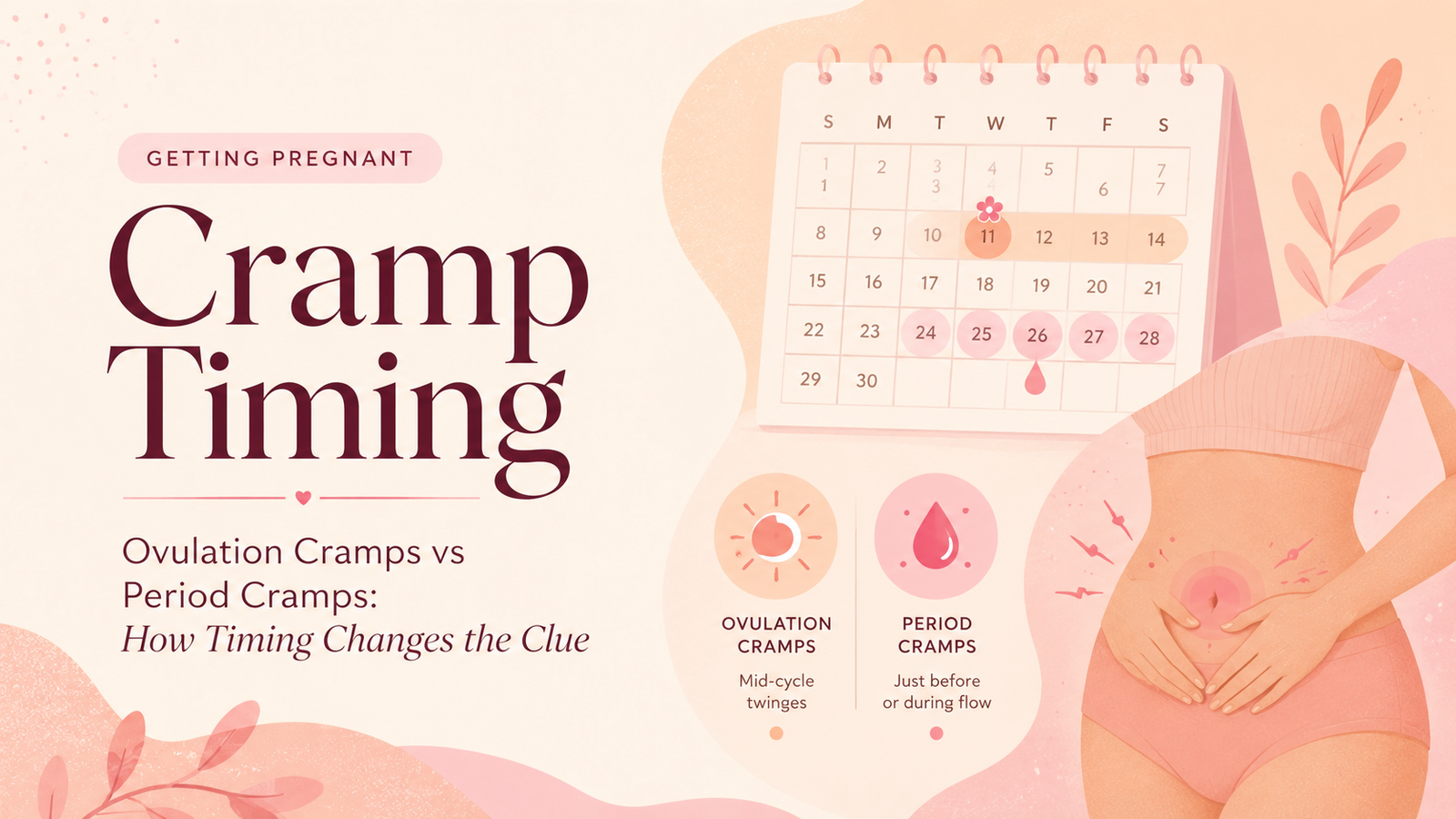
A twinge low in your belly can feel like a tiny mystery. Is it ovulation pain? Is your period about to start? Is it just a random pelvic ache that happened to land in the middle of your cycle? When you are trying to understand ovulation cramps vs period cramps, timing is often the first clue, but it is not the only one.
Ovulation cramps usually show up around the time an ovary releases an egg, often near the middle of the cycle. Period cramps usually appear just before or during menstrual bleeding, when the uterus contracts to help shed its lining. But real bodies do not always follow textbook patterns. Cycles can shift, bleeding can start lightly, discharge can change, and pain can have causes that are not related to ovulation or your period at all.
That is why this guide compares timing, location, duration, bleeding, discharge, and red flags in a practical way. It can help you track patterns and decide when recurring or unusual pelvic pain deserves a conversation with a healthcare professional.
If you use Flow & Glow as your warm cycle wellness companion on iPhone, you can log cramps, bleeding, discharge, ovulation signs, workouts, mood, and daily wellness notes in one place. You can use those patterns as a calmer starting point for understanding what your body may be telling you.
Why timing is the biggest clue
When people search for ovulation cramps vs period cramps, they are usually asking: where am I in my cycle, and what does this pain mean? Timing is useful because ovulation and menstruation happen at different points in the cycle.
The menstrual cycle starts on the first day of true menstrual bleeding. In the first part of the cycle, hormones help prepare an egg and build the uterine lining. Around ovulation, an egg is released. After ovulation, the body moves into the luteal phase. If pregnancy does not occur, hormone levels shift and the next period begins.
In many cycles, ovulation happens roughly in the middle, but not always on day 14. A person with a 24 day cycle may ovulate earlier than someone with a 35 day cycle. Stress, illness, travel, postpartum changes, stopping hormonal contraception, perimenopause, and natural variation can all shift ovulation timing.
Period cramps are tied more closely to bleeding. They often begin in the hours or days before the period starts and may peak during the first day or two of flow. For some people, cramps begin after bleeding has already started. For others, cramping is an early signal that bleeding may arrive soon.
Ovulation cramps are different because they tend to appear before the period, often when fertile-type discharge or other ovulation signs are present. If you want a deeper guide to the mid-cycle version, read more about ovulation pain.
Ovulation cramps vs period cramps at a glance
| Feature | Ovulation cramps | Period cramps |
|---|---|---|
| Usual timing | Around the fertile window, often mid-cycle or about 10 to 16 days before the next period | Just before bleeding or during the first days of menstrual flow |
| Common location | May be one sided, low in the pelvis, or felt more on the side that seems active that cycle | Often central low belly, with possible back, hip, or thigh discomfort |
| Pain quality | Twinge, pinch, short sharp sensation, dull ache, pressure, or brief stabbing feeling | Dull ache, squeezing, heaviness, waves, lower back ache, or crampy pressure |
| Duration | Minutes, hours, or sometimes up to a day or two | Often one to three days, sometimes longer depending on the person |
| Bleeding pattern | Usually no full menstrual flow, though some people notice light spotting | Menstrual bleeding, often with heavier flow early in the period |
| Discharge clues | May happen near slippery, stretchy, clear, or wetter cervical fluid | May happen with bleeding, brown spotting, or pre-period discharge changes |
| Fertility context | Can appear near fertile days, but pain alone cannot confirm ovulation | Usually means the current cycle is ending, unless bleeding is not a true period |
| When to check | New, severe, persistent, worsening, or pregnancy-linked pain | Severe, disabling, worsening, unusually heavy, or changing cramps |
This table can guide your thinking, but it cannot diagnose the cause of pelvic pain. The same person can have different sensations from one cycle to the next. Also, digestive discomfort, bladder irritation, muscle strain, ovarian cysts, infections, pregnancy-related concerns, and other issues can cause pelvic pain. If the pain feels unusual or worrying, it is worth getting checked.
What ovulation cramps can feel like
Ovulation cramps are sometimes called mittelschmerz, a term used for mid-cycle pain. The experience can be subtle or noticeable. Some people feel a quick twinge on one side of the lower belly. Others feel a dull ache, pelvic pressure, a pulling sensation, or a sharper pain that comes and goes.
A common pattern is one sided cramps around the time fertile cervical fluid appears. The side may change from cycle to cycle, but it also may not feel obvious. Some people feel it more centrally. Some feel discomfort that seems to radiate toward the hip, lower back, or upper thigh.
The key caution: one-sided pain does not always mean ovulation. It can be a normal mid-cycle sensation for some people, but one-sided pelvic pain can also come from other causes. It is especially important to take it seriously if it is sudden, intense, worsening, paired with fever, paired with unusual bleeding, or happening when pregnancy is possible.
Ovulation pain may last a few minutes, several hours, or up to a couple of days. If it lasts longer than your usual pattern, becomes more intense than usual, or begins interfering with normal activities, that is a reason to seek medical guidance.
What period cramps can feel like
Period cramps are usually linked with the uterus contracting around menstruation. They may feel like a heavy ache, squeezing, pressure, or waves of pain low in the abdomen. Many people also feel them in the lower back, hips, or thighs.
Period cramps often start before bleeding or on the first day of a period. They may be strongest when flow is heaviest. Some people feel mild cramps that respond to rest, heat, hydration, gentle movement, or over-the-counter pain relief if appropriate for them. Others have cramps that are intense, disruptive, or worsening over time.
Painful periods are common, but common does not mean you have to ignore them. If period cramps stop you from working, studying, sleeping, caring for family, exercising, or doing daily tasks, it is reasonable to ask for help. If your cramps have changed over time, become heavier or more painful, or come with new symptoms, read about period cramps that change over time and consider discussing the pattern with a healthcare professional.
Location: side, center, back, or pelvis
Location can add useful context, but it is not a guarantee. Ovulation pain is often described as one sided because ovulation usually involves one ovary releasing an egg in a given cycle. That said, not everyone can tell which side the pain is on, and not every one sided cramp is ovulation.
Period cramps often feel more central because they are related to uterine cramping. They may spread to the lower back, thighs, or hips. Some people describe period pain as a deep pelvic ache rather than a surface-level abdominal cramp.
Here are practical location prompts to track:
- Is the pain clearly on the left or right?
- Is it central, low, or deep in the pelvis?
- Does it radiate to your back, hip, groin, or thigh?
- Does it feel like a surface muscle cramp or a deeper pelvic sensation?
- Does the side change cycle to cycle?
- Does the pain happen with bowel symptoms, bladder symptoms, or pain during sex?
If pain is sharply one sided and severe, do not wait to see whether it becomes a familiar pattern. Sudden or intense pelvic pain should be assessed promptly, especially if it is paired with dizziness, fainting, vomiting, fever, heavy bleeding, shoulder tip pain, or possible pregnancy.
Duration: minutes, hours, or days
Duration is one of the easiest details to miss if you do not write it down. A twinge that lasts 20 minutes feels very different from a pelvic ache that continues for three days.
Ovulation pain is often short-lived. It may arrive as a brief pinch, fade, return later, and disappear. Some people feel a dull ache for several hours. Others notice discomfort for a day or two around fertile days.
Period cramps often last longer because menstrual flow itself continues over several days. Cramps may be strongest early in the period and ease as flow lightens. If pain continues after bleeding ends, appears at random times, or is getting worse cycle by cycle, it deserves attention.
Track duration in plain language, not just numbers. For example:
- 10 minute sharp twinge on right side
- Dull ache from afternoon to bedtime
- Cramps began the night before bleeding and lasted two days
- Pain woke me from sleep
- Pain came in waves every few minutes
- Pain stayed constant for six hours
Patterns are clearer when you log the start time, stop time, and what else was happening that day.
Flow, spotting, and discharge clues
Bleeding and discharge can help separate ovulation cramps vs period cramps, but they are not perfect clues.
Around ovulation, many people notice cervical fluid that feels wetter, clearer, slippery, or stretchy. Some describe it as egg white-like. This type of discharge can support sperm movement and often appears in the fertile window. If cramps happen at the same time as these changes, ovulation may be one possibility.
Period cramps usually happen with true menstrual bleeding. The flow may begin as spotting, turn red, become heavier, then taper into lighter bleeding or brown discharge. Some people also have pre-period spotting that starts before full flow.
Mid-cycle spotting can happen, but it should not automatically be labeled as ovulation. Spotting can have many possible explanations, including hormonal shifts, contraception changes, cervical irritation, infection, pregnancy-related concerns, or other reasons. If spotting is new, persistent, heavy, or paired with pain, it is worth getting advice.
Discharge changes can also be important. Seek care if discharge has a strong unusual odor, is paired with fever or pelvic pain, causes significant itching or burning, or appears with pain during sex or urination.
Fertility window context when you are trying to conceive
If you are trying to get pregnant, mid-cycle cramps can feel especially meaningful. It is natural to wonder whether a twinge means the fertile window is open. Ovulation pain may happen near ovulation for some people, but it should not be your only timing method.
For a more complete picture, compare cramps with:
- Cervical fluid changes
- Cycle length over several months
- Basal body temperature shifts if you track them
- Ovulation test results if you use them
- Libido, energy, breast tenderness, mood, or skin changes
- The date your next period actually starts
Flow & Glow can help you keep these clues together: cycle dates, symptoms, ovulation and fertility window estimates, workouts, and wellness patterns. You can also use the cycle calculator as a simple starting point, especially if you want to compare expected fertile days with the symptoms you are logging.
Try not to put too much pressure on one cramp, one day, or one sign. Fertility awareness is more useful when it looks at patterns over time.
How to track cramps without overthinking every sensation
Tracking should make you feel more informed, not more anxious. The goal is not to label every twinge perfectly. The goal is to notice what is normal for you, what changes, and what information may help if you decide to seek care.
Use these prompts for each cramp episode:
1. What cycle day is it?
Log the day of your cycle, counting day 1 as the first day of true bleeding. If your cycles are irregular, also note how many days it has been since your last period started.
2. Where is the pain?
Left side, right side, central, low belly, deep pelvis, back, hip, or thigh. If it moves, note that too.
3. What does it feel like?
Use words that match your body: pinch, stab, twinge, ache, pressure, heaviness, pulling, burning, waves, or squeezing.
4. How intense is it?
Try a 0 to 10 scale. Also note whether it interrupted your day, changed your posture, woke you from sleep, or made you stop an activity.
5. How long did it last?
Minutes, hours, all day, overnight, several days. Write down whether it came and went or stayed constant.
6. What else is happening?
Track bleeding, spotting, discharge, nausea, bowel changes, urinary symptoms, fever, pain during sex, recent intense exercise, stress, travel, illness, or new medication.
7. What happened next?
Did fertile discharge appear? Did bleeding start? Did the pain resolve? Did it repeat next cycle? This follow-up detail often makes the pattern clearer.
A gentle decision guide
If you are comparing ovulation cramps vs period cramps in the moment, ask yourself these questions:
- Am I close to my expected period?
- Has bleeding started, or does it feel like my usual pre-period pattern?
- Am I near my usual fertile window?
- Do I have slippery, stretchy, or wetter cervical fluid?
- Is the pain one sided, central, or spreading?
- Is the pain mild and familiar, or new and intense?
- Is there any chance of pregnancy?
- Do I have fever, dizziness, fainting, heavy bleeding, or unusual discharge?
- Has this pain been getting worse over several cycles?
- Would I be worried if a friend described this pain to me?
If the answers point to a familiar mild pattern, tracking may be enough for the moment. If the answers include red flags, possible pregnancy, or pain that feels different from your usual, it is safer to get medical guidance.
Red flags: when pelvic pain needs prompt attention
Pelvic pain should be checked urgently if it is severe, sudden, worsening, or paired with symptoms that suggest something more serious may be happening. Do not try to force the pain into an ovulation or period category if it feels alarming.
Seek urgent help for:
- Sudden severe pelvic or lower abdominal pain
- Pain with fainting, dizziness, weakness, or shoulder tip pain
- Pain when pregnancy is possible or confirmed
- Heavy bleeding, soaking pads or tampons quickly, or passing large clots with feeling unwell
- Fever, chills, or feeling very unwell with pelvic pain
- Persistent vomiting with pelvic pain
- Severe one sided pain that does not ease
- New pelvic pain after sex, with unusual discharge, or with burning when urinating
- Pain that is rapidly worsening
- Pain after a procedure, injury, or significant trauma
Also book a non-urgent appointment if cramps are recurring, interfering with daily life, becoming more painful over time, happening outside your usual cycle pattern, or causing anxiety because you cannot tell what is normal for you.
When recurring pain deserves evaluation
Recurring pain deserves attention when it becomes part of your life rather than a passing symptom. You do not need to wait until pain is unbearable before asking questions.
Consider speaking with a healthcare professional if:
- Period cramps regularly stop you from normal activities
- Mid-cycle pain is getting worse or lasting longer
- Pain happens with sex, bowel movements, or urination
- Your bleeding pattern has changed
- You have spotting between periods that is new or persistent
- Your cycles have become much shorter, longer, or unpredictable
- You are trying to conceive and have cycle concerns
- You feel worried every month because the pain is hard to interpret
Bring your tracking notes if you have them. A simple log of cycle days, pain location, pain score, bleeding, discharge, and duration can make the appointment more focused. You are not trying to self-diagnose. You are giving a clearer timeline.
How workouts and daily habits can affect cramp tracking
Flow & Glow includes workouts and daily wellness guidance because cycle symptoms do not happen in isolation. Sleep, stress, hydration, digestion, exercise intensity, and recovery can all change how you experience discomfort.
A hard lower-body workout can create muscle soreness that overlaps with pelvic-area sensations. Digestive bloating or constipation can feel like low abdominal pressure. Stress can make pain feel sharper or more intrusive. Poor sleep can lower your tolerance for discomfort.
This does not mean cramps are all about lifestyle. It means context helps. If pain follows intense exercise, note it. If cramps flare after poor sleep or during a stressful week, note it. If pain happens on the same cycle day no matter what else is happening, that is useful too.
When tracking, try adding:
- Sleep quality
- Workout type and intensity
- Hydration
- Bowel changes
- Stress level
- Sex or pelvic pressure triggers
- Rest, heat, or movement response
These details can help you see whether cramps are cycle-linked, activity-linked, digestion-linked, or unclear.
How ovulation signs fit into the bigger picture
Ovulation pain is only one possible sign of the fertile window. Other signs may include changes in cervical fluid, libido, basal body temperature patterns, breast tenderness, mild bloating, or a shift in mood or energy. None of these signs is perfect alone.
If you are learning your cycle, it may help to compare several signs rather than relying only on cramps. You can read more about ovulation signs and then track which ones actually apply to you.
Some people never feel ovulation pain. Some feel it only occasionally. Some feel pelvic discomfort that does not line up with ovulation at all. Your body does not need to match someone else's pattern to be valid.
Supportive ways to respond to mild, familiar cramps
If cramps are mild, familiar, and not paired with red flags, supportive self-care may help you feel more comfortable. This can include rest, gentle movement, warmth, hydration, and noticing whether certain positions ease the sensation.
Some people find that light stretching, walking, or a warm bath helps. Others prefer to rest and avoid intense workouts. If you use over-the-counter pain relief, follow the label and avoid anything that is not safe for you due to allergies, medical conditions, pregnancy possibility, stomach issues, kidney issues, blood thinners, or other medication interactions.
Do not use self-care as a way to dismiss pain that is severe or unusual. Comfort measures are for symptoms that fit your known pattern and do not raise concern.
A simple monthly cramp review
At the end of each cycle, take two minutes to review your notes. Ask:
- Did cramps happen near ovulation, near my period, both, or neither?
- Was the pain one sided, central, or changing?
- Did it match discharge changes or bleeding?
- Did it last longer than usual?
- Was it more intense than usual?
- Did it interfere with normal life?
- Were there any red flags?
- Do I want to bring this pattern to a healthcare professional?
This review turns scattered symptoms into a clearer story. It can also help reduce the mental loop of wondering, "Was that ovulation or my period?" every month.
Article information
- Written by Flow & Glow Editorial
- Medically reviewed by Dr. Jennifer Martinez, MD, FACOG
- Published on June 29, 2026
- Updated on July 30, 2026
Key takeaways
- Ovulation cramps vs period cramps are easiest to compare when you look at timing first, then location, duration, bleeding, discharge, and pattern over several cycles.
- Ovulation pain can happen around the fertile window, but one sided cramps do not always mean ovulation.
- Period cramps usually occur before or during menstrual bleeding and may feel lower, heavier, more central, or more wave-like.
- Mild mid-cycle discomfort that repeats predictably may be part of your normal pattern, but new, severe, worsening, or unusual pelvic pain deserves medical advice.
- Seek urgent help for sudden severe pelvic pain, pain with fever, fainting, shoulder tip pain, heavy bleeding, unusual discharge with feeling unwell, or pain when pregnancy is possible.
- A symptom tracker can help you notice whether pain happens before ovulation signs, during fertile-type discharge, with bleeding, after sex, after intense workouts, or at random points in the cycle.
- If you are trying to conceive, tracking cramps alongside cervical fluid, cycle length, and fertility window estimates can give more context than cramps alone.
Frequently asked questions
Can ovulation cramps feel like period cramps?
Yes, they can overlap. Ovulation cramps may feel like a dull ache, pressure, or mild cramping, which can resemble early period cramps. Timing helps separate them: ovulation discomfort often appears around the fertile window, while period cramps usually happen just before or during bleeding. If the pain is new, severe, or unusual, do not assume it is ovulation.
Are one sided cramps always ovulation pain?
No. One sided cramps can happen around ovulation for some people, but they are not proof that ovulation is happening. One sided pelvic pain can also have other causes. If it is sudden, severe, worsening, persistent, or linked with pregnancy possibility, fever, heavy bleeding, dizziness, or feeling unwell, seek medical help promptly.
How many days before a period can ovulation cramps happen?
For many people, ovulation happens roughly 10 to 16 days before the next period, but this can vary by cycle length and personal pattern. If cramps happen two weeks before bleeding and repeat across cycles, ovulation may be one possibility. Tracking several cycles gives more context than one episode.
Can ovulation pain happen with spotting?
Some people notice light spotting around the middle of the cycle, but spotting does not automatically mean ovulation. Spotting can happen for several reasons. If spotting is new, heavy, persistent, painful, or paired with unusual discharge, fever, or pregnancy possibility, it is a good idea to get medical advice.
How long should period cramps last?
Period cramps often last one to three days, especially around the heaviest flow, but patterns vary. Cramps that are severe, worsening, newly disruptive, lasting beyond your usual period pattern, or interfering with daily life deserve a conversation with a healthcare professional.
Can tracking help if I am trying to get pregnant?
Yes. Tracking can help you compare cramps with cervical fluid, cycle length, fertile window estimates, and the date your next period starts. This can give you a more complete picture of your cycle. Cramps alone cannot confirm ovulation, so it is best to look at patterns across multiple signs.
When should I worry about pelvic pain during my cycle?
Seek urgent help for severe, sudden, or worsening pelvic pain, pain with fever, fainting, dizziness, vomiting, heavy bleeding, unusual discharge with feeling unwell, or pain when pregnancy is possible. Also seek care if pelvic pain keeps returning, changes over time, or regularly interferes with your normal activities.
References
Editorial and medical disclaimer
Flow & Glow health content is educational and is not a substitute for diagnosis, treatment, or personal medical advice from a qualified clinician.
Our editorial standards, reviewer process, sourcing approach, and correction process are explained in the Editorial Policy. You can also review our authors and medical reviewers, healthcare professional information, contact page, and privacy policy.