One-Sided Period Cramps: What Can Cause Pain on One Side?
One-sided period cramps can come from ovulation, cysts, or other pelvic causes. Learn what to track, what is normal, and when to ask for help.
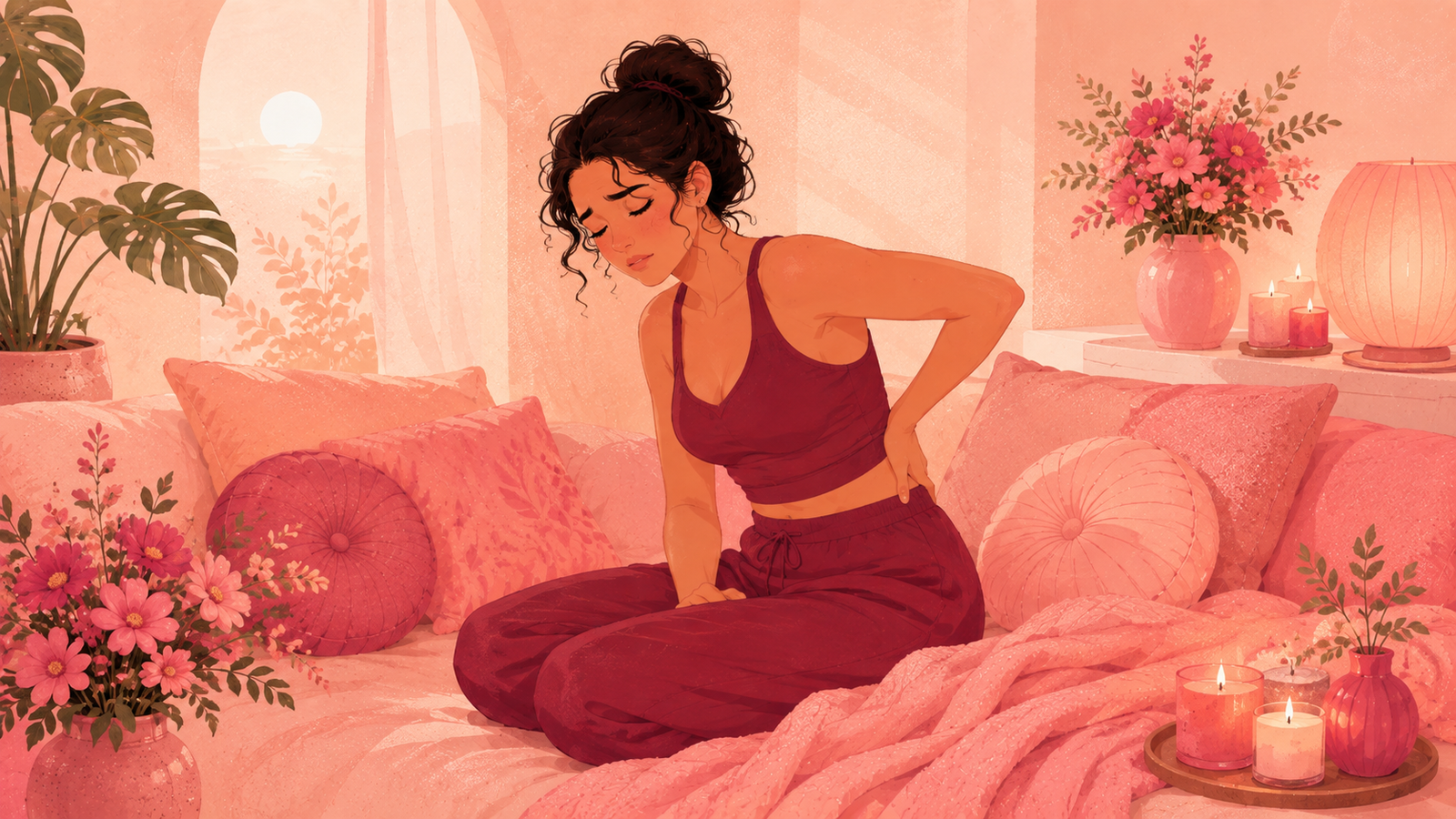
Most people grow up with the idea that period pain should sit dead center, a single dull throb across the lower belly. Your body did not get that memo. The uterus is a pear shaped muscle that contracts in waves, and those waves do not always crest evenly across both sides. The result is a real, normal experience that surprises a lot of people the first time it happens: a sharper, more focused ache on the left or the right, sometimes traveling into the hip, lower back, or the top of the thigh.
Why One-Sided Cramps Are More Common Than People Think
There is also the ovary factor. In most cycles, one ovary releases an egg, not both. The side that ovulates can change month to month, and the surrounding tissues, the fallopian tube, and the area near the ovary all sit slightly forward and to one side of the pelvis. When that side has done the heavy work of growing and releasing an egg, it can stay tender for a while after. If your period arrives a couple of weeks later, the cramping you feel can lean toward that side without anything being wrong.
Add in normal anatomical variation, the angle of the uterus (often tipped slightly), where scar tissue from old infections or surgery may sit, and even where you tend to carry tension in your pelvic floor, and one-sided period cramps stop looking strange and start looking like part of the range of normal.
Normal does not mean ignore. It means you can take a breath before you start searching the worst case scenarios. A calm cycle wellness companion, like Flow & Glow, can take the panicked late night Googling out of the equation by giving you a private place to log which side, when, and how strong. You can start tracking in under a minute. The point is not to obsess; the point is to spot patterns, so a real concern becomes easy to see and a normal cycle becomes easy to trust.
Left Side Period Cramps: What That Side Often Means
A lot of people specifically search left side period cramps because the pain feels new, sharper, or in a place they do not usually notice. Here is the honest answer: left side does not point to a specific cause on its own.
The most common reasons cramps lean left are:
- Your left ovary was the one that did the work this cycle. The lingering sensitivity travels with the rest of your cramps when your period arrives.
- The uterus is contracting in a wave pattern that happens to push harder on that side this month.
- Gas, constipation, or a tense pelvic floor on the left is being read by your brain as period cramping because it is in the same neighborhood.
- Old endometriosis-style adhesions or scar tissue on the left, when present, can pull on tissue during contractions.
- A small functional cyst on the left ovary, which is very common and usually resolves on its own.
Left side pain that lands at mid-cycle timing is more likely linked to ovulation. Left side pain that lines up with bleeding is more likely linked to your period and your uterus. Left side pain that lingers in between, especially with bloating, change in bowel habits, or pain with sex, is the version worth tracking carefully and bringing to a clinician.
A useful side note for anyone curious about cycles that have started to feel different from the cycles of their teen years: the patterns of period cramps in your 20s are not always the same as the patterns you grew up with. Hormone exposure shifts, stress shifts, body composition shifts, and your cycle is a moving body, not a fixed one.
Right Side Period Cramps: Same Logic, Different Side
Right side period cramps follow the same logic. The right ovary may have ovulated, the wave of contractions may simply be louder on the right, or constipation, gas, and pelvic muscle tension may have set up shop on that side this month.
The right side does have one extra thing worth mentioning in passing: the appendix lives in the lower right. Appendix pain is not period pain, but if you ever feel a one-sided right-sided pain that builds steadily over hours, comes with nausea, vomiting, fever, and worsens with movement, that is not a cramp to ride out. That is a same-day medical question.
Pelvic pain in general, including pain that happens with or around your period, can be triggered by your urinary tract, your bowel, your pelvic floor muscles, or your reproductive organs. One of the most useful gifts you can give yourself is the ability to recognize the difference between cramps you can ride out and pain that has crossed into a different category.
Ovulation Pain Versus Period Cramps
Ovulation pain often gets blamed on the period because the pain is in the same area and the brain does not love organizing pelvic sensations cleanly. The clue is timing.
Ovulation pain (sometimes called mittelschmerz, which simply means middle pain) usually:
- Lands roughly in the middle of your cycle, around 10 to 16 days before your next period, depending on cycle length.
- Sits on one side, the side of the ovary doing the work that month.
- Feels like a brief, sharp pinch or a dull ache that comes and goes.
- Resolves within a few hours to a day or two.
- Sometimes shows up with a small amount of clear or stretchy cervical fluid, a slight shift in temperature, or a light feeling of fullness in the belly.
Period cramps usually:
- Start in the day or two before your bleed and run into the first one to three days of flow.
- Feel like waves, pressure, or a deep ache that can sit center or lean to one side.
- Settle as the heaviest flow days pass.
- May travel into the lower back or upper thighs.
The trick most apps miss is that a single calendar view does not tell you which kind of pain you are dealing with. You need to know where you are in your cycle and which side the pain favored. A short ovulation pain explainer can help if you suspect mid-cycle pain is showing up alongside or instead of period pain.
If your cramps have been changing in nature lately, getting sharper, more one-sided, or moving in your cycle, that pattern matters. It is worth reading about cramps that change over time for a wider view, because shifts across months are often more meaningful than any single painful day.
Could It Be an Ovarian Cyst?
The phrase ovarian cyst sounds scarier than it usually is. Most ovaries form small fluid filled sacs as part of a normal cycle. These are called functional cysts, and they typically come and go without you noticing.
A cyst becomes a possible answer for one-sided pain when:
- The pain on one side feels heavy, full, or pressing rather than the usual cramping wave.
- It does not stick strictly to your bleed; it can show up during ovulation, mid-cycle, or just sit in the background.
- It is paired with bloating, a sensation of fullness, mild nausea, or pain with sex.
- It worsens over time across one or two cycles instead of fading.
Most functional cysts do not need treatment. A clinician may suggest a pelvic ultrasound if the pain pattern, severity, or other symptoms suggest a closer look is needed. The reason imaging exists is not to scare you; it is to confirm what is going on and rule out the small number of cysts that need active management.
What is worth taking seriously, urgently, is a sudden, severe, one-sided pelvic pain that comes with dizziness, fainting, vomiting, fever, rapid heartbeat, or shoulder pain. That combination, especially if there is any chance of pregnancy, is the version of one-sided pain that is not a wait and see situation.
Endometriosis and One-Sided Pain: A Careful Conversation
Endometriosis comes up a lot when people search one-sided period cramps because online forums often jump straight there. A cautious, honest view is more useful.
Endometriosis is a condition where tissue similar to the lining of the uterus grows in places it usually does not, like the pelvic wall, around the ovaries, or near the bowel and bladder. It can cause:
- Pain that is consistently worse than typical period pain.
- Pain that starts before the period and lasts longer than the period.
- Pain with sex, with bowel movements, or with urination, especially during your bleed.
- Pain that often, but not always, leans to one side.
- Other symptoms like heavy or irregular bleeding, bloating, and fatigue that goes beyond a normal tired day.
The honest part of this conversation: pain on one side does not mean you have endometriosis, and many people with endometriosis have pain on both sides or all over. The combination of symptoms over time matters far more than which side hurts.
If you are noticing several of these patterns together, and they are interfering with school, work, sex, sleep, or just daily life, that is a meaningful signal. A simple endometriosis symptom check can help you organize what you are noticing into language a clinician can act on. It is not a diagnosis. It is a way to walk into an appointment with a clearer story than I have weird cramps sometimes.
Other Causes Worth Knowing About
One-sided cramps do not always come from your reproductive organs. The pelvis is a small, packed space, and several systems share the room.
- Urinary tract issues. A bladder infection or kidney stone can produce sharp, one-sided pain that gets confused with period cramps, especially if it overlaps with your bleed.
- Gut issues. Constipation, irritable bowel patterns, food sensitivities, or a tense colon can mimic or amplify period pain.
- Pelvic floor tension. Tight pelvic floor muscles can lock onto one side, especially after a stressful month, long hours of sitting, or hard exercise.
- Adhesions or scar tissue. Past pelvic surgery, infections, or even some IUDs can change how tissues sit and how pain travels.
- Pregnancy related causes. In early pregnancy, one-sided pain plus a missed period, light spotting, or a positive test should be evaluated quickly to rule out an ectopic pregnancy, which is a medical emergency.
You do not need to memorize this list. The point is to understand that one-sided cramps are not automatically a reproductive answer. Sometimes the next useful question is what else is going on, not what is wrong with my uterus.
Red Flags You Should Not Wait Out
Most one-sided cramps do not require a same-day phone call. Some absolutely do. The clearest reasons to seek care quickly:
- Sudden, severe one-sided pelvic pain that doubles you over.
- One-sided pain with fever, chills, or sweating.
- One-sided pain with vomiting that will not stop or with severe nausea.
- One-sided pain with dizziness, fainting, very pale skin, or a racing heart.
- Any chance of pregnancy paired with one-sided pain, with or without spotting.
- Heavy bleeding that soaks through a pad or tampon every hour for several hours.
- Pain that suddenly becomes much worse than your usual pattern with no clear reason.
- Pain that lasts longer than your bleed or shows up between periods and does not pass.
You are allowed to call a clinician for something that looks small. The worst case is they reassure you. The best case is you catch something early. Trusting your body is not overreacting; trusting your body is the most useful information a clinician has.
What Tracking Actually Tells You
Tracking one-sided cramps is not about becoming obsessive. It is about giving your future self, and any clinician you may see, a clean, short story instead of a foggy one.
The notes that matter the most:
- Cycle day when the pain appeared.
- Side: left, right, both, or shifting.
- Intensity, on a simple 1 to 10 scale.
- Type of pain: dull, sharp, pressure, pulling, burning.
- How long it lasted.
- Any related symptoms: bleeding, sex, bowel changes, urination, bloating, nausea, headache, fatigue, mood.
- What helped, even a little: heat, rest, gentle movement, sleep, certain foods, hydration.
- What made it worse: long sitting, certain workouts, stress, alcohol, dehydration, skipping meals.
After two or three cycles, patterns usually surface. Maybe the pain shows up on day 14, leans left, and fades within a day. That looks a lot like ovulation. Maybe the pain only shows up day one of your bleed, leans right, and goes with the rest of your cramps. That looks like period cramps with a side preference. Maybe the pain does not respect any cycle pattern, leans the same side every time, and stays for days. That is the version that earns a closer look.
This is what cycle wellness apps are built for. They turn the random, anxious moments into a quiet log that becomes more useful than memory. Less guessing, less Googling, more pattern.
How to Talk to a Clinician About One-Sided Cramps
The single biggest factor in a useful appointment is how clearly you can describe the pain. Try this script and adjust to fit you:
- My cycle is usually around X days.
- I get one-sided cramps that usually land on the (left, right, or both) side.
- They usually start (on the day of my bleed, before my bleed, mid-cycle, or other).
- They feel like (sharp, dull, pressing, burning, pulling).
- They last about (X hours or days).
- They are around a (number out of 10) at the worst.
- The pain affects (work, school, sleep, sex, exercise, daily life).
- These other symptoms come with it: (list).
- These things help: (list). These things make it worse: (list).
- I am, or am not, trying to get pregnant.
If you walk in with that, you are ahead of most appointments. You are also more likely to get a clear answer than a vague we will see.
How Flow & Glow Fits In
Flow & Glow exists for exactly this kind of question. One-sided cramps are not weird. They are common. They are usually not dangerous. They are worth tracking. They are not worth panicking about.
The app is designed to feel calm, warm, and private. You log how you feel, where the pain sits, what helped, what did not. Over a couple of cycles, your patterns become clear without you having to think about them. When something is off, you see it. When something is normal, you trust it.
That is the quiet difference between a tracker and a wellness companion. A tracker tells you the date. A wellness companion helps you understand the body that lives inside those dates.
A Short, Honest Recap
If you remember nothing else from this guide, keep this:
- One-sided period cramps are common and usually normal.
- Timing in your cycle matters more than which side hurts.
- Ovulation pain, period cramps, cysts, gut issues, urinary issues, and pelvic floor tension can all show up on one side.
- Endometriosis can present as one-sided pain, but pain on one side is not a diagnosis on its own.
- Sudden, severe, fever-laced, faint-inducing, or pregnancy-overlapping one-sided pain is urgent.
- A few cycles of clean notes can change every conversation you have about your body for the better.
You are allowed to listen to your body. You are also allowed to not assume the worst. Most one-sided cramps belong to the ordinary, boring side of the cycle. The point is to know the difference and to have somewhere calm to log it while you figure that out.
Article information
- Written by Flow & Glow Editorial
- Medically reviewed by Dr. Jennifer Martinez, MD, FACOG
- Published on June 23, 2026
- Updated on October 7, 2026
Key takeaways
- One-sided cramps are normal for many cycles and often relate to which ovary released an egg that month, plus the way the uterus contracts during a bleed.
- Ovulation pain usually sits around mid-cycle on one side and fades within hours or a day or two; period cramps tend to start with your bleed and can favor one side without indicating disease.
- Ovarian cysts can cause a heavier, more pressing one-sided pain and sometimes need imaging if the pain is intense, persistent, or paired with bloating or nausea.
- Endometriosis can show up as one-sided pain, but pain alone is not a diagnosis; pattern, severity, life impact, and other symptoms matter more.
- Sudden, severe one-sided pain with dizziness, fever, vomiting, heavy bleeding, or any chance of pregnancy is a reason to seek urgent care.
- Tracking side, timing, intensity, sex, bowel and bladder symptoms, and bleeding across two or three cycles gives you and a clinician something concrete to work from.
Frequently asked questions
Is it normal to have period cramps on one side only?
For many people, yes. The uterus does not contract perfectly evenly, and one ovary often does the heavier work in a given cycle, so cramps can favor the left or the right. As long as the pain stays within your usual range, fades with your bleed, and is not paired with red flag symptoms, one-sided cramps are usually a normal variation. Track side and timing for a few cycles to see your own pattern.
Why are my period cramps worse on the left side?
Left side cramps are often linked to the left ovary doing the work that month, the way your uterus is contracting in waves, or completely unrelated causes like gas, constipation, or a tense pelvic floor on that side. They can also reflect a small functional cyst that will resolve on its own. It is worth watching if the left side keeps repeating with strong pain or with other symptoms.
Why are my period cramps worse on the right side?
The same logic applies to the right side. The right ovary may be more active this cycle, your contractions may simply be louder on that side, or right side pelvic muscles may be tighter. The right side has one extra thing to be aware of: appendix pain. If right side pain builds with nausea, fever, and worsens with movement, that is not period pain, that is urgent care.
How do I tell ovulation pain from period cramps?
Timing is the cleanest signal. Ovulation pain usually shows up around mid-cycle, sits on one side, and fades within a few hours to a couple of days. Period cramps usually start with your bleed, can be one-sided or central, and ease as your flow lightens. Track cycle day next to the pain to spot which one you are dealing with.
Can an ovarian cyst cause one-sided period cramps?
Yes. Most functional cysts are quiet and pass on their own, but some cause heavy, pressing one-sided pain that lingers across the cycle, sometimes with bloating, fullness, or pain with sex. A cyst becomes worth checking with imaging if the pain is severe, persistent, or paired with other symptoms. Sudden severe one-sided pain with dizziness, fever, or fainting is urgent.
When should one-sided pelvic pain be checked urgently?
Seek care quickly for sudden, severe one-sided pain, especially with fever, vomiting, fainting, very heavy bleeding, or any chance of pregnancy. Pain that is sharply worse than your usual pattern, lasts much longer than your bleed, or comes with shoulder pain or rapid heartbeat is also a reason to call. Better an unnecessary call than a missed problem.
Can endometriosis cause cramps on only one side?
It can, but pain on one side is not enough to diagnose endometriosis. The more meaningful pattern is severe pain that starts before your period and outlasts it, pain with sex, with bowel movements, or with urination, plus fatigue, bloating, or heavy bleeding. If several of these are stacking up over time, organize your notes and ask for a longer conversation with a clinician.
References
- American College of Obstetricians and Gynecologists. (2024). Dysmenorrhea: Painful periods Source
- Cleveland Clinic. (2024). Ovarian cysts Source
- Mayo Clinic. (2024). Pelvic pain: Causes Source
- National Institute for Health and Care Excellence. (2017). Endometriosis: Diagnosis and management (NICE guideline NG73) Source
- NHS. (2024). Pelvic pain Source
- Office on Women's Health, U.S. Department of Health and Human Services. (2024). Endometriosis Source
Editorial and medical disclaimer
Flow & Glow health content is educational and is not a substitute for diagnosis, treatment, or personal medical advice from a qualified clinician.
Our editorial standards, reviewer process, sourcing approach, and correction process are explained in the Editorial Policy. You can also review our authors and medical reviewers, healthcare professional information, contact page, and privacy policy.