How to Improve Sperm Quality: Evidence-Based Guide
Heat, weight, alcohol, smoking, nutrition, and supplements reviewed against the actual research. What can genuinely support sperm quality, what cannot, and when to see a specialist.
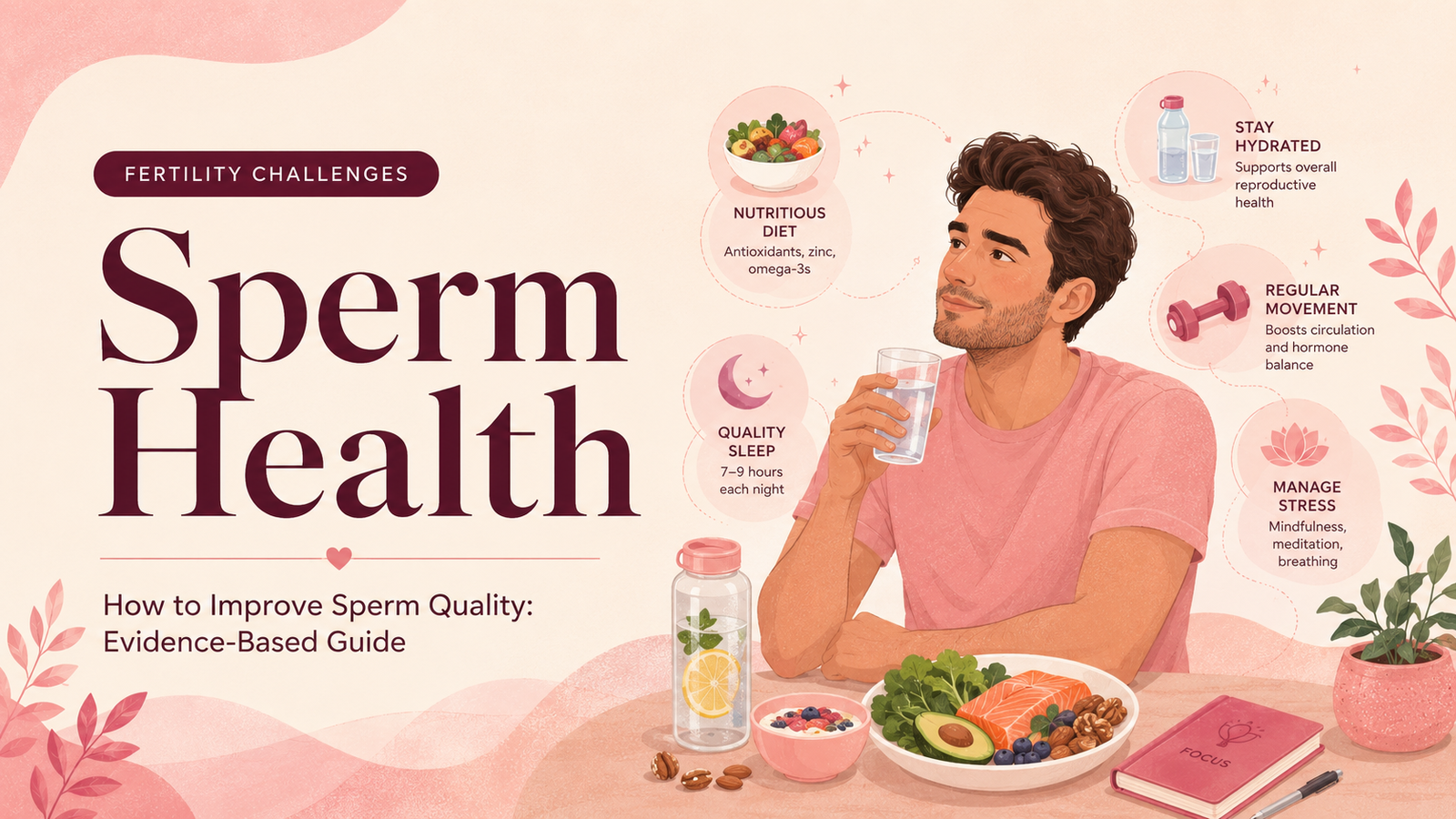
Sperm quality is more than a number on a lab report. It is a quiet picture of how a body has been eating, sleeping, recovering, and managing stress over the last few months. For couples trying to conceive, paying attention to sperm health can shorten the time spent guessing and worrying, and it can take pressure off one partner who often feels like the only one being studied.
Why sperm quality matters for couples trying to conceive
It also helps to know what sperm quality really measures. A clinic looks at several things together rather than a single number. Count tells you roughly how many sperm are in a sample. Motility describes how many are swimming well. Morphology looks at how many have a normal shape. Volume and other markers fill in the picture. Numbers can look low on a single day and bounce back later, which is one reason a single test rarely tells the full story.
If you find yourself reading article after article and feeling more confused, you are not alone. There is a lot of noise around male fertility, and a lot of it pushes blame or product. A more useful starting point is to clear the air on what truly matters. Many couples find it helpful to start with male fertility myths before changing anything, so the time and energy you spend goes toward the things that actually move the needle.
A small note about tone before we go further. The most useful sperm health conversations are warm, curious, and shared between partners. Anything that turns into a verdict about one person tends to backfire. Improvement is a team practice, not a punishment.
How sperm is made and why timing matters
Sperm is not produced in a single moment. The body makes it on a cycle that takes roughly two and a half months from start to maturity. That means today's sample reflects choices and exposures from many weeks ago. It also means that real changes in lifestyle take time to show up in a lab result. Two to three months is a fair window to retest after major changes.
This timeline can feel slow when you are trying to conceive. The good news is that the daily habits that shape sperm health are often the same ones that improve sleep, mood, energy, and connection. They are worth doing even if you are not yet sure how each one moves your numbers.
You can find Flow & Glow on the App Store, where many couples use it to keep track of cycles, fertile windows, and gentle reminders together. Pair this kind of tracking with shared notes on sleep and habits and you create a simple, low pressure way to see how lifestyle changes line up with cycle timing.
What truly affects sperm quality
The factors below are the ones with the strongest evidence behind them. They are not ranked by importance, since most people benefit from working on whichever feels easiest first.
Sleep and recovery
Short sleep, irregular schedules, and chronic exhaustion all weigh on the hormones that drive sperm production. Most adults do better with seven to nine hours, with a steady wake time. If sleep has been rough, start by anchoring a wake time and gradually shifting bedtime earlier. Even small wins here often improve mood and intimacy, which matter for the bigger picture.
Stress and emotional load
Stress shows up in the body. Long stretches of worry, overwork, or grief can suppress the hormones that support sperm production. This does not mean you can think your way to better numbers, but it does mean that practices that calm the nervous system are not a side dish. Breathing routines, time outdoors, time with friends, talk therapy, and shared activities all count.
Body weight and movement
Being significantly underweight or overweight can shift hormones in ways that affect sperm. Crash diets do not help and may even make things worse. Steady, moderate movement most days, plus a few strength sessions a week, supports better hormone balance over time. The goal is consistency, not punishment.
Alcohol
Heavy drinking is linked to lower sperm count and motility. Light to moderate use is more debatable, but cutting back is one of the simplest changes a person can try. If quitting feels too big, a useful starting point is to choose specific alcohol free days each week and notice what shifts.
Smoking, vaping, and recreational drugs
Smoking is consistently tied to lower sperm count, lower motility, and more DNA damage in sperm. Vaping is not a safe substitute. Cannabis use, especially daily use, has been associated with lower sperm parameters in studies. Quitting is one of the highest impact moves available, and support resources can make it more achievable.
Heat exposure
Sperm production prefers a slightly cooler temperature than the rest of the body. Regular hot tubs, long saunas, heated car seats, laptops resting on laps for hours, and very tight underwear in hot environments can all add up. Occasional exposure is not a big deal. A daily habit may be worth adjusting.
Diet basics
There is no single food that fixes sperm quality. The pattern that comes up again and again is a diet rich in vegetables, fruits, whole grains, legumes, nuts, fish, and healthy fats, with less ultra processed food and added sugar. Vitamins, omega 3 fats, zinc, selenium, and folate from food can support sperm production. Supplements may be useful in some cases, but they are not a replacement for a steady eating pattern.
Environmental exposures
Some workplaces and home routines bring repeated contact with pesticides, solvents, heavy metals, and certain plastics. If a job involves these exposures, ask about ventilation, protective equipment, and safer alternatives. Reducing the number of harsh personal care products and rinsing produce well are small but useful steps.
Medications and supplements
A handful of prescription medications can affect sperm. So can some over the counter supplements taken in high doses. Do not stop a prescribed medication on your own. Bring the question to a clinician and ask if any current prescription could be adjusted or paired with a fertility friendly plan.
Lifestyle changes that often help
You can use the list above to choose two or three changes that feel realistic right now. Trying to overhaul everything at once usually does not stick. A short list might look like this.
For the next 90 days, pick one habit from each bucket. A sleep anchor like a consistent wake time. A movement habit like a daily walk plus two short strength sessions. A diet shift like adding two vegetables to your evening plate. A stress practice like ten minutes outside without a phone. One reduction like cutting alcohol on weekdays.
This is not a perfect plan and that is the point. It is a doable plan. Sperm quality changes lag behind lifestyle changes, so you will not see the effect in the first week. You may, however, notice better sleep, steadier mood, and more energy long before any lab numbers shift.
Timing sex without taking the joy out of it
Even with great sperm health, conception still depends on timing. The egg is only available for a short window each cycle, and sperm can survive in the body for several days under the right conditions. Most pregnancies come from sex in the few days leading up to ovulation rather than the day of ovulation itself.
This is where understanding the fertile window makes a real difference. It widens the chance of conception and reduces the pressure to schedule sex on a single day. For couples trying to conceive, knowing the window helps both partners feel less like they are taking a test and more like they are working with the body's natural rhythm.
A common follow up question is how often to have sex during this window. The short answer is every one to two days during the fertile window is the standard general guidance. Trying to save sperm for one perfect day usually backfires. Regular intimacy during the window is more reliable.
Cycle length affects this conversation, too. Very short or very long cycles can change when ovulation lands. For more on this, see cycle length and fertility. Tracking cycles for a few months builds a clearer baseline than guessing.
When to consider testing
A semen analysis is the simplest, most useful test for male fertility. It is non invasive, often covered by insurance, and can shorten months of guessing into a clearer picture.
A reasonable rule of thumb for couples is to consider an evaluation after about a year of trying without conception when the female partner is under 35, and after about six months when she is 35 or older. There are reasons to test earlier, like known reproductive history, surgeries, hormonal symptoms, sexual function concerns, or simply wanting peace of mind.
If the idea of testing feels heavy, knowing what happens can take some of the worry out of it. Learning about male fertility testing ahead of time can help both partners feel prepared rather than anxious. A first test is not a final verdict. Results vary by day, by stress, and by collection conditions, so a clinician usually looks at two samples spaced a few weeks apart before drawing conclusions.
It is also normal for the first conversation to feel emotional. Many people approach this exam as if it is a measure of worth rather than a routine check. It is not. It is one snapshot among many.
Realistic expectations and timeframes
Two key timeframes are worth setting in stone in your mind. Sperm production takes around two and a half months, so it takes about that long for major lifestyle changes to fully show up in results. And conception is a numbers game even when everything looks good. Most healthy couples conceive within twelve months, with many pregnancies happening in the first six. Patience is not a passive thing here. It is an active, important part of the plan.
If results from a semen analysis come back lower than expected, that is not the end. Many men with low parameters still conceive naturally, especially after addressing the lifestyle factors above. Others benefit from medical care. The point of testing is to make smart choices, not to deliver a verdict.
Supporting your partner without blame
The internet often turns male fertility into either a joke or a verdict. Neither helps a real couple. The most useful posture is shared work. You are both in this. Both partners can adjust sleep, alcohol, diet, and movement. Both can attend appointments. Both can be patient with the timeline. Both can choose to make this a season of building habits that will benefit health for years, even after a child arrives.
It can also help to set up structure together. Agree on a quarterly check in. Agree on a stop point for guesswork. Agree on what you will do together if a test comes back unexpected. Talking about a plan before you need it makes hard moments easier.
If your partner pushes back on testing or change, try not to push harder. Curiosity is more effective than pressure. Listen to what scares them about the topic. Sometimes the resistance is not about sperm. It is about identity, money, or fear of bad news. Most of those things are easier to talk about when nobody is being rushed.
When to seek help sooner
Some patterns are worth bringing to a clinician sooner rather than later. These include very low libido that has lasted for months, pain or swelling in the testicles, a previous infection or surgery in the reproductive area, a history of undescended testicles, a known hormone condition, severe sexual function concerns, or signs of significant emotional distress. A clinician can help sort what is routine and what needs a closer look.
For the female partner, severe pain, very heavy bleeding, fainting, chest pain, shortness of breath, severe headaches, one sided swelling, fever, foul odor, or possible pregnancy concerns are all reasons to seek care promptly. None of these are about fertility on their own. They are reasons to be seen.
A gentle reminder about supplements and quick fixes
Most pages on this topic try to sell a product. The honest answer is that no supplement reliably replaces sleep, food, and a healthy environment. A clinician may suggest a specific supplement based on tests or symptoms. That is different from a general recommendation aimed at everyone. Save your money. Spend it on a steady food shop, comfortable bedding, and the test itself if you decide it is time.
Putting it all together
A practical way to start is to choose a single 90 day window. Pick two or three changes you can actually keep. Track cycles together. Plan around the fertile window rather than the calendar. If you have not yet, decide as a couple when you will consider a basic evaluation. Then live your life. Most couples benefit far more from a few sustained changes than from a long list of perfect ones.
Sperm quality is not a moral story. It is a snapshot of recent life, and life can change. With patience, shared effort, and a few useful tools, most couples can move forward feeling less stuck and more like a team.
Article information
- Written by Emma Hart, MS in Science Writing
- Medically reviewed by Dr. Jennifer Martinez, MD, FACOG
- Published on June 5, 2026
- Updated on July 31, 2026
Key takeaways
- Sperm production takes around 74 days, so meaningful changes show up about two to three months later
- The biggest movers are smoking, alcohol, body weight, heat exposure, sleep, and emotional stress
- Diet matters but no single food fixes sperm quality on its own
- A semen analysis is the simplest way to move from guessing to knowing
- Timing sex during the fertile window matters even when sperm numbers are healthy
- Most male factor concerns are common, treatable, and not a moral story
- Both partners shape fertility together, and shared habits make change easier
Frequently asked questions
How long does it take to improve sperm quality?
Plan on at least two to three months. Sperm production takes around 74 days, so changes made today usually show up in a sample taken about ten to twelve weeks later. Some changes, like quitting smoking or cutting heavy drinking, may show partial benefits sooner, but lab numbers tend to lag behind lifestyle in a fairly predictable way. The honest takeaway is that consistency over a season matters more than effort over a week.
Can diet alone improve sperm count and motility?
Diet helps, but it is rarely the only factor at play. A pattern that includes vegetables, fruits, whole grains, legumes, nuts, fish, and healthy fats supports sperm production over time. Cutting back on ultra processed food and added sugar matters, too. If sleep, alcohol, smoking, weight, or environmental exposures are also working against you, diet on its own will only do part of the job. Think of diet as the floor of the plan, not the ceiling.
Do supplements actually help sperm quality?
Some supplements may help in specific situations, especially when guided by a clinician based on tests or symptoms. As a general rule for everyone, a balanced diet and healthier habits matter more than a daily pill. Supplements taken in high doses can also cause issues, including with hormone balance. If you want to try one, ask a clinician what would be appropriate for you rather than choosing based on a marketing claim.
Should we both get tested if we are trying to conceive?
A joint evaluation often saves time and emotional energy. Female factor and male factor concerns are roughly equally common, and many couples have a mix of small factors that add up. Testing both partners early avoids long stretches of guessing. It also helps both people feel like they are doing the work together, which matters for the relationship as much as the medical picture.
How does timing sex affect the chance of conception if sperm health is fine?
Even with healthy sperm, conception still depends on the egg being available. The egg is only ready to be fertilized during a short window each cycle, so timing intimacy with the fertile window has a big effect on the odds. Aiming for sex every one to two days during this window is the general guidance most clinicians offer. Tracking your cycles makes the window easier to predict over time.
Is masturbation bad for sperm count?
No, regular ejaculation does not lower fertility in a meaningful way for most people. Long abstinence stretches can actually reduce motility, while very frequent ejaculation can briefly lower volume. Around the fertile window, sex every one to two days strikes a useful balance. The idea that sperm needs to be saved up for one perfect moment is more myth than science for most couples.
What if our semen analysis results are lower than expected?
A lower than expected result is not a verdict. It is information. The next step is usually a repeat test a few weeks later, since results vary day to day. A clinician can then talk through possible reasons, lifestyle changes worth trying, and whether further evaluation makes sense. Many couples with mixed results still conceive, sometimes naturally and sometimes with help. The key is to use the result as a starting point, not as a label.
References
- American Society for Reproductive Medicine. (2022). Optimizing natural fertility: A committee opinion Source
- American Society for Reproductive Medicine. (2020). Diagnostic evaluation of the infertile male: A committee opinion Source
- American Urological Association and American Society for Reproductive Medicine. (n.d.). Diagnosis and treatment of infertility in men Source
- Cleveland Clinic. (n.d.). Male infertility Source
- National Health Service. (n.d.). Low sperm count Source
- National Institutes of Health, MedlinePlus. (n.d.). Semen analysis Source
- World Health Organization. (2021). WHO laboratory manual for the examination and processing of human semen Source
Editorial and medical disclaimer
Flow & Glow health content is educational and is not a substitute for diagnosis, treatment, or personal medical advice from a qualified clinician.
Our editorial standards, reviewer process, sourcing approach, and correction process are explained in the Editorial Policy. You can also review our authors and medical reviewers, healthcare professional information, contact page, and privacy policy.