Period Pain but Light Flow: Why Cramps Can Still Feel Strong
Bad cramps with a light period are more common than you think. Learn what causes the pattern, what is normal, and when to get checked.
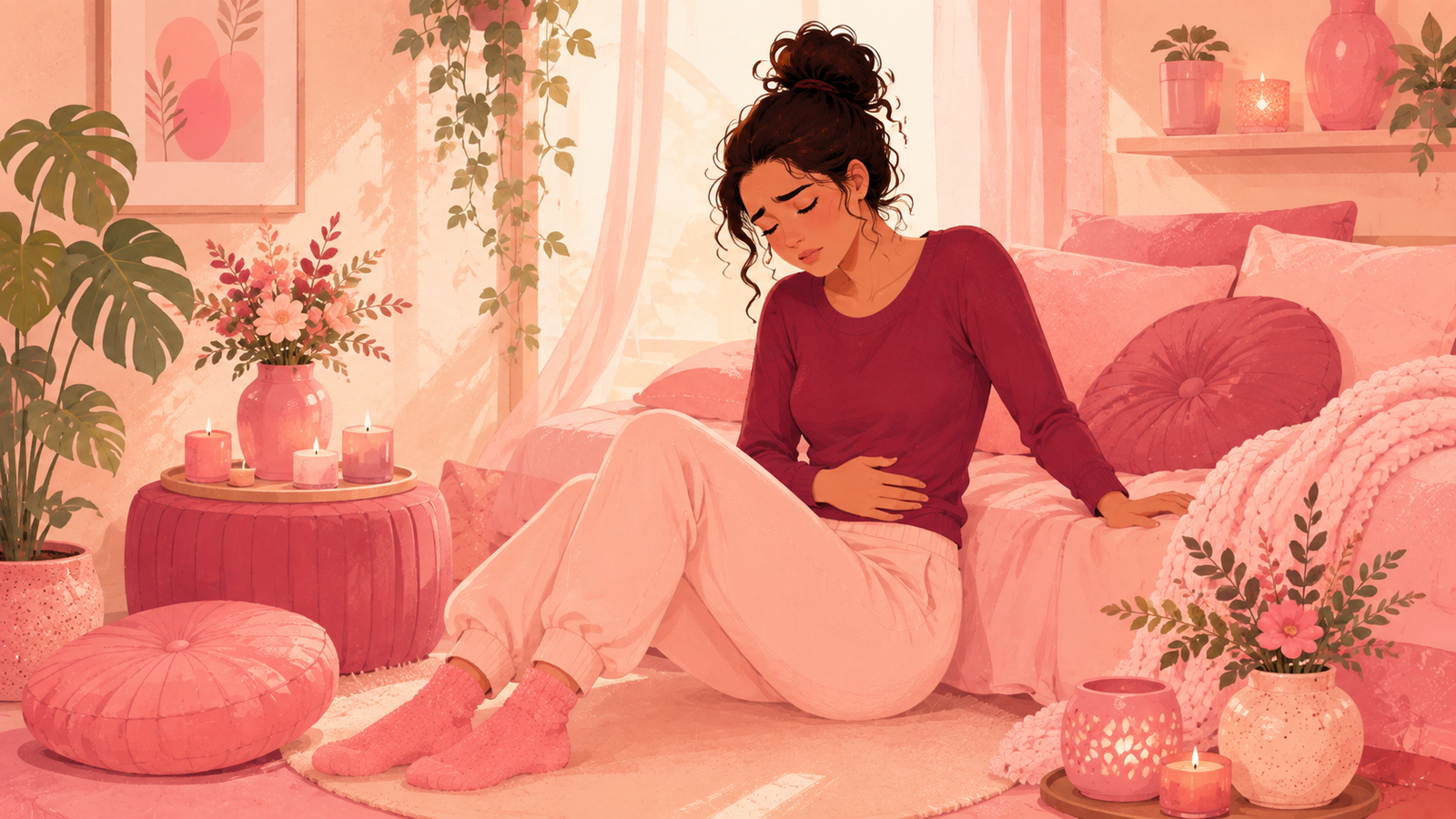
If you bleed only a little but the cramps still drop you, you are not imagining things, and you are not unusual. The amount of blood you see on a pad or tampon is one signal of what your body is doing during a period. The pain you feel is another signal, and the two do not always move together.
Why Light Flow Does Not Mean Light Pain
During the menstrual phase of your cycle, the uterus contracts to shed its lining. Those contractions are what create the cramping feeling, whether it shows up as a dull ache in your lower back, sharp twinges low in your belly, or a deep heaviness that pulls down through your hips. The strength of those contractions depends mostly on the chemicals your body releases, not the volume of blood that ends up on the pad. So someone with a heavy flow can have mild cramps, and someone with a light flow can be doubled over.
That mismatch confuses people, especially when they grew up hearing that a light period must mean a calm period. Across the United States and the United Kingdom, the question of why a light period can hurt so much is one of the most common queries that brings people to apps like Flow & Glow on the App Store, looking for a simple way to log what they feel and see if the pattern is changing. Light volume is not always proof that the cycle is quiet underneath.
The other thing worth saying clearly is that pain is not a fitness test. You do not earn anything by ignoring it, and feeling strong cramps does not mean you have low pain tolerance. It usually means there is something physical going on that explains exactly why it hurts, even when the bleeding looks unimpressive.
What Prostaglandins Actually Do
The simplest explanation for cramping is a group of fatty compounds called prostaglandins. They are part of how the body manages inflammation, and they show up in everything from minor injuries to labor. During a period, the uterus releases them so that the muscle layer of the uterine wall contracts and helps push out the lining.
Higher levels of prostaglandins lead to stronger, longer contractions and to the symptoms that often travel with cramps, like nausea, loose stools, fatigue, and headache. Lower levels lead to lighter cramping. The point that catches people off guard is that the amount your body produces is somewhat independent of how thick the lining is or how much bleeding there is overall.
That means two things in real life. First, you can have a relatively thin lining (which leads to lighter bleeding) and still release enough prostaglandins to feel strong pain. Second, the same person can have one cycle where flow and pain match up neatly, and another cycle where they do not. Hormone shifts, sleep loss, stress, diet, illness, and recent travel can all nudge prostaglandin response up or down for a given month.
If you are someone who gets bad cramps with a light period, the prostaglandin angle alone explains a lot of it. It is also why anti inflammatory pain relief, the kind that blocks prostaglandin production, is often the first line of help for primary period pain. The bleeding might already be light. The pain is being driven by chemistry, and that chemistry can be turned down.
This is also why heat, gentle movement, hydration, and rest help. They do not change the volume of blood, but they soften muscle tension and reduce the inflammatory load your body is dealing with at the same time. None of that is a cure, but it is real, and it is more than many people are told when they ask why a small period can hurt so much.
Why Light Flow Can Still Bring Strong Cramps
Once you understand that pain and bleeding are driven by partly separate processes, the next question is more practical: why does my flow look light in the first place when the cramps stay loud? There are several reasons that get confused for each other, and they are worth pulling apart.
A naturally thinner lining is one. Some people consistently have lighter periods because their lining builds up less during the cycle. The shedding still happens, the contractions still happen, but the volume coming out is smaller. The cramps are doing the same job in a smaller building.
Another reason is hormonal birth control. Combined pills, the patch, the ring, hormonal IUDs, the implant, and the shot all change the lining in different ways, and most of them make it thinner over time. Lighter, shorter, or skipped periods are an expected change on these methods. Cramps usually drop too, but not always. Some people stay on a hormonal method for years and still get a painful light period every cycle, especially in the first few months on a new method.
Stress and sleep can also lighten flow. The same things that disrupt sleep and elevate stress hormones can change how the uterine lining develops in a given month. A stressful work cycle, a sick week, a long flight, or a period of undereating can all show up as a lighter than usual period. The cramps can stay the same, or even feel sharper, because the underlying inflammation in the body is already raised.
A few less common reasons matter too. Very low body fat or rapid weight loss can lighten or pause periods. Early pregnancy bleeding or miscarriage can look like a light, painful period and is worth ruling out if there is any chance of pregnancy. Some thyroid issues affect flow. And in older cycles, the years approaching menopause can bring lighter or more erratic bleeding without making cramps any softer, which is one reason understanding why period pain gets worse with age is useful even when bleeding is going in the opposite direction.
The takeaway is simple. A light flow is not automatic proof that everything is quiet. It is one data point, and it sits inside a wider picture.
When Pain Is Trying To Tell You Something
Most painful light periods are uncomfortable but not dangerous. They are the body doing a normal thing, sometimes with the volume of pain turned higher than you would like. That is the most common scenario, and it is also the one most easily helped at home.
There is a smaller, important slice where pain is a signal worth listening to. The pattern to watch is not a single bad month. It is what happens cycle after cycle, and how the rest of your body feels around the bleeding.
Reasons to get checked include pain that has been getting worse over months or years, pain that stops you from working, sleeping, or moving on a normal day, pain that begins days before bleeding and stays after it ends, sharp one sided pain, pain during sex, pain with bowel movements or urination during your period, and any new pain pattern that does not match what your cycles used to feel like.
A few signs deserve same day attention rather than a routine appointment. Sudden severe pain, fainting, fever, vomiting that will not stop, heavy bleeding with clots larger than a quarter, or any strong pelvic pain combined with a possible pregnancy needs urgent care. None of those are common, but they are the line between regular cycle pain and something else going on.
If you are in the United States, a primary care doctor or a gynecologist is a good first stop. In the United Kingdom, your GP is usually the first call, and they can refer you onward when needed. In both places, clinicians take painful periods more seriously than they did a decade ago. Going in with a clear log of when the pain happens and what it feels like makes the visit faster and more useful.
Birth Control, Light Periods, And Pain That Lingers
Hormonal birth control is one of the most common reasons a period gets lighter, and it deserves its own section because it confuses the picture a lot.
Combined hormonal methods (pills, patch, ring) thin the lining over time, which usually means lighter, shorter periods. Progestin only methods (mini pill, implant, hormonal IUD, shot) can lighten periods even more, sometimes to spotting, sometimes to no bleeding at all. None of these are designed as painkillers. They often reduce cramps as a side effect of thinning the lining, but they do not always remove pain.
That gap is where painful light periods on birth control show up. Common patterns include strong cramps in the first three to six months of a new method while the body adjusts, ongoing cramps with a hormonal IUD that is sitting fine but still triggers contractions during bleeding, breakthrough cramping that comes with breakthrough spotting on long acting methods, and continued pain on combined pills if there is something else going on underneath, like endometriosis, that the pill is partly masking but not curing.
It is worth saying that birth control is not a diagnostic tool. It can change a period a lot and still leave the underlying biology of why your cycle hurts. If a method has been in place for several months and you are still getting strong pain with light flow, that is a reasonable thing to bring up at your next appointment. Sometimes the method needs adjusting. Sometimes the pain is pointing to something deeper that the method has been quietly covering.
Stopping or changing birth control on your own to test whether the cramps are really yours is usually not the move. Tracking carefully and bringing the pattern to a clinician is.
Endometriosis, Adenomyosis, And The Pattern To Watch
A specific reason painful light periods get extra attention online is endometriosis. It is a condition where tissue similar to the uterine lining grows outside the uterus, and it causes pain through inflammation and lesions in places that are not designed to shed monthly. That pain is not coming from the volume of menstrual flow, which is why endometriosis can show up with periods that look light, normal, or heavy.
Common patterns that should make endometriosis worth investigating include severe pain that started in the teen years and never softened, pain that begins before bleeding and lasts after, pain during sex, pain with bowel movements, pain with urination, infertility, and fatigue that goes beyond normal period tiredness. None of these signs on their own prove endometriosis, but together they form a pattern that a clinician can evaluate.
Adenomyosis is related but distinct. It is when tissue similar to the lining grows into the muscle wall of the uterus itself. It tends to cause heavier rather than lighter periods, but pain can be intense, and the two conditions can coexist. The reason both come up in any conversation about painful light periods is that the pain in both is driven by inflammation rather than only by shed lining, which is exactly why flow volume is a misleading single signal.
This is also why pattern tracking is so much more useful than guessing. You do not need to diagnose anything from your phone, and you should not try. What you can do is build a clear picture of when symptoms hit, how strong they are, and how they have changed over the past six to twelve months. A short check against a basic endometriosis symptom screen can help you decide whether the pattern is worth bringing to a clinician now, rather than waiting another year to see if it eases off on its own.
Less Talked About Reasons Cramps Stay Strong
Beyond hormones and the better known conditions, several smaller factors can keep cramps loud while flow stays light. Most of them are easy to miss because they do not show up on basic period explainers.
Pelvic floor tension is one. The same group of muscles that hold up your pelvic organs can become chronically tight, especially with stress, sitting all day, holding tension low in the belly, or after a long history of period pain. A tight pelvic floor amplifies cramping and can make a light period feel like a heavy one in pain terms. Pelvic floor physical therapy can help, and it is offered in both the US and UK by trained specialists.
Constipation, IBS flares, and gut inflammation can also overlap with period pain and feel almost identical. Many people with painful periods notice their bowels change around bleeding, and the cramps from a stressed gut sit very close to where uterine cramps live. Hydration, fiber, and managing food triggers in the days before your period can take some of that pain off.
Ovulation pain, sometimes called mid cycle pain, can also be misread as period pain when cycles are short or irregular. It usually happens around the middle of the cycle on one side, and it can be sharp. If your period pain is showing up two weeks before bleeding, that may be what is going on.
Less commonly, fibroids, ovarian cysts, pelvic inflammatory disease from an untreated infection, or an ectopic pregnancy can present with pain that does not match flow. These are not common explanations and you should not assume them, but they are part of why clinicians take strong unexplained pelvic pain seriously instead of waving it off.
The point is not to give yourself ten new things to worry about. The point is that light flow with strong cramps is not a single condition. It is a category, and the right next step depends on which version of it you have.
How To Track The Pattern So It Actually Helps
Memory is a bad witness for cycle pain. By the time you get to an appointment, last month is already blurred into the month before, and the cramps that ruined a Tuesday have softened in your head. Written tracking, even in light strokes, fixes that.
A useful log does not need to be elaborate. You want a record of when your period starts and ends, how heavy each day is, and where the pain sits on a one to ten scale. You want to know what kind of pain it is, whether it is cramping, stabbing, aching, pulling, or pressure. You want to know what time of day it hits hardest and what makes it better or worse. You want to know what symptoms travel with it, like nausea, headache, bloating, bowel changes, mood shifts, or pain with sex.
If you keep that record for two or three cycles, two things happen. First, you start to see your own pattern, which makes a painful month less scary because you know what your baseline actually is. Second, when you sit in front of a clinician, you have a clear timeline instead of a feeling. That changes the quality of the conversation a lot.
A few basics of useful period tracker notes make the logging stick. Keep it short enough that you will actually do it. Use the same wording each time so you can compare months. Note medications and what dose helped. Mark anything that surprised you, even if you cannot explain it. A monthly photo of the log, or an export from the app, is enough to share with a doctor without sending screenshots of your entire cycle.
Tracking will not stop a painful period from happening. It will, over time, help you tell the difference between a cycle that is rough but normal for you, and a cycle that has shifted into something worth investigating.
What Self Care Looks Like When Flow Is Light
If your cramps are strong but the pattern is steady, and you do not have signs that need a medical check, the day to day support looks a lot like normal period care, just without the assumption that you are exaggerating.
Anti inflammatory pain relief, taken at the dose on the label and started early in the pain rather than waiting until it is at peak, is the most direct lever. Heat helps. Hydration helps. Gentle movement, like walking, stretching, or slow yoga, often does more than people expect, because it eases the muscle tension that has built up around the cramp. Lying flat with a heated pad is fine. Lying flat for days losing sleep and missing meals is not, and that is a signal your pain is sitting above your normal baseline.
Sleep matters more than it gets credit for. Poor sleep raises pain perception and can lift inflammation. The week before your period is a useful one to protect your sleep on purpose. Caffeine, especially late in the day, is worth watching if you are someone whose cramps spike with high caffeine intake.
Food does not need to be perfect, but the cycle is sensitive to swings. Most people do best with regular meals, enough protein, enough iron rich foods around their period, and not under eating in the days before bleeding. None of this is a cure for endometriosis or adenomyosis. It is, for the more common version of painful light periods, the kind of background support that takes the edge off without turning your life into a wellness program.
If your cramps have shifted over the years, knowing the usual ways period cramps change over time is useful too, because what is normal at sixteen is different from what is normal at thirty two, and pain that ramps up year on year should never be brushed off as part of growing into it.
What To Do Next If The Pattern Is Not Easing
If you have read this far and your honest answer is that this still hurts more than it should, that is enough reason to get it looked at. You do not have to wait until pain is unbearable, and you do not have to justify it with a heavy flow. Light bleeding does not disqualify you from being taken seriously.
A useful first appointment usually includes a conversation about your cycle history, a basic pelvic exam, and sometimes a pelvic ultrasound. Blood tests may follow depending on the picture. A clinician may suggest a trial of a different pain reliever, a change of birth control, or referral to a gynecologist if a deeper look is warranted.
Two practical notes for that visit. Bring your tracking. A printed or exported log of the last two to three cycles is far more useful than trying to remember. And ask specifically what your clinician thinks the next step is, what would change that next step, and when you should come back. That last question is the one that often gets skipped, and it is the one that catches a worsening pattern early.
Whatever the cause turns out to be, the goal is not to live with pain that is shaping your life. Light flow with strong cramps is a real pattern with real explanations, and it has more options behind it than most people are told.
Article information
- Written by Flow & Glow Editorial
- Medically reviewed by Dr. Jennifer Martinez, MD, FACOG
- Published on June 25, 2026
- Updated on October 7, 2026
Key takeaways
- Pain and flow are driven by partly different parts of the same process, so a light period can still hurt a lot
- Prostaglandins control most cramping, and your body can make them in high amounts even with little bleeding
- Hormonal birth control often thins the uterine lining, which is why pills, IUDs, or implants can change flow without erasing cramps
- Painful light periods that worsen over time, hit one side, or knock you out of normal life need a medical check
- Conditions like endometriosis can show up as strong pain with light or unusual bleeding, so the pattern matters more than the volume
- Tracking when the pain starts, where it sits, and how long it lasts helps a clinician spot patterns faster than memory ever will
Frequently asked questions
Is it normal to have bad cramps with a light period?
It is common, and for many people it is part of their normal pattern. Pain and bleeding are driven by partly different processes, so flow volume is not a reliable measure of how much your uterus is contracting. Persistent pain that disrupts your life or worsens over time is still worth getting checked, even when the flow looks light.
Why do I have cramps but very little bleeding?
The most common reason is that your body is still producing the chemicals that cause contractions while the lining you are shedding is thin. Hormonal birth control, stress, sleep loss, and natural cycle variation all thin the lining without quieting the cramping response, which is why cramps can stay strong with little blood showing.
Could a painful light period mean I am pregnant?
It can, especially if the period is lighter than your normal pattern and the timing feels off. Implantation bleeding can mimic a light period in some cases, and early pregnancy complications can also cause cramping with light bleeding. If pregnancy is possible, take a test, and seek urgent care for severe one sided pain.
Does endometriosis always cause heavy periods?
No. Endometriosis pain comes from tissue outside the uterus and is driven by inflammation, not by flow volume. Periods with endometriosis can be light, normal, or heavy. The more telling signs are severe pain, pain that starts before bleeding, pain during sex, and pain with bowel or bladder activity during the period.
Will birth control fix painful light periods?
Sometimes. Hormonal birth control often reduces pain by thinning the lining, but it does not always remove cramps, especially in the first few months on a new method or when something like endometriosis is in the picture. If pain stays strong on birth control for several cycles, it is worth bringing up with a clinician.
How can I tell the difference between normal cramps and a problem?
Pattern is the key signal. Cramps that are predictable, respond to basic relief, and stay within the same range each month are usually normal for you. Pain that gets worse over months, hits one side, lasts long after bleeding stops, or stops you from working, sleeping, or moving is worth a medical look.
What should I track to bring to a doctor?
Track the start and end of your period, the heaviness of each day, the pain level on a one to ten scale, where the pain sits, what makes it better or worse, and any symptoms that travel with it. Two to three cycles of consistent notes give a clinician a much clearer picture than memory ever will.
References
- American College of Obstetricians and Gynecologists. Dysmenorrhea: painful periods Source
- National Health Service. Period pain Source
- National Institute for Health and Care Excellence. (2017). Endometriosis: diagnosis and management. NICE guideline NG73 Source
- Cleveland Clinic. Dysmenorrhea Source
- Mayo Clinic. Endometriosis: symptoms and causes Source
- Iacovides, S., Avidon, I., and Baker, F. C. (2015). What we know about primary dysmenorrhea today: a critical review. Human Reproduction Update, 21(6), 762 to 778 Source
Editorial and medical disclaimer
Flow & Glow health content is educational and is not a substitute for diagnosis, treatment, or personal medical advice from a qualified clinician.
Our editorial standards, reviewer process, sourcing approach, and correction process are explained in the Editorial Policy. You can also review our authors and medical reviewers, healthcare professional information, contact page, and privacy policy.