Period Flu: Why Your Body Feels Sick Before Your Period
Period flu can describe the achy, tired, headachy, or unwell feeling some people notice before or during a period.
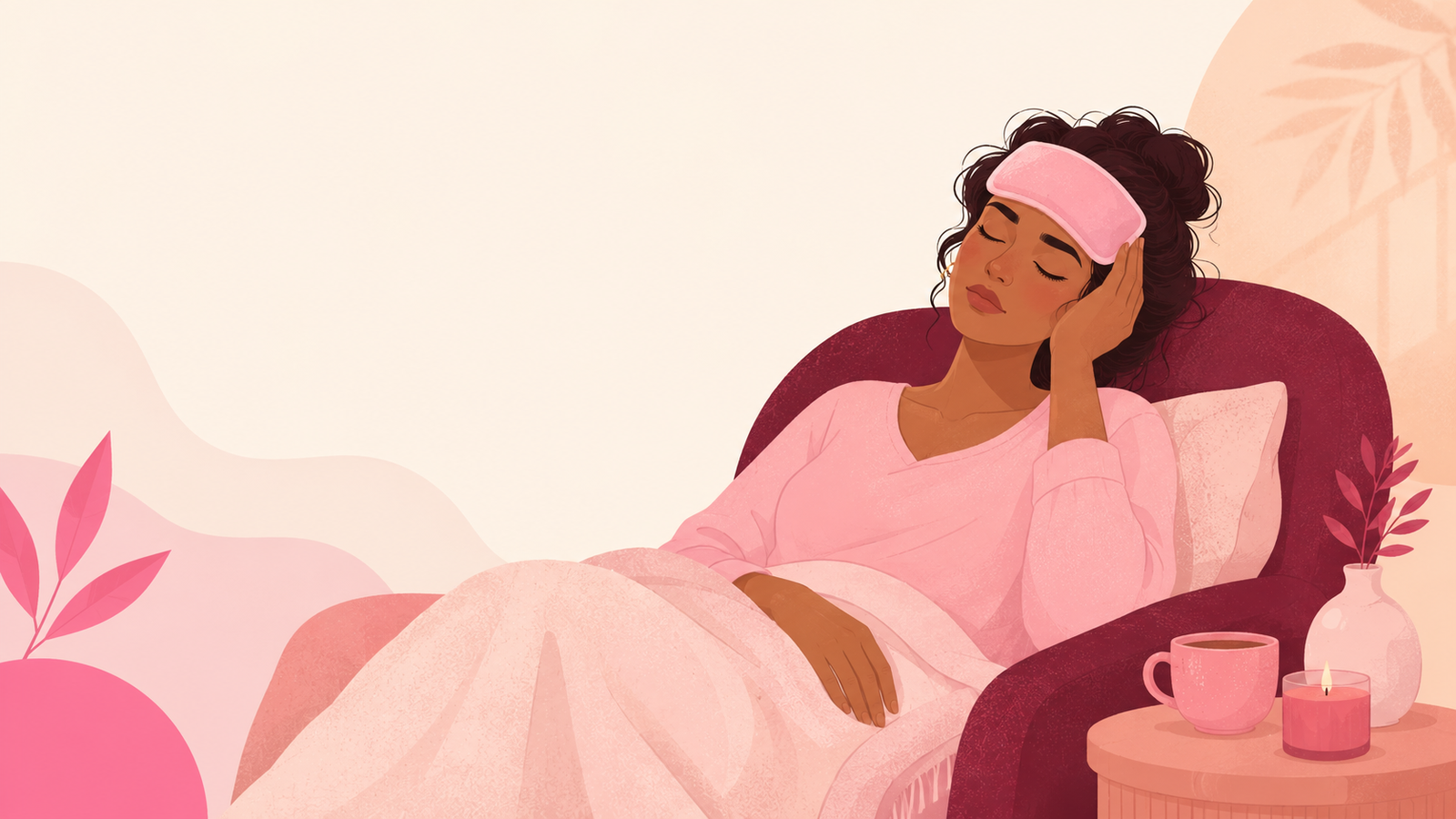
If you have ever felt achy, feverish, queasy, and exhausted in the days before your period, only to wake up the morning of bleeding and realize you do not have the flu after all, you have met what the internet calls period flu.
What people mean by period flu
It is not an official diagnosis. You will not find period flu in any medical textbook. What you will find, when you look closely at premenstrual syndrome, is that PMS can absolutely produce flu like symptoms in the luteal phase. The term period flu is just shorthand for a very specific cluster: body aches, chills, headache, nausea, fatigue, sometimes a tiny bump in body temperature, sometimes a sore throat or stuffy nose feeling. It can be mild, or it can sit on you like a brick for two to four days.
That is part of why it is so disorienting. Period flu feels like an illness but behaves like a calendar. It arrives at roughly the same point in the cycle each month, often peaks the day or two before bleeding, then lifts as the period begins or shortly after. That timing is the single biggest clue you are dealing with the body's normal cycle, not a virus you caught at work.
If you want a friendlier way to track what your body actually does in this window, Flow & Glow lets you log symptoms day by day so you can see the pattern instead of guessing.
Why your body feels sick before your period
To understand why a non illness can feel so much like an illness, it helps to look at what is happening inside the body in the second half of the cycle. The short version: many of the same chemical messengers that show up when you are actually sick also surge during your luteal phase. Your body is using familiar tools for a different job, and your nervous system reads the signal the way it always does.
Prostaglandins are doing more than you think
Prostaglandins are hormone like compounds released by the lining of the uterus as it prepares to shed. Their job is local: they cause the uterine muscle to contract so the lining can come away. The problem is that prostaglandins are not polite about staying in one place. Some of them enter the bloodstream and act on tissue far from the uterus.
That spillover is why prostaglandins can cause:
- Cramping not just in the lower belly but radiating into the lower back and thighs
- Nausea, loose stools, or diarrhea, because the gut is sensitive to the same signals
- Headaches and a heavy, foggy feeling
- A general sense of being unwell that does not match a specific injury
When prostaglandin levels are high relative to the rest of your hormones, the experience can look a lot like a low grade flu. People who get strong period cramps are often also the people who report the worst period flu symptoms, and that overlap is not a coincidence.
Hormones shift faster than your body would like
The luteal phase is the stretch of the cycle after ovulation and before bleeding. During the early part of this phase, progesterone climbs. In the final days before your period, progesterone and estrogen both fall, sometimes sharply.
That drop is what tells your uterine lining to shed. It is also a big change for your central nervous system, which uses these hormones as inputs for mood, body temperature, appetite, sleep, and pain perception. A sudden withdrawal of progesterone can make you feel restless, irritable, and physically off. Estrogen swings can trigger headaches in people who are sensitive. None of that is illness. All of it can feel like illness.
If you want a deeper look at what is actually happening in this window, the luteal phase explainer walks through the timeline day by day.
Inflammation is part of the picture
Your immune system is not on the sidelines during the cycle. Markers of inflammation tend to rise in the late luteal phase. Inflammation is part of how the uterine lining prepares to shed, but inflammation also makes you feel achy, tired, and a little foggy when it is present anywhere else in the body.
This is the chemistry behind body aches that feel like the flu without any actual virus. The immune system is using some of the same inflammatory pathways it uses when fighting infection, just at a lower intensity and for a different reason. The nervous system, which only knows what signals it is receiving, can read this as illness.
Sleep and the luteal phase
Sleep often gets worse in the days before a period. Body temperature is slightly higher in the luteal phase, which can make it harder to fall asleep and easier to wake up overnight. Some people get vivid dreams. Some get up to pee more. Some lie awake with their brain spinning over nothing.
A few nights of broken sleep on top of hormone changes and inflammation is a near guaranteed recipe for feeling sick. Fatigue compounds. Pain tolerance drops. The same headache that would barely register on a well rested Tuesday lands much harder on a poorly rested Sunday. That is why people who already feel tired before their period often experience the most intense version of period flu.
The most common period flu symptoms
There is no official symptom list because there is no official diagnosis. But across surveys and clinical descriptions of PMS, a recognizable cluster shows up again and again. If you have several of these in the same window each cycle, you are likely dealing with period flu rather than an actual infection.
Body aches that mimic the actual flu
Generalized muscle and joint aches are one of the hallmark complaints. Some people describe it as feeling bruised all over, or as if they did a heavy workout the day before when they did not. Lower back ache is especially common because the uterus and the lower back share nerve pathways. Hips, thighs, and shoulders can also feel sore.
Chills and feeling cold
A small subset of people feel genuinely chilled before their period, sometimes with goosebumps, sometimes just an inability to get warm. This is usually a nervous system response to hormone shifts rather than a true fever. Some people swing the other way and feel overheated, especially at night. The pattern matters more than the direction.
Nausea, bloating, and gut chaos
Prostaglandins love the gut. Many people get queasy in the day or two before bleeding, and a smaller number actually throw up. Loose stools or full diarrhea on the first day or two of the period are extremely common. Bloating in the late luteal phase is also normal, driven partly by water retention and partly by slower gut motility from progesterone.
Headaches and migraines
Estrogen withdrawal at the end of the luteal phase is a known migraine trigger. Even people who do not normally get migraines can get a dull, hard to shake premenstrual headache. Stress, dehydration, and poor sleep make this worse.
Fatigue that feels heavier than tired
Period flu fatigue is not just sleepiness. It is the kind of tired where stairs feel like a project, social plans feel like a burden, and your brain refuses to assemble a coherent sentence. It is your body asking for rest. The mood and energy changes around this time can blur into other PMS effects on mood and libido, which is why the whole experience can feel like more than just a physical thing.
Period flu vs the actual flu: how to tell the difference
This is the part most articles skip, and it is the part that matters most. Period flu and actual flu can look similar in the early hours. The differences usually become clear within a day.
Period flu, in most cases, will:
- Arrive in the late luteal phase, in the days right before bleeding
- Follow your usual pattern, give or take a day
- Lift within twenty four to forty eight hours of your period starting
- Not include a true high fever
- Improve with rest, fluids, food, and basic pain relief
- Not get worse hour by hour
A real respiratory infection or viral illness, on the other hand, often will:
- Arrive without regard to your cycle
- Include a true measured fever, usually above one hundred point four degrees Fahrenheit or thirty eight degrees Celsius
- Come with symptoms like a sore throat that hurts to swallow, a productive cough, sinus pressure, or a strong runny nose
- Worsen over the first one to three days before plateauing
- Often involve a clear exposure to someone else who is sick
- Persist for many days regardless of where you are in your cycle
If you are not sure which one you are dealing with, two simple checks help. First, take your temperature with an actual thermometer rather than guessing. Period flu rarely produces a real fever. Second, check your tracking. If you are about a week before your expected period and you feel exactly like you did last month at this point, you have your answer.
When period flu is not just PMS
Here is where period flu gets misused. Not everything that happens around your period is PMS, and treating every painful, feverish, vomiting episode as just my body doing its thing can delay real care.
Pay attention if any of the following show up:
- A true measured fever, especially with chills, severe pain, or unusual discharge
- Pain so intense you cannot stand up, cannot work, or cannot keep down fluids
- Vomiting that lasts more than a few hours or prevents you from staying hydrated
- Fainting, lightheadedness when standing, or a racing heart
- Bleeding that soaks through a pad or tampon every hour for several hours in a row
- Pain that is sudden, sharp, and localized to one side of the pelvis
- Symptoms that show up at the wrong point in your cycle, do not improve once you start bleeding, or last well past your period
These are not period flu. They could be a urinary tract infection, a pelvic infection, an ovarian cyst that has ruptured or twisted, endometriosis, adenomyosis, fibroids causing heavy bleeding, or a pregnancy related complication. None of those get better by waiting and blaming hormones. They get better by being examined and treated.
If your cycle has always been rough and you have just accepted it, that is also worth a second look. Severe, life disrupting symptoms every month are common, but common is not the same as healthy. Effective treatments exist for heavy bleeding, debilitating cramps, and severe PMS, and you do not have to white knuckle through them.
How to feel better without overmedicating
For the regular, predictable, not dangerous kind of period flu, simple steps tend to help more than fancy ones.
Hydrate aggressively. Water with a pinch of salt and a squeeze of lemon, broth, herbal tea, or an electrolyte drink can all help. Dehydration makes headaches, fatigue, and cramps worse.
Eat real food, even when you do not feel like it. Skipping meals in the late luteal phase can crash your blood sugar and amplify every symptom. Protein, fiber, and steady carbohydrates tend to work better than ultra processed snacks in this window.
Move gently. You do not need to power through a workout. A short walk, slow stretching, or a yoga session can ease cramps, lift mood, and improve sleep. If you are floored, rest is medicine too.
Use heat. A heating pad or hot water bottle on the lower belly or lower back can reduce cramp intensity within minutes. A warm shower or bath can ease body aches.
Sleep on purpose. Go to bed earlier than you think you need. Keep your room cool. Skip the late caffeine. The luteal phase is not the week to push your sleep limits.
Use basic pain relief if you need it. Over the counter anti inflammatories taken at the right time can reduce prostaglandin effects and ease cramps, headaches, and body aches. Read the label, do not exceed the dose, take with food, and check with a clinician if you have any condition that makes them risky.
Do not stack everything at once. If you are stressed, dehydrated, sleep deprived, skipping meals, and overcaffeinated heading into your period, all five will make period flu worse. Picking even two of these to clean up usually changes the experience.
Tracking is the cheat code
The fastest way to stop being blindsided by period flu is to know it is coming. That sounds simple, but most people remember their period only when it arrives and forget about the run up entirely. Tracking removes the guesswork.
Useful things to log in the second half of your cycle:
- Energy level on a one to five scale
- Sleep quality and total hours
- Body aches, headache, nausea, bloating, chills
- Mood and irritability
- Cravings and appetite
- Bowel habits
- Any pain that is unusual for you
Within two or three cycles, a pattern emerges. You will start to see that the four day stretch before your period reliably looks a certain way, and you can plan around it. Move heavy obligations off your worst days when possible. Stock the house with food you actually want to eat when you feel terrible. Tell the people close to you what you need.
Tracking also gives you data to bring to a clinician if something seems off. Saying I do not feel great before my period is hard to act on. Saying I have body aches, chills, and nausea starting about three days before bleeding, every cycle for the last five months, and it now lasts longer than it used to is a different conversation.
When to talk to a clinician
You do not have to wait for a crisis. Reasonable reasons to bring this up at a regular visit include:
- Period flu symptoms that have been getting worse over time
- Symptoms that interfere with work, school, relationships, or daily life
- A new fever pattern, severe pain, or vomiting tied to your cycle
- Bleeding that is much heavier or longer than your norm
- Pain or symptoms that show up at points in your cycle that do not make sense
- Any symptom that scares you, even if you cannot articulate why
A good clinician will take you seriously, ask about timing, examine you if appropriate, and consider both gynecologic and non gynecologic causes. If they wave you off without asking real questions, that is a sign to find someone else.
The point
Period flu is real in the sense that the symptoms are real and they happen. It is not real in the sense that you have caught something. It is your body, in the luteal phase, using inflammation and hormone shifts to do its monthly job, and your nervous system reading those signals as illness. For most people, it passes within a day or two of bleeding starting and responds well to basic care.
What it should not be is a label you slap on every painful, feverish, debilitating week so you stop asking questions. The point of understanding period flu is not to dismiss what you feel. It is to give you a framework: most of the time this is normal, sometimes it is not, and tracking the pattern is what tells you the difference.
Article information
- Written by Jessica Morrison, MS in Health Communication, CHES
- Medically reviewed by Dr. Maya Patel, MD, MPH
- Published on June 9, 2026
- Updated on October 7, 2026
Key takeaways
- Period flu is a popular term for flu like symptoms in the days before bleeding starts, not a medical diagnosis.
- Prostaglandins, falling progesterone, rising inflammation, and disrupted sleep explain most of the feeling.
- Period flu usually starts in the second half of the cycle and lifts within a day or two of bleeding.
- A real fever, vomiting, severe pain, dehydration, or symptoms that break your normal pattern are not PMS and need attention.
- Tracking symptoms across cycles is the fastest way to tell the difference between predictable PMS and something else.
Frequently asked questions
Is period flu a real medical condition?
No, period flu is not a formal diagnosis. It is a popular term for flu like symptoms that show up in the luteal phase, including body aches, chills, nausea, headache, and fatigue. These are usually a version of PMS driven by prostaglandins, hormone shifts, and inflammation rather than an actual infection.
How long does period flu last?
For most people, period flu starts in the few days before bleeding, peaks just before or on day one, and lifts within twenty four to forty eight hours of the period starting. If your symptoms last well past day two of bleeding, get worse instead of better, or hit you at the wrong point in your cycle, that is worth investigating beyond PMS.
Can you get a real fever from PMS?
A true measured fever, meaning a temperature above one hundred point four degrees Fahrenheit or thirty eight degrees Celsius, is not a typical PMS symptom. You may feel feverish or run slightly warm in the luteal phase because your body temperature is a bit higher overall, but a real fever points to something else, like an infection, and deserves attention.
Why do I feel nauseous before my period?
Nausea before a period is usually driven by prostaglandins that act on the gut along with the uterus, plus general hormone shifts in the late luteal phase. Skipping meals, dehydration, poor sleep, and stress all make it worse. If nausea is severe, includes vomiting that prevents fluids from staying down, or shows up at unusual points in your cycle, see a clinician.
Why do I get chills before my period?
Chills before a period are not common but they happen. They are usually a nervous system response to hormone changes and inflammation rather than a true fever. If chills come with a measured high temperature, severe pain, or unusual discharge, that is no longer PMS territory and you should be evaluated for an infection.
How do I know if I have period flu or an actual virus?
The cleanest way to tell is timing and temperature. Period flu arrives in your usual premenstrual window, follows your normal pattern, and lifts as your period starts. A virus arrives independent of your cycle, often comes with a true fever and respiratory symptoms, and tends to worsen over the first day or two regardless of when your period is due. Tracking your cycle for two or three months makes this much easier to see.
Can anything actually make period flu better?
Yes. Sleep, hydration, real food, gentle movement, heat, and basic over the counter pain relief used appropriately can take the edge off for most people. Tracking helps you see it coming and prepare. If your symptoms are severe enough to disrupt life every month, that is a strong reason to bring it up with a clinician, not a sign that you have to tough it out forever.
References
Editorial and medical disclaimer
Flow & Glow health content is educational and is not a substitute for diagnosis, treatment, or personal medical advice from a qualified clinician.
Our editorial standards, reviewer process, sourcing approach, and correction process are explained in the Editorial Policy. You can also review our authors and medical reviewers, healthcare professional information, contact page, and privacy policy.