Low-Energy Workouts for PMS, Cramps, and Heavy Days
Gentle low-energy workouts for PMS, cramps, and heavy days, with a symptom-based movement menu and realistic cycle-aware options.
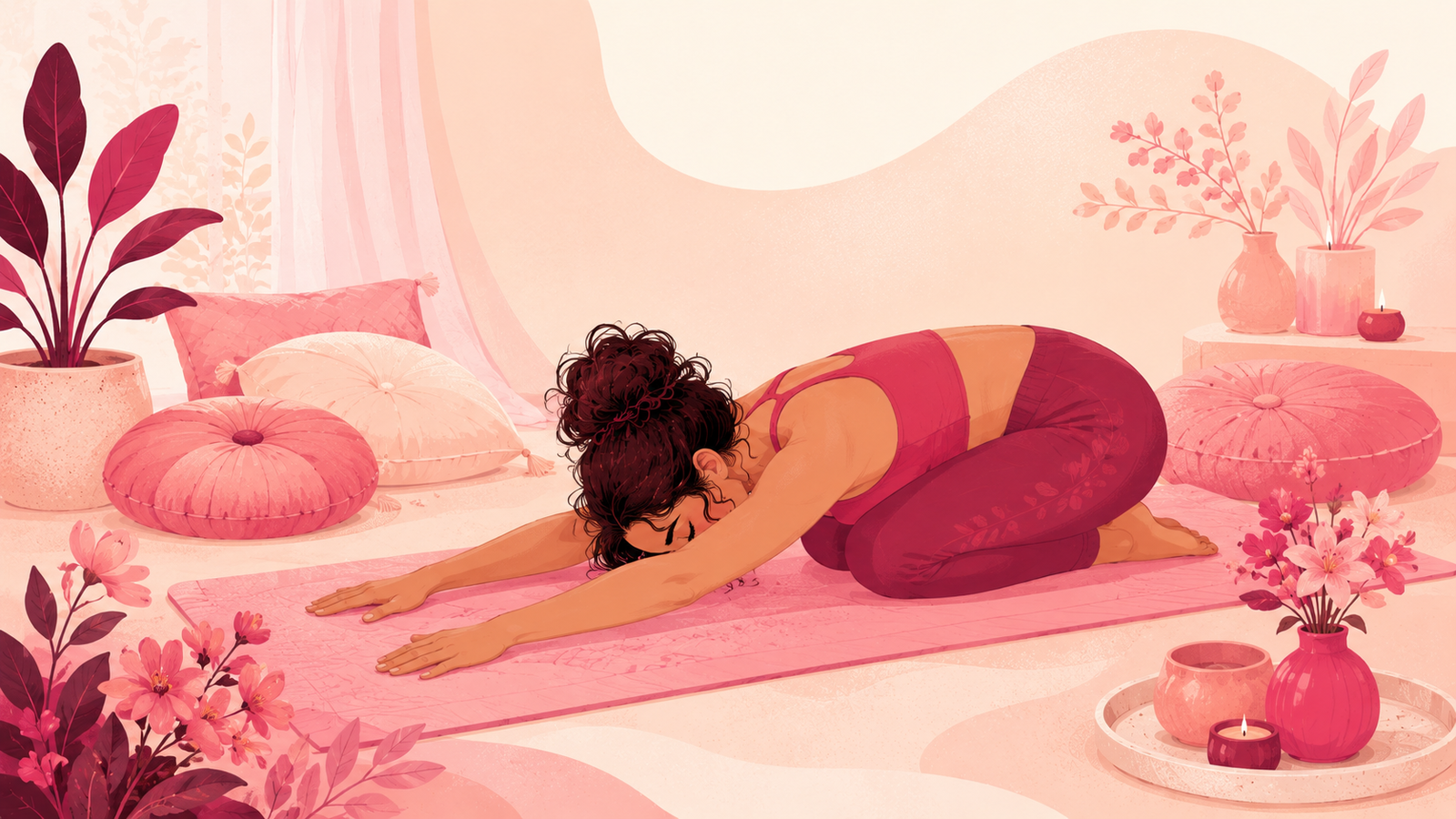
Your body is not a machine that produces the same output every day. Across a typical menstrual cycle, hormones shift, body temperature changes, sleep quality wobbles, and your nervous system spends some weeks more wired and some weeks more tender. Low energy days are a normal part of that pattern. They show up most often in the days right before your period and on heavy bleeding days, but they can also appear elsewhere in your cycle depending on stress, sleep, illness, and life load.
Why Low Energy Days Are Normal
The cultural script around fitness still tells you to push, grind, and earn your rest. That script does not match the lived reality of a body with a cycle. Honoring a low energy day with adjusted movement is not laziness. It is good training, good self respect, and often what lets you have stronger sessions when your energy is actually there.
If you are using or considering Flow and Glow to track your cycle, low energy days are exactly the kind of pattern worth logging. Over a few months you will likely see clusters of low energy showing up around the same cycle days, which gives you something concrete to plan around instead of guessing.
What Counts As A Low Energy Day
There is no single test, but there are reliable signals. A low energy day usually shows up as a mix of these.
Physical Signals
You wake up heavy. Stairs feel harder than they did three days ago. Your warm up that usually takes five minutes now needs ten, and you still feel slow. Your heart rate is higher than normal for the same effort. Your muscles feel achy without a reason. You feel slightly puffy, bloated, or tender in your breasts and lower belly.
Emotional Signals
You feel flat, irritable, or close to tears for reasons that do not match the day. Small obstacles feel huge. You want to bail on plans you usually enjoy. Your motivation is lower than your usual baseline, even after coffee, food, and decent sleep.
Sleep And Recovery Signals
You slept the usual number of hours but woke up unrested. You needed an extra nap. You went to bed earlier than normal and still felt tired. Cravings spiked. Caffeine helped less than usual.
If two or three of those signals are on for you, treat that day as a low energy day and reach for the movement menu below instead of your normal plan.
The Energy Audit Before You Train
Before any workout on a possible low energy day, run a 60 second audit. Sit down, breathe slowly, and rate four things on a simple zero to ten scale.
- Sleep quality last night
- Mood right now
- Body pain or tenderness
- Motivation for the planned session
If your average across those four is six or higher, your normal plan is likely fine, possibly with small tweaks. If your average is between four and six, scale down. If your average is below four, swap to the gentlest option on the menu, or take a true rest day. This is not a perfect formula. It is a way to interrupt the autopilot urge to do exactly what was planned, regardless of how you feel.
The Low Energy Movement Menu
Think of movement on these days as a menu, not a prescription. You pick what fits, you stop when you have had enough, and there are no extra points for grinding.
Walking
A slow to moderate walk is one of the most underrated tools for low energy days. Twenty to forty minutes outside, in daylight if possible, gives you light cardio, mood support, fresh air, and a sense of accomplishment without spiking stress hormones. If you usually power walk, go slower. If you usually run, walk and let the run wait two days. Walking with a friend can also help if isolation makes the day worse.
Gentle Yoga And Mobility
Slow flow yoga, restorative yoga, and basic mobility sessions all work well here. Skip strong twists if your belly feels tender. Skip inversions if you feel dizzy or nauseous. Focus on hips, lower back, shoulders, and breath. A 15 to 30 minute session is plenty.
Good poses to lean on include child's pose, cat cow, supported bridge, gentle reclined twists, supine figure four, and a long savasana with a pillow under your knees. The goal is to feel a bit looser and calmer when you finish, not sweaty or smashed.
Slow Strength Or Bodyweight
If you have some energy but not enough for a full lifting session, a short slow strength block can still feel good. Three to five exercises, two to three sets each, lighter loads, longer rests. Goblet squats, hip bridges, dumbbell rows, presses with light weight, and slow step ups all work. Keep your heart rate in a conversational zone. Stop when the bar starts to feel heavy in a different way than usual, not heavier in the productive sense.
Easy Cardio
Steady state cardio at a low intensity can lift mood without taxing you. Think a bike ride at a chatty pace, a swim with no intervals, or an elliptical session where you can still breathe through your nose. Twenty to thirty minutes is a fine target. If you start to feel worse instead of better, end the session.
Pure Rest
Rest is a complete option, not a fallback. Going to bed early, taking a long bath, lying on the floor for ten minutes with your eyes closed, or simply not doing the workout are valid choices. Your training plan is allowed to bend around your body. A rest day during a heavy bleed or a rough PMS day is usually paid back with a better session later in the week.
Working With Cramps
Period cramps are one of the most common reasons people skip movement and one of the most common reasons people benefit from movement. Both can be true. The trick is matching the kind of cramps you have to the kind of movement that helps.
For mild to moderate cramps, gentle movement often eases them. Slow walking, deep breathing, hip mobility, child's pose, and reclined butterfly are reliable picks. Warmth helps a lot. A heating pad on your lower belly or lower back before and after movement can ease the muscular tension that cramps create. Hydration matters too. Dehydration can make cramping feel worse.
For severe cramps that stop you in your tracks, intense workouts are not the answer. Forcing a hard session through pain usually does not produce a training effect, just stress. Choose rest, gentle stretching, heat, and food you actually want to eat. If pain regularly interferes with daily life, school, or work, talk to a clinician. Cramps are common, but cramps that consistently take you out are worth investigating.
You can read more about why some period cramps feel sharper as you move through your twenties, and what factors might make them shift over time.
Heavy Flow Days: Practical Adjustments
Heavy bleeding days bring their own physical reality. You may be losing more iron than usual, your blood volume can feel different, and you may simply feel less stable. Smart adjustments matter more than willpower.
Keep sessions shorter. Forty five to sixty minutes can become twenty to thirty. Drop intensity by a clear notch. If you would normally lift heavy, lift moderate. If you would normally run, walk or jog. Wear period protection that you trust and have backup with you. A change of leggings in your gym bag costs you nothing and removes a stressor.
Eat before you train, even just a small carb plus protein snack. Hydrate well. Watch for dizziness, lightheadedness, or unusual breathlessness. If those show up, stop, sit down, sip water, and rest. Standing back up too fast on a heavy day is a quick way to feel awful.
If your flow is so heavy that you are soaking through a tampon or pad every hour for several hours, passing very large clots, or feeling faint, talk to a clinician. That is not a personality flaw or low pain tolerance. It is information your body is sending you.
For more day to day choices on what to actually do during your bleed, the best workouts during your period breakdown goes deeper.
PMS Week: Planning Around The Dip
The week or so before your period is when many people feel the biggest energy and mood shifts. This is the luteal phase, and for some it brings bloating, breast tenderness, food cravings, sleep disruption, low patience, and a general sense that everything is just harder.
Movement still helps during PMS, but it usually feels better at a softer intensity. Heavy lifts, long high intensity sessions, and big group classes can feel grating. Steady walks, light to moderate strength, easy cardio, and yoga tend to land better. You may also notice that you sleep worse the week before your period, which feeds the fatigue. Working on sleep before your period often does more for your training energy than tweaking the training itself.
Mood support is a real reason to move during PMS, even if energy is lower. A short walk in daylight, a gentle yoga flow, or a friendly low intensity class can shift a tough afternoon. The key is to lower the bar. Movement during PMS does not have to be impressive. It just has to happen at a level that does not crush you.
For a deeper look at planning sessions across this part of the cycle, see luteal phase workouts.
Signs To Stop Or Scale Back Mid Workout
Even with a good plan, your body can surprise you. Knowing when to bail is a skill, not a failure.
Stop the session or scale back hard if you feel:
- Lightheaded, dizzy, or close to fainting
- Sudden severe cramping, sharper or different than your usual
- Sudden gushing of blood that is much heavier than your normal pattern
- Sharp pain in your back, side, or pelvis that does not ease with rest
- Nausea that gets worse with movement
- Heart racing or pounding far beyond what the effort should cause
- Cold sweat, clammy skin, or trembling
- Chest pain or trouble breathing at rest
Most of those are signals to rest, eat, hydrate, and check in with how you feel later. Some, like chest pain, severe sudden pain, or fainting, deserve same day medical attention. Trust your gut. Walking out of a session is allowed.
How Tracking Changes The Way You Plan
A cycle tracker is not magic. It does not predict your future moods or your perfect workout schedule. What it can do is give you patterns. After two or three months of honest logging, you can start to see things like:
- A regular dip in energy three to five days before your period
- A specific window where your sleep gets worse
- A predictable day or two of stronger cramps
- A high energy stretch around mid cycle when harder sessions land easier
- A pattern of low mood that responds to walking better than to high intensity
Once you can see these patterns, your training calendar starts to look different. You stop scheduling your hardest sessions on the days you are statistically most likely to crash. You stop wondering why you fell apart in a workout that should have been fine. You give yourself an honest framework instead of a guilt loop.
This is not about cycle syncing as a strict rule book. Hormones are one input among many, alongside sleep, stress, nutrition, life events, and training history. The point is to use your own data to make better, kinder choices.
Building A Low Energy Routine You Actually Follow
The best low energy routine is one you will use when you are tired, not one that looks good on paper.
Keep It Boring
A simple repeatable menu beats a clever new program every cycle. Pick one walk you like, one yoga session you trust, one short strength routine you can do at home, and one cardio session you can do without thinking. Save them somewhere you can pull them up in 30 seconds. When your energy is low, decision making is also harder. Pre decide.
Lower The Threshold To Start
Promise yourself ten minutes. If after ten minutes you want to stop, you stop with full permission. Most of the time, momentum will carry you a bit further. Sometimes you really will stop at ten, and that is still a win. The friction to start is usually the hardest part of a low energy day.
Pair Movement With Comfort
Soft clothes, a warm shower after, a heating pad, a drink you like, a podcast or playlist you love, a comfortable mat, a window cracked open for air. The comfort layer is not optional. It is what makes the routine sustainable when your body is asking for gentleness.
Track Honestly
Note what you did, how you felt, and how you slept after. Do not edit for the version of yourself you wish you were. Real data is what makes future planning useful. If you did ten minutes of stretching and a slow walk, log that. If you rested all day, log that too. Rest is data.
Forgive The Off Weeks
Some cycles will be smoother than others. A stressful week, a bad cold, a sleepless stretch, or a particularly rough PMS round can throw your plans off. The cycle after often goes better. Long term consistency matters more than any single week of perfect adherence.
Nutrition And Hydration Notes For Low Energy Days
This is not a meal plan, just a few practical touches that change how movement feels.
Eat enough. Skipping meals on a low energy day is rarely the move. A real meal with carbs, protein, fats, and some color on the plate tends to lift the floor. If you are bleeding heavily, iron rich foods like beans, lean meats, eggs, leafy greens, and fortified grains are useful. Pair iron rich foods with vitamin C sources for absorption.
Hydrate. Aim for water across the day, not all at once. If you are sweating, add electrolytes. Caffeine is fine in moderation, but a heavy caffeine load on an already wired PMS day can amplify anxiety and sleep problems.
Watch alcohol the night before low energy days. It worsens sleep and can crank up next day fatigue, even in small amounts. If a rough PMS day is coming up, an alcohol free evening tends to help more than it costs.
A Sample Low Energy Week
This is one example, not a prescription. Adjust it to your cycle, your job, your sleep, and your goals.
Day One: First Day Of Period, Heavy Flow
Sleep in if you can. Slow walk for 20 to 30 minutes in daylight. Restorative yoga, 15 to 20 minutes, focused on hips and lower back. Heating pad. Earlier bedtime.
Day Two: Still Heavy, Cramps Easing
Easy bike ride or treadmill walk, 30 minutes, very conversational pace. Optional five to ten minutes of gentle stretching after. Skip lifting if it does not feel right.
Day Three: Lighter Bleeding
Short strength session, 20 to 25 minutes, lighter than usual. Squats, hinges, a push, a pull, a core finisher. Stop two reps short on every set. Walk after dinner.
Day Four: Flow Tapering
A normal yoga class or walk plus mobility. You might feel close to your usual self. Do not jump back to your hardest workout yet. Build the bridge.
Day Five: Reassess
If energy is genuinely back, return to your regular plan. If not, repeat a day three style session and try again tomorrow. There is no medal for rushing the comeback.
When To Talk To A Clinician
Movement is not a substitute for medical care. Bring concerns to a qualified clinician when:
- Pain is severe, regular, and not relieved by usual measures
- Bleeding is heavy enough to disrupt daily life or cause faintness
- Periods are missing, much longer, or much shorter than your normal pattern
- You have signs of infection, like fever with pelvic pain
- You suspect pregnancy or have pregnancy related concerns
- You have new or unusual symptoms during exercise, like fainting or chest pain
- You feel that something is off, even if it is hard to describe
You know your baseline. A new pattern that worries you is reason enough to ask for help.
Article information
- Written by Jessica Morrison, MS in Health Communication, CHES
- Medically reviewed by Dr. Maya Patel, MD, MPH
- Published on June 9, 2026
- Updated on October 7, 2026
Key takeaways
- Low energy is a normal feature of certain cycle days, not a personal failure.
- A simple energy audit before training beats sticking to a rigid plan no matter what.
- The movement menu can scale from full rest to light strength based on how you feel.
- Cramps often respond well to gentle movement, heat, hydration, and slow stretching.
- Heavy flow days call for shorter sessions, easier intensity, and good fueling.
- Tracking your cycle helps you plan ambitious training during higher energy windows.
- Severe pain, fainting, or very heavy bleeding deserves a clinician visit, not more pushing through.
Frequently asked questions
Should I work out if I have cramps?
Mild to moderate cramps often improve with gentle movement, especially walking, slow yoga, and hip mobility. Heat, hydration, and slow breathing add support. If cramps are severe enough to stop you from doing daily tasks, rest and care are the better choice, and recurring intense pain deserves a clinician's input.
How long should a low energy workout be?
Anywhere from 10 to 40 minutes works for most people. Shorter sessions on heavy or painful days, slightly longer on PMS days when steady walking or easy cardio can lift mood. The point is to feel a little better after, not depleted.
Is it bad to exercise during my period?
It is not bad. For most people, gentle to moderate exercise during the period is fine and often helpful. Match intensity to how you feel. Heavy bleeding days usually call for shorter, easier sessions, while later lighter days can tolerate normal training.
What is the best workout when I feel bloated and tired?
Walking, gentle yoga, mobility work, and easy steady cardio are the most reliable picks. Skip heavy lifting and high intensity intervals on these days. Aim for movement that leaves you feeling looser and calmer rather than smashed.
How does PMS affect strength training?
PMS can lower energy, mood, sleep quality, and tolerance for high intensity. Strength training still works, but lighter loads, longer rests, and shorter sessions often feel better. Save personal bests for higher energy windows in your cycle.
Can tracking my cycle really help me plan workouts?
It can. Tracking gives you patterns over time, which lets you place harder sessions on days when your energy tends to be higher and softer sessions on days when it tends to dip. It does not predict the future, but it does reduce guesswork.
When should I stop a workout entirely?
Stop if you feel faint, dizzy, suddenly nauseous, or hit with sharp new pain. Stop if bleeding suddenly becomes much heavier than your normal pattern. Chest pain, severe sudden symptoms, or fainting deserve same day medical attention.
References
- ACOG. Dysmenorrhea: painful periods Source
- Office on Women's Health. Premenstrual syndrome Source
- NHS. Exercise Source
- Cleveland Clinic. Exercising on your period Source
- Armour, M., et al. (2019). Exercise for dysmenorrhea Source
- McNulty, K. L., et al. (2020). Menstrual cycle phase and exercise performance Source
Editorial and medical disclaimer
Flow & Glow health content is educational and is not a substitute for diagnosis, treatment, or personal medical advice from a qualified clinician.
Our editorial standards, reviewer process, sourcing approach, and correction process are explained in the Editorial Policy. You can also review our authors and medical reviewers, healthcare professional information, contact page, and privacy policy.