Brown Period Blood Clots: What Old Blood and Texture Can Mean
Brown period blood clots often signal older blood or slower flow. Learn when texture and timing matter, red flags to watch, and how to track gently.
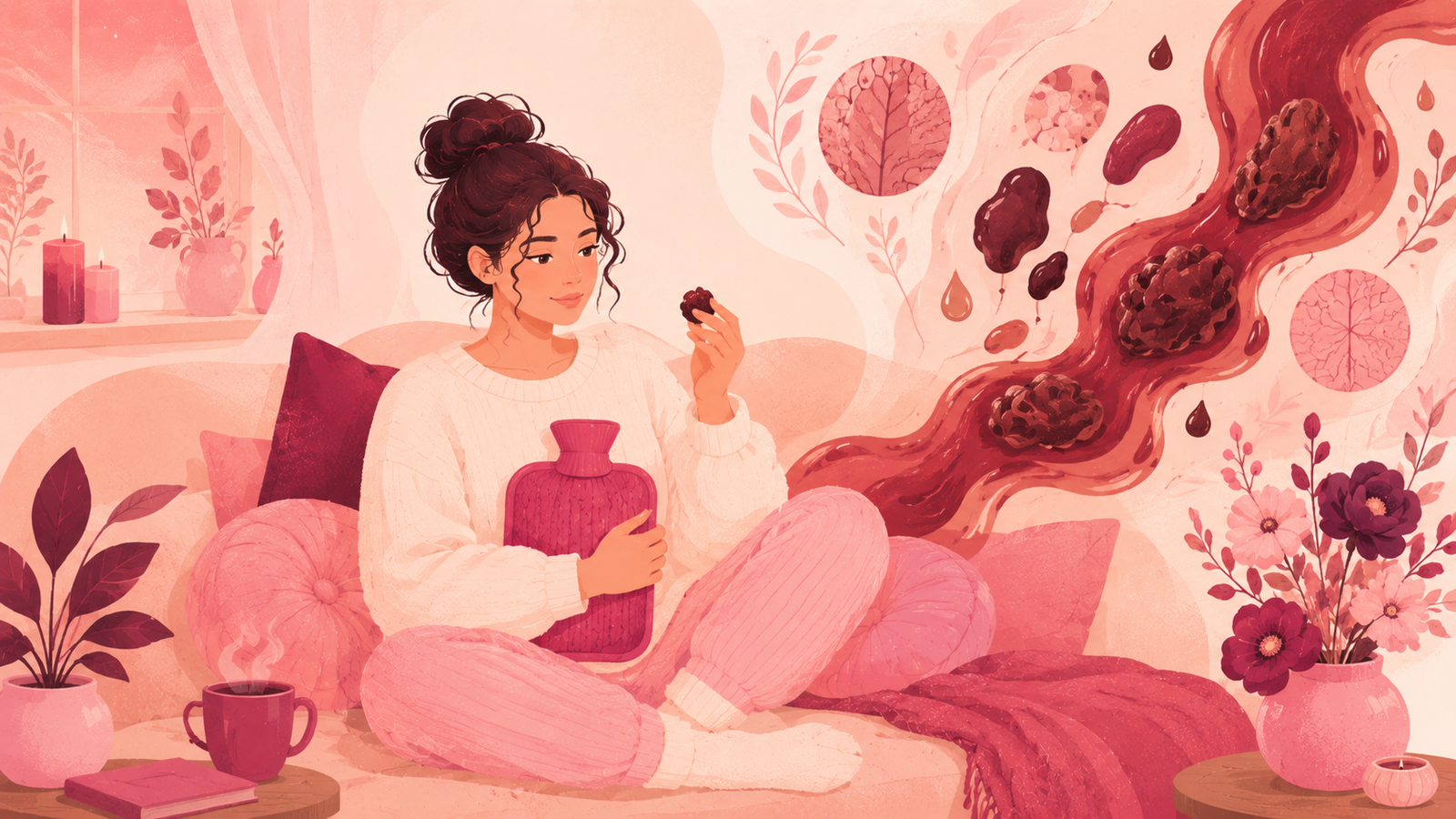
Seeing brown blood or thick clots during your period can feel jarring, especially if the color and texture look different from what you are used to. Most of the time, the shade of your flow and the little jelly like pieces you spot on a pad or in the toilet have a calmer explanation than the internet would suggest. Brown often points to older blood that took a slower path out of your uterus. Clots often reflect the pace and volume of a specific flow day.
At the same time, brown period blood clots are not always harmless. Some patterns can hint at hormonal changes, structural issues in the uterus, thyroid shifts, medication effects, an early pregnancy, or another condition worth checking. The goal of this guide is to help you tell the difference calmly, decide what to track, and know when to book a visit.
What brown period blood clots actually are
Period blood is not just blood. It is a mix of blood, tissue from your uterine lining, mucus, and other fluids that shed each month when pregnancy does not occur. The color and texture change through your cycle for reasons that are largely about time, temperature, and volume.
Why blood turns brown
Fresh blood is bright red because it carries a lot of oxygen. When blood sits inside the uterus or vagina longer, it reacts with oxygen and slowly oxidizes. That process darkens it from bright red to deep red to brown, and sometimes almost black. Brown period blood is often the same blood you would see as red on a heavier day, just older by the time it leaves your body.
Slower flow is one of the main reasons blood has time to change color. Toward the beginning or end of your period, when your uterus is releasing less at a time, blood may linger before it makes its way out. If you want to explore what different shades can suggest across the cycle, this closer read on what your period color actually tells you is a useful companion to this article.
Why clots form
Your body has a built in balance between clotting and thinning. During your period, your uterus releases a natural anticoagulant that helps blood flow out smoothly. On heavier days, the anticoagulant can be outpaced by the volume, and some of the blood clots on the way out. That is why clots are more common when your flow is heaviest, often on day one or day two.
Clots are usually a mix of blood cells and the fibers that form when blood coagulates, sometimes with strands of uterine lining. They can look jelly like, dark red, brown, or almost black. Small clots up to about the size of a grape are usually within the normal range on heavy days. Very large clots, especially if they show up often, are worth mentioning to a clinician.
When brown clots are more likely to be old blood
Not every dark spot needs deep worry. Certain timing and life patterns make old blood a more likely explanation. That said, no single rule fits every body, so tracking helps you know what is normal for you.
At the very start of your period
Some people notice a day or so of light brown spotting before the flow really begins. That can be the first bits of the shedding lining making their way out slowly. It is often followed by a red, heavier day as flow picks up speed.
At the end of your period
The tail of a period is a classic time for brown blood and small clots. As bleeding slows, the last of the blood and tissue takes longer to leave. Whatever is left has more time to oxidize on the way out. Brown discharge that tapers over a day or two at the end of your bleed is very common.
After a lighter cycle overall
Some cycles are simply lighter than others. Stress, sleep, travel, weight changes, and hormonal contraception can all shift how much lining builds up in a given month. A lighter cycle can look darker overall because there is less volume to push blood out quickly.
After a pause or gap in flow
A break in bleeding of a day, followed by a resumption, can bring darker blood at the restart. Blood that sat in the uterus or upper vagina during the pause often shows up brown when it finally leaves.
After sex, exercise, or a change in position
Movement can shift blood that was pooling. If you notice a brown clot after standing up, exercising, or having sex, it may simply be blood that was resting somewhere finally making its way out.
To help sort what you are seeing, keeping brief observations in one place is worth the small effort. Simple notes save time later, and a short read on what to log in your period tracker shows exactly what is worth writing down.
When brown clots may need a closer look
Not every brown clot points to old blood. Some patterns hint at other things happening in the body, and they are worth understanding without jumping to conclusions.
Heavy flow with clots
If you are soaking through a pad or tampon every hour or two for several hours in a row, or passing clots larger than a quarter often, that is more than a heavy day. It can be a sign your body is losing more than it should. Very heavy periods can lead to low iron and fatigue over time, and they can point to fibroids, polyps, hormonal imbalance, or other conditions. If this feels familiar, a broader look at when period clots are normal and when they are not offers more context.
Foul smell or unusual discharge
Period blood has its own scent, but it should not be strongly foul or rotten. A very unpleasant odor, especially combined with itching, burning, unusual discharge color, or fever, can suggest an infection that deserves prompt care. This is not something to wait out.
Pain that stops you
Cramps are common, but pain that keeps you from work, school, sleep, or basic activities is not the price of being alive with a uterus. Sharp, one sided, or severe pain, especially with brown or heavy bleeding, deserves a conversation with a clinician. It can be linked to endometriosis, ovarian cysts, fibroids, or other issues that respond well to being taken seriously.
Bleeding when you did not expect it
Brown spotting or clots between periods, after sex, or long after a period has ended can point to hormonal shifts, polyps, infection, or pregnancy related bleeding. If there is any chance you could be pregnant, brown spotting or clots are not something to dismiss as old blood without at least a pregnancy test.
Bleeding that outlasts your usual pattern
Periods that keep going past seven days, or brown bleeding that lingers for a week or more, are worth checking. If you are unsure what typical length even looks like, this piece on how long a period should last and when it is too long is a helpful starting point.
A quick comparison table
The following table is a starting point, not a diagnosis. Bodies vary and patterns matter more than any single symptom.
| What you see | More likely old blood or normal flow | Worth a closer look |
|---|---|---|
| Brown spotting at start of period | Often the first lining shedding | If it lasts many days without a real period following |
| Brown blood at end of period | Common as flow tapers | If it stretches well past a week |
| Small clots on a heavy day | Up to about grape size can be typical | If clots are larger than a quarter often |
| Occasional dark clot with cramps | Often normal | If pain is severe or one sided |
| Brown blood between periods | Can be hormonal | With pregnancy possibility, pain, odor, or fever |
| Very heavy flow with clots | Not typical | Soaking through in an hour or passing very large clots |
| Foul smell with brown blood | Not typical | With fever, discharge, or pelvic pain |
What to track when you see brown clots
Numbers and patterns matter more than any single day. Track calmly for one or two cycles and you will have real information to share if you ever need to. This is where an app comes in handy, and Flow & Glow is designed to make daily logging fast and gentle rather than clinical.
Flow amount
Note whether you are spotting, light, medium, heavy, or very heavy each day. A rough way to think about it is how often you change protection. If you rarely need to change a pad or tampon, that is light. If you are changing every one to two hours, that is heavy.
Clot size and frequency
Approximate size beats precise measurement. Use everyday references such as pea, dime, grape, or quarter. Note how many clots you notice on a given day and whether they are dark red, brown, or nearly black.
Timing within your cycle
Note where in your cycle brown blood or clots appear. Beginning, middle, end, between periods, after sex, after exercise, or at random moments. Timing helps sort likely explanations quickly.
Other symptoms
Cramps, pain level, back ache, headache, mood, breast changes, dizziness, and unusual fatigue all connect to what is happening in your cycle. Even short notes help you see patterns that would be easy to forget by the next month.
Life context
Stress, sleep, travel, new medication, contraception changes, illness, and big shifts in weight or exercise can all move your cycle around. A quick line about anything unusual gives you and any clinician a fuller picture without you having to remember it later.
Red flags that call for care
Brown period blood clots are usually not an emergency, but the following symptoms are reasons to reach out to a clinician promptly, and in some cases urgently.
- Soaking through pads or tampons every hour for two hours or more
- Passing clots larger than a quarter often
- Feeling dizzy, faint, weak, or short of breath during your period
- Fever, chills, or feeling unwell alongside heavy or brown bleeding
- Foul smelling discharge, unusual color discharge, or pelvic pain
- Any bleeding if you might be pregnant or have recently given birth or miscarried
- Severe or one sided pain that will not ease with usual measures
- Sudden change from your normal pattern that continues for more than a cycle or two
- Any bleeding after menopause
- Bleeding that simply feels wrong or unsafe to you
Trust yourself on that last one. If something feels off, that is enough of a reason to call.
Possible reasons behind brown clots beyond old blood
When brown clots keep showing up or come with other symptoms, several things can be worth exploring with a clinician. This section is not a diagnosis but a map of what conversations may cover.
Hormonal shifts
Estrogen and progesterone shape the buildup and shedding of your uterine lining. When they are out of balance, bleeding patterns often shift. New contraception, coming off contraception, perimenopause, postpartum recovery, breastfeeding, and thyroid changes can all shape flow color and clotting behavior.
Fibroids and polyps
Fibroids are noncancerous growths of muscle in the uterus. Polyps are small growths of the lining. Both can cause heavier periods, longer bleeding, clots, and sometimes spotting between periods. They are common and often manageable, but they usually need imaging to identify with confidence.
Thyroid changes
An underactive or overactive thyroid can influence period length, heaviness, and regularity. Very heavy bleeding, unusually long cycles, or new patterns of brown clots can sometimes have a thyroid component in the background.
Bleeding conditions
Some people have bleeding disorders that make heavy periods more common. If heavy bleeding, easy bruising, frequent nosebleeds, or a family history of bleeding issues sound familiar, it is worth mentioning to a clinician even if you are managing the periods on your own.
Medication effects
Blood thinners, some hormonal medications, certain antidepressants, and other prescriptions can influence bleeding. Copper intrauterine devices can make periods heavier for some people, especially in the first few cycles. Hormonal intrauterine devices often make periods lighter and browner.
Infection possibilities
Pelvic infections can bring unusual discharge, odor, pain, and changes in bleeding. If bleeding is paired with fever, foul smell, or pelvic tenderness, an infection is worth ruling out promptly.
Pregnancy related bleeding
Brown spotting, dark clots, or unusual bleeding can be linked to early pregnancy, implantation, miscarriage, or ectopic pregnancy. If pregnancy is even a small possibility, a pregnancy test is a reasonable first step, and any pain, dizziness, or heavy bleeding with a possible pregnancy is a reason to seek care quickly rather than to wait.
How Flow & Glow helps you track brown clots
Trackers turn scattered observations into useful information. Instead of trying to remember what your last three cycles looked like, you have a soft record to look back on. The app was designed with that everyday reality in mind, so logging is quick, private, and gentle rather than clinical.
You can note flow level, clot size, color, cramps, mood, sleep, and life context in a few taps. Over time, you can see how a season, a new medication, or a stressful stretch shifts your cycle. If you ever bring notes to a clinician, patterns from real data are more useful than best guesses in the moment.
The point is not to obsess. It is to make small, kind observations of your body so you can tell the difference between a normal brown tail day and a pattern worth asking about.
When to check in with a clinician
You do not need to wait for a crisis to book a visit. Reasonable moments to check in include the following.
- Brown clots that are new to you and persist over more than a cycle or two
- Periods that grow heavier or longer than they used to be
- Bleeding between periods that repeats
- Any chance of pregnancy with unusual bleeding
- Signs of low iron such as tiredness, pale skin, breathlessness, or a racing heart
- Pain that limits daily life
- Bleeding after menopause of any amount
- Any pattern that scares you or leaves you unsure
A short appointment can bring clarity. In many cases, the answer is reassurance. When there is more to explore, catching it early is easier and kinder than waiting.
Article information
- Written by Flow & Glow Editorial
- Medically reviewed by Dr. Jennifer Martinez, MD, FACOG
- Published on July 1, 2026
- Updated on August 7, 2026
Key takeaways
- Brown color often points to older blood that took longer to leave your uterus
- Small clots can be a normal part of heavier flow days
- Timing matters most, brown clots are common at the start and end of a period
- Large clots, heavy soaking, dizziness, or severe pain call for care
- Foul odor, fever, or a chance of pregnancy need prompt attention
- Tracking flow, clot size, and symptoms helps you and your clinician see patterns
Frequently asked questions
Are brown period blood clots always old blood?
Not always. Brown color often points to blood that took longer to leave your body, but clots can also come from heavier flow days or from conditions that need a closer look. Timing, size, and other symptoms help sort likely explanations, and a pattern over two or three cycles tells you more than any single day.
Is it normal to have only brown blood, without any red?
A whole period that is only brown, especially if it is very light, can happen sometimes with stress, low estrogen, hormonal contraception, or a lighter cycle. If it becomes a regular pattern that is new for you, or if it comes with other symptoms, it is worth checking in with a clinician.
How big can a period clot be before it is a concern?
Small clots up to about the size of a grape are often within a normal range on heavier days. Clots larger than a quarter, especially if they show up frequently or come with heavy soaking, deserve a conversation with a clinician rather than a wait and see approach.
Can brown clots mean pregnancy?
They can. Brown spotting or clots in early pregnancy can be linked to implantation, hormonal changes, or complications such as miscarriage or ectopic pregnancy. If pregnancy is possible, take a test, and seek care for pain, heavy bleeding, dizziness, or bleeding that feels unusual.
Why do I get brown clots at the end of every period?
That is common. As flow slows near the end of your period, the last of the blood and tissue takes longer to leave and has more time to oxidize. Brown blood tapering off is often just your period wrapping up, especially when it settles within a day or two.
Should I worry about a strong smell with brown blood?
Period blood has its own scent, but a strongly foul or rotten smell is not typical. Combined with itching, unusual discharge, fever, or pelvic pain, it can suggest an infection and is a reason to seek care rather than to wait for the next period.
Can stress or diet change my period color?
Stress, sleep, weight changes, and diet can all affect hormone balance and flow. That can shift how heavy or light your cycle is and how much time blood takes to leave. It is one of many reasons a couple of months of gentle tracking can be so useful when you are trying to understand a new pattern.
References
- ACOG. Abnormal uterine bleeding Source
- NHS. Heavy periods Source
- Cleveland Clinic. Period blood color Source
- Mayo Clinic. Heavy menstrual bleeding Source
- Office on Women's Health. Your menstrual cycle Source
- NICE. Heavy menstrual bleeding assessment and management Source
- Heavy menstrual bleeding review Source
Editorial and medical disclaimer
Flow & Glow health content is educational and is not a substitute for diagnosis, treatment, or personal medical advice from a qualified clinician.
Our editorial standards, reviewer process, sourcing approach, and correction process are explained in the Editorial Policy. You can also review our authors and medical reviewers, healthcare professional information, contact page, and privacy policy.