Horny, Angry, and Crying Before Your Period? PMS Mood and Libido Explained
Wondering why you feel horny, angry, and weepy in the week before your period? A calm look at PMS mood and libido, with red flags and tracking tips.
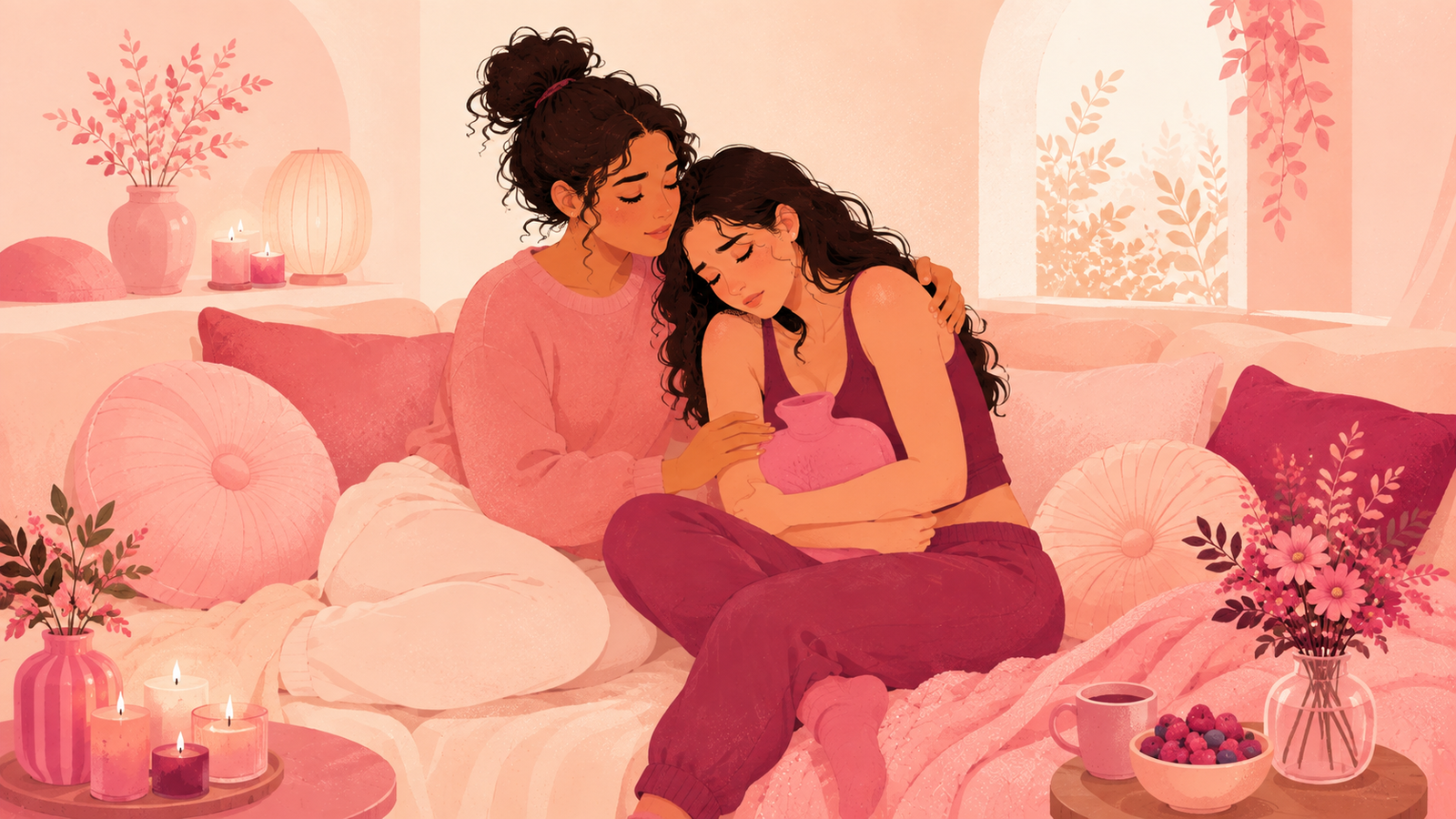
The week before a period can feel like three different people are sharing one body. One hour you want everyone to leave you alone. The next, you cannot stop crying at a dog video. By dinner, you are weirdly turned on and also annoyed at your partner for chewing. Nothing in your day actually changed. Your cycle did.
If you have ever wondered why you can feel horny, angry, and weepy in the same afternoon, this article is for you. The shorthand most people use for that window is PMS mood and libido, and it is one of the most misunderstood corners of the menstrual cycle. Pop content turns it into a punchline. Clinical pages can make it sound scary. The truth sits in between.
This is a calm walkthrough of what is happening in your luteal phase, why desire can rise or fall, why irritability and tears can travel together, what is normal, what is not, and when to ask for support. There are no promises about fixing your cycle in seven days. There is also no shame attached to feeling sharp, soft, and switched on in the same week. Your body is not malfunctioning. It is moving through a phase.
If a cycle tracker would help you see this pattern instead of guessing at it, Flow & Glow is built exactly for this kind of week. The rest of the article works on its own whether you use a tracker or not.
What This Pattern Actually Describes
The late luteal phase is the stretch of days between ovulation and your next period. For most cycles it lasts somewhere between ten and fourteen days, with the most noticeable symptoms often clustered in the final five to seven days before bleeding begins.
During this window, several things can happen at once. Energy can dip. Sleep can get patchy. Cravings can spike. Breasts can feel sore. Skin can break out. Bowels can change. Some people get a flu-like heaviness during this stretch, which is why the term period flu gets used so often. On top of that physical layer sits an emotional layer that is often louder than the physical one.
That emotional layer is the part this article focuses on. It is the part that makes a normal Tuesday feel impossible, and a small comment feel like a personal attack, and a sex scene in a TV show feel suddenly very interesting, and a sentimental ad make you sob.
The Luteal Phase In Plain Words
Think of the luteal phase as the body preparing for either pregnancy or a period. Whichever way it lands, the preparation involves changes to body temperature, breast tissue, gut motility, sleep architecture, and the nervous system's sensitivity to stress. Mood and desire ride those changes.
Pop culture often picks one symptom and turns it into the whole story. Real luteal weeks are usually a mix. You can feel sharp and soft on the same day. You can be turned on at noon and weepy at three. None of that means you are unstable. It means the phase is doing what it does.
Why The Same Person Can Feel Three Things At Once
Strong emotions in the luteal week tend to travel together because they share a nervous system that is more reactive than usual. The same heightened reactivity that makes a sad song feel sadder can also make a sexy thought feel sexier and a small irritation feel huge. The intensity is the common thread. The flavor depends on what shows up in front of you that hour.
That is also why luteal mood often looks bigger than the trigger that set it off. The trigger did not change. Your filter did.
Why You Might Feel Horny Before Your Period
Most people are told that the only horny week is the one around ovulation. That is true for some bodies, but not all. Plenty of people notice a second, quieter window of desire in the days right before their period. If that is you, you are not unusual.
A Late-Cycle Desire Spike Is A Real Pattern
In the late luteal phase, some people report higher arousal, more interest in solo or partnered sex, more sensitivity to touch in a way that feels good rather than overwhelming, and stronger fantasies. There is no single agreed explanation for why this happens. Possible factors discussed in clinical guidance include shifts in blood flow to the pelvis, changes in skin and breast sensitivity, and emotional release patterns that pair stress with seeking pleasure.
The honest version is that the cycle changes things, and desire is one of the things that can change. If you only ever wanted sex during ovulation week, you would not be the only one. If you only ever wanted sex in the days before your period, you would not be the only one either.
Why Desire Can Feel Different Than Mid-Cycle
Mid-cycle desire often feels outward-facing and energetic. Late-luteal desire can feel different. It can feel slower, more inward, more about being held or being touched than about going out. Some people describe it as needier or more emotional. Some describe it as more raw.
If you have a partner, this is useful to share. The mid-cycle and late-luteal versions of "I want you" can mean very different things, and both are valid.
When Higher Desire Is Just A Pattern, Not A Problem
Higher libido before a period is not a symptom that needs fixing. It is a piece of data about your cycle. If it does not interfere with your life, you do not need to do anything about it. You can simply notice it, plan around it if you want to, and use it as one more clue about where you are in your cycle.
When Lower Desire Is Also Normal
The opposite is also extremely common. Many people feel less interested in sex in the days before their period, find touch uncomfortable, or want to be alone. That is just as valid as a desire spike. If you flip between the two from cycle to cycle, that is also normal. There is more on the touch-averse side in the article on not wanting to be touched before your period.
Why You Might Feel Angry Before Your Period
Anger is one of the most underdiscussed PMS symptoms. People are more willing to talk about sadness or anxiety than rage. The truth is, irritability and anger are some of the most reported premenstrual symptoms in clinical surveys.
The Difference Between Irritability And Rage
Irritability is the low-level version. Everything is mildly annoying. The kitchen feels too loud. Your phone notifications are too bright. The person you love most chews like they are doing it on purpose.
Rage is the bigger version. Something small happens, and the reaction is huge. You snap. You slam a drawer. You say something you would not normally say. Five minutes later you feel awful and confused about where that came from.
Both are common in the late luteal week. Both are real. Neither means you are a bad partner or a bad person.
How Anger Shows Up Physically
Premenstrual anger often comes with physical signs that match a stress response. Tight jaw. Tight chest. Shallow breathing. A hot feeling behind the eyes. A sense that you need to move, leave the room, or get away from a sound.
Recognizing the physical signs early is useful. It gives you a window to step outside, drink water, eat something, or text someone safe before the wave gets bigger.
When Conflict Sensitivity Spikes
A subtler version of luteal anger is conflict sensitivity. You are not raging. You are just much more likely to read a neutral text as cold, a question as criticism, or a delay as rejection. If you find yourself drafting long defensive replies to messages that did not actually attack you, the late luteal week is a likely culprit.
This is also why some people instinctively cancel plans, avoid heavy conversations, or postpone big decisions in the days before their period. That instinct is often correct.
Why You Might Feel Like Crying For No Reason
Crying in the luteal week is usually not about the trigger. It is about the threshold. The trigger that pushes you over the edge could be a movie scene, a memory, a tired evening, or absolutely nothing you can name. The threshold to tears is just lower.
Sudden Tears, Heavier Lows, And Sadness That Lifts
Premenstrual sadness has a specific shape for many people. It comes on fast. It feels heavy. It can include thoughts that feel very true in the moment, such as "nothing is working" or "no one likes me." And then, a day or two into bleeding, it tends to lift on its own.
That lift is one of the most important clues. If your low mood lifts within the first few days of your period, it is most likely a premenstrual pattern. If it does not lift, or it keeps coming back at other points in the cycle, that is information for a clinician.
When Crying Is A Release Versus A Warning Sign
A cry that ends with you feeling lighter is not usually something to worry about. A cry that ends with you feeling worse, hopeless, or unsafe is different. The first is part of the luteal week for many people. The second deserves attention.
This is one of the situations where keeping notes across more than one cycle matters. Two heavy cries in the same luteal phase across three cycles is a pattern. One bad day this month is just a day.
Why All Three Can Happen In The Same Week
A common worry is, "If hormones are doing this, why am I horny and angry and sad? Shouldn't I just be one of those?" Not really. The luteal phase does not push one button. It changes the gain on the whole emotional system. Whichever feelings show up land harder.
Picture turning up the volume on a speaker. The music does not change. It just gets louder. That is closer to how the late luteal week works on mood. Funny gets funnier. Sad gets sadder. Aroused gets more aroused. Annoyed gets a lot more annoyed.
So a Tuesday where you cry at a sad email, get unreasonably angry at a coworker, and then feel turned on watching a totally average TV scene is not three contradictions. It is the same volume knob with three different songs hitting it.
Things That Make The Luteal Week Feel Heavier
PMS is not just hormones. The week is a stress test of everything else in your life. A few specific things tend to push the luteal week from manageable to overwhelming.
Sleep Debt
Sleep often gets choppier in the late luteal phase. Body temperature shifts, you can wake up more during the night, and dreams can get vivid. If you go into that week already under-slept, mood and desire can both take a hit. A look at how the cycle shapes sleep before period is a useful companion to this article.
Caffeine, Alcohol, And Skipped Meals
Caffeine on an empty stomach in the late luteal week can mimic a panic response. Alcohol can pull sleep apart on a night where sleep is already fragile. Skipping meals can make the blood-sugar dips feel emotional rather than physical. None of these have to be banned. Noticing how they land in this specific week is what matters.
Stress Overflow From The Rest Of The Month
If you are running hot all month, the luteal phase is where it will probably show up. The phase does not invent stress. It uncovers the stress that was already there. A week of late nights, a difficult work stretch, an unresolved conflict, or grief can all sit quietly during the follicular weeks and then arrive loudly in the luteal week.
Other Body Signals That Travel With Luteal Mood
Mood and libido do not move alone. The same days can bring cravings, breast tenderness, headaches, bloating, and gut changes. For the cravings layer in particular, see PMS cravings. For the anxious edge that often joins the mood and libido picture, see anxiety before period.
PMS Versus PMDD
Most people who experience the kind of week described above are dealing with PMS. PMS is common and very normal. The mood and physical symptoms come up in the late luteal phase and ease within a few days of bleeding. It is uncomfortable. It is not, by itself, a disorder.
Premenstrual dysphoric disorder is a more severe condition. It involves the same luteal-phase timing, but the emotional symptoms are intense enough to disrupt work, relationships, school, or safety. Sadness can feel hopeless. Anger can feel uncontrollable. Anxiety can feel constant. The symptoms still tie to the cycle, but the size of them is different.
The distinction matters because the path forward can look different. Many PMS weeks can be helped with lifestyle support, tracking, and gentle planning. PMDD often benefits from clinical care, including therapy and sometimes medication. Neither version is your fault.
How Severe Is "Severe"
Severe, in clinical guidance, usually means the symptoms get in the way of normal life on a regular basis. That can include calling out of work in the luteal week, ending relationships you later regret ending, struggling to care for yourself or your kids, or having thoughts of self-harm. If any of that is in the picture, this is worth bringing to a clinician.
Red Flags To Take Seriously
A few signs deserve attention rather than wait-and-see:
- Sadness that feels hopeless rather than just heavy.
- Panic attacks that did not used to happen.
- Thoughts of self-harm or suicide, at any intensity.
- Symptoms that do not lift within a few days of bleeding.
- Symptoms that have suddenly gotten much worse in recent cycles.
- Cycle pain or bleeding that changed sharply alongside the mood changes.
Any of these is a reason to talk to a healthcare professional. If you are in crisis or thinking about hurting yourself, please contact a local emergency line or a trusted person right now.
Tracking The Pattern Without Pathologizing It
The most useful thing you can do during a confusing luteal week is also one of the simplest. Write things down. Not in a panic-diary way. In a notice-the-shape way.
What To Log
A few things tend to matter most for the mood-and-libido picture:
- Cycle day or estimated cycle day.
- Mood, in a few words rather than a single number.
- Desire and any notable shifts in it.
- Sleep length and sleep quality.
- Cramps, headaches, breast tenderness, gut changes.
- Conflicts or emotional spikes, and what happened just before them.
- Caffeine, alcohol, food gaps, big stress events.
You do not need a perfect record. Three to five quick notes a day is plenty.
Why A Cycle View Beats A Day View
A single bad day is not a pattern. Three cycles in a row where days twenty-three through twenty-seven feel heavy is. The point of tracking is not to judge yourself. It is to see the shape of your cycle so the heavy week feels less random and more predictable.
When you can predict the week, you can prepare for it. That changes the experience completely.
Gentle Ways To Move Through The Week
There is no magic checklist that erases premenstrual mood and libido shifts. There is a quieter version, which is moving through the week with a little more care than usual. A few principles tend to help.
Body
Move in ways that feel kind, not punishing. Walk. Stretch. Soft strength work. Skip the personal-record workouts if your body is asking for slower movement. Eat warm, regular meals. Hydrate. Keep caffeine moderate. Keep alcohol modest, especially if it disrupts your sleep.
Mind
Lower the stakes on this week if you can. Move heavy conversations to a later date if it is safe to do so. Be careful about big decisions that feel very certain in the moment. Notice when you are reading neutral messages as personal. Give yourself permission to be a less polished version of yourself for a few days.
Relationships
Tell the people close to you what week you are in, if it feels safe to do so. Not as an excuse, just as context. Many partners and close friends respond better when they understand the phase. If you live with someone who can do an extra small task this week, ask for it.
Pleasure
If you notice higher libido in this window, you can plan for it. If you notice lower libido or touch aversion, you can plan for that instead. The goal is not to perform desire or its opposite. The goal is to listen.
When To Talk To A Clinician
Most luteal weeks pass. Some do not. Signs that it is time to involve a healthcare professional include:
- Symptoms that are clearly disrupting work, school, parenting, or relationships.
- Mood that does not lift after bleeding starts.
- New or worsening anxiety or panic that lines up with your cycle.
- Sharp changes in cycle pain, flow, or length alongside mood changes.
- Any thoughts of self-harm, hopelessness, or feeling unsafe.
- A family history of PMDD or mood disorders, plus a sense that your symptoms are getting bigger.
Going in with two or three cycles of notes makes that conversation much more useful than going in with a single bad week.
Article information
- Written by Jessica Morrison, MS in Health Communication, CHES
- Medically reviewed by Dr. Alicia Williams, PhD, LMFT, CST
- Published on June 15, 2026
- Updated on October 7, 2026
Key takeaways
- The week before your period is called the luteal phase, and it can shift mood, desire, sleep, and appetite.
- Some people notice higher libido before a period. Others notice the opposite. Both are common.
- Anger, sadness, and arousal in the same week are not a contradiction. They share a phase, not a single cause.
- Hormone patterns shift across the cycle, but no single hormone reliably explains every mood or libido change.
- PMS is common. Premenstrual dysphoric disorder is a more severe condition that deserves clinical attention.
- Red flags include hopelessness, panic, thoughts of self-harm, or symptoms that do not lift after bleeding begins.
- Tracking patterns across at least two full cycles is more useful than judging any single day.
Frequently asked questions
Is it normal to be horny right before my period?
For many people, yes. Some notice a second window of higher desire in the late luteal phase, distinct from the one some people feel around ovulation. Others notice the opposite. Both patterns are common, and they can switch from cycle to cycle.
Why do I cry and feel turned on in the same week?
The late luteal phase tends to raise the intensity of whatever emotions show up, not just one type of emotion. So a week that includes a sad moment, an arousing moment, and an annoying moment can all feel bigger than usual. The intensity is the common thread.
How do I know if it is PMS or PMDD?
PMS is uncomfortable but usually manageable, and it eases within a few days of your period starting. PMDD involves severe emotional symptoms that disrupt daily life and relationships, even though the cycle timing looks similar. A clinician can help with that distinction, especially if you bring a few cycles of notes.
Can stress make PMS mood and libido changes worse?
Yes. Stress, sleep loss, irregular meals, and heavy caffeine or alcohol use often make the luteal week feel heavier. They do not cause PMS by themselves, but they raise the volume on it.
Why does my anger feel so different from regular irritability?
Premenstrual anger can come on faster, feel more physical, and pass more quickly than your usual irritability. Some people describe it as a wave rather than a mood. If it is recurring and tied to your cycle, that is useful information to bring to a clinician.
Does tracking really help, or is it just extra pressure?
Done loosely, tracking helps. The goal is not perfect data. The goal is to see whether your hardest emotional days really do line up with the same cycle days each month. Even a few quick notes a day over two or three cycles can show a clear pattern.
When should I see a doctor about PMS mood and libido?
Anytime symptoms feel severe, do not ease after bleeding starts, involve panic or hopelessness, or get in the way of work, sleep, or relationships, it is worth booking a visit. Thoughts of self-harm or feeling unsafe are reasons to seek help immediately rather than wait for the next cycle.
References
- American College of Obstetricians and Gynecologists. (2023). Management of premenstrual disorders: ACOG Clinical Practice Guideline. Obstetrics and Gynecology Source
- Office on Women's Health. (n.d.). Premenstrual dysphoric disorder (PMDD). U.S. Department of Health and Human Services Source
- Cleveland Clinic. (n.d.). Premenstrual syndrome (PMS) Source
- Mayo Clinic. (n.d.). Premenstrual syndrome (PMS): Symptoms and causes Source
- Hofmeister, S., & Bodden, S. (2016). Premenstrual syndrome and premenstrual dysphoric disorder. American Family Physician, 94(3), 236-240 Source
- Reed, S. C., Levin, F. R., & Evans, S. M. (2008 onwards review). Premenstrual dysphoric disorder and sexual function: A review Source
Editorial and medical disclaimer
Flow & Glow health content is educational and is not a substitute for diagnosis, treatment, or personal medical advice from a qualified clinician.
Our editorial standards, reviewer process, sourcing approach, and correction process are explained in the Editorial Policy. You can also review our authors and medical reviewers, healthcare professional information, contact page, and privacy policy.