Blood Sugar, Mood, Cravings, and Your Cycle: What To Know
Learn how cycle phase, meals, sleep, cravings, and mood can overlap before your period, plus what to track and when to ask for support.
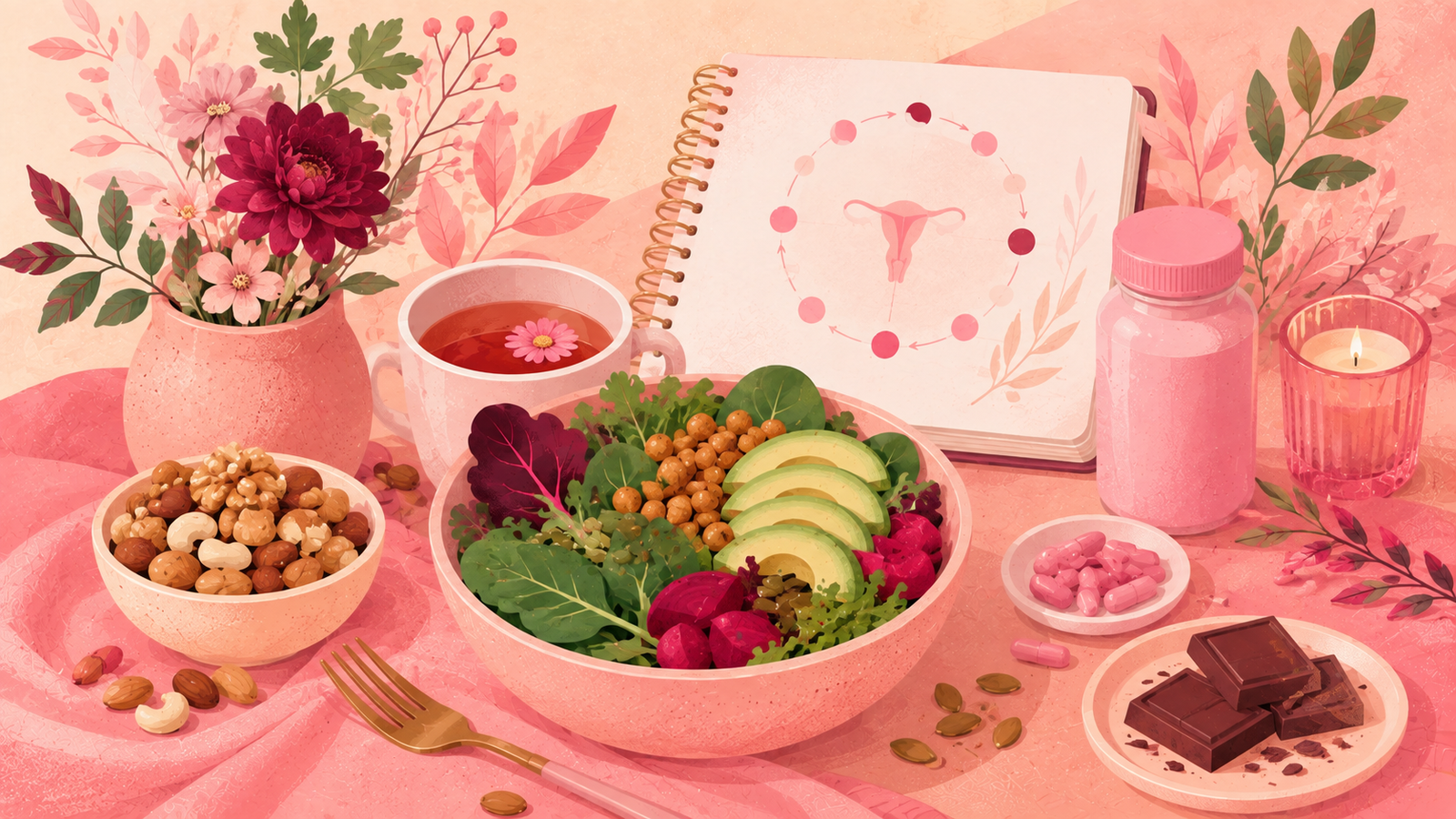
If you search blood sugar mood period, you are probably trying to name a pattern that feels very real. Maybe you feel steady for half the month, then suddenly want sweeter snacks, feel foggy between meals, cry faster, snap faster, or feel like your appetite has changed overnight. That does not automatically mean anything is wrong. It also does not prove that your blood glucose is high or low. It means your body is giving you repeat signals worth tracking with care.
Flow & Glow can help you record the timing of cravings, mood shifts, appetite changes, sleep, bleeding, cramps, and body symptoms across your cycle. It is not a blood sugar monitor, and it should not replace medical care. Its job is simpler and still useful: it helps you see whether the same pattern keeps showing up before your period, after ovulation, during bleeding, or around stressful weeks.
The tricky part is that period related cravings and mood changes rarely come from one single cause. Hormones, sleep, meals, stress, movement, digestion, pain, medication, caffeine, alcohol, and mental health can all overlap. Some people also live with conditions that affect glucose regulation, but feelings alone cannot diagnose those. A calm cycle log can help you separate “this happens every late luteal phase” from “this happens when I skip lunch” or “this is new and needs support.”
The pattern question
Many people use blood sugar language when they are describing a feeling: shaky, hungry, irritable, foggy, suddenly tearful, or desperate for something sweet. Sometimes those feelings really can be related to how long it has been since you ate, what you ate, how much you slept, or how stressed your body feels. Sometimes they overlap with cycle timing. Sometimes they are part of PMS. Sometimes they are unrelated.
That is why the most useful first step is not to panic or self diagnose. It is to track the pattern.
A period related pattern usually has timing. It may show up after ovulation. It may intensify in the week before bleeding. It may ease once your period starts. Or it may only appear in certain cycles, such as when sleep is poor, workouts change, deadlines pile up, or you are traveling. Without a log, the symptoms can feel random. With a log, they can become a story you can actually review.
This matters because cravings and mood shifts can create a loop. If you sleep badly, you may feel hungrier. If you feel hungrier, you may snack differently. If you snack differently, your energy may feel uneven. If your energy feels uneven, mood can feel harder to manage. Add cramps, breast tenderness, bloating, or headaches, and the same ordinary day can feel much more demanding.
The goal is not to make your cycle another thing to control. The goal is to understand your own baseline. When you know what is normal for you, it becomes easier to plan meals, rest, movement, and support. It also becomes easier to notice when something has changed.
Before bleeding starts
The days after ovulation and before a period are often called the luteal phase. For many people, this is the window when premenstrual symptoms are most noticeable. Not everyone experiences this phase the same way, and not every cycle feels the same. Still, it is common for people to report a mix of emotional and physical symptoms before bleeding begins.
Those symptoms can include:
- Mood swings
- Irritability
- Feeling more emotional
- Anxiety or sadness
- Tiredness
- Trouble sleeping
- Bloating
- Cramps
- Breast tenderness
- Headaches
- Appetite changes
- Food cravings
This does not mean hormones are the only factor. Hormones are part of the background, but your daily inputs still matter. If you enter the pre period window under slept, under fed, dehydrated, stressed, or in pain, your body may feel louder. If you have a calmer week with steady meals and sleep, the same phase may feel easier.
A useful cycle log gives you context. Instead of writing only “bad mood,” write what was happening around it. Did you skip breakfast? Did you drink more coffee than usual? Did you sleep five hours? Did cravings appear after lunch, after dinner, or late at night? Did the symptoms lift once bleeding started? These details are more helpful than a single symptom label.
If cravings are your biggest pattern, you may also want to read more about PMS cravings and how they can be tracked without shame. Cravings are not a character flaw. They are information. The question is what your body tends to ask for, when it asks, and what helps you feel steady.
Blood sugar feelings
People often describe “blood sugar” as a feeling, but blood glucose is a measurement. Without a glucose meter, lab test, or clinician directed monitoring, you cannot know your actual blood sugar from symptoms alone.
That distinction matters. Feeling shaky, hungry, sweaty, irritable, foggy, weak, or anxious can happen for many reasons. It may be related to not eating enough, waiting too long between meals, having a very high sugar snack without enough protein or fiber, drinking caffeine on an empty stomach, sleeping poorly, stress hormones, pain, panic, medication effects, or a medical issue. Cycle phase can be part of the picture, but it is not the whole picture.
A cautious way to think about it is this: your cycle may change the background conditions that affect appetite, energy, sleep, and mood. Your meals, stress, and rest shape what happens inside that background. The combination is what you feel.
Here is an example. Imagine you usually eat lunch at 12:30, but during the week before your period you are busier and lunch slides to 2:30. By then you feel irritated, shaky, and desperate for chocolate. Is that a period symptom? Is it blood sugar? Is it stress? It may be a mixture. The useful pattern is that late lunch plus late luteal phase equals a harder afternoon.
Another example: you sleep badly for three nights before your period, then cravings spike and mood feels fragile. That may not be about one snack. It may be about sleep pressure, cycle timing, stress, and appetite regulation all stacking together.
This is why a simple log beats a dramatic conclusion. Track what you can observe. Cycle day. Hunger. Meals. Cravings. Mood. Sleep. Stress. Movement. Pain. Bleeding. Over time, the pattern becomes less mysterious.
Cravings need context
Cravings before a period are common, but they are not all the same. Some cravings feel like a gentle preference. Some feel urgent. Some happen at night. Some show up with sadness or irritability. Some follow a long gap between meals. Some appear even when you have eaten normally.
Research on menstrual phases and appetite suggests that energy intake can be higher in the luteal phase for some people. That does not mean everyone needs more food before a period, and it does not mean every craving has the same cause. It does suggest that appetite shifts are not imaginary.
Instead of fighting every craving, try to understand the setting around it:
- What cycle phase were you in?
- What time of day did it happen?
- How long had it been since your last meal?
- Did the craving come with sadness, anger, anxiety, or tiredness?
- Did you sleep poorly the night before?
- Did you have cramps, bloating, or a headache?
- Did eating help you feel better, worse, or unchanged?
This is not about perfect food choices. It is about noticing what supports you. Some people feel steadier with regular meals. Some feel better when snacks include protein, fiber, and fat. Some need to reduce long gaps between meals before their period. Some mainly need more sleep or less caffeine. Some need clinician support because cravings come with binge eating, restriction, distress, or loss of control.
Cravings are also emotional. If the week before your period is when you feel more sensitive, a craving can become comfort, distraction, or relief. That does not make it bad. It means the craving may be connected to emotional load as much as physical hunger.
Mood joins in
Mood and appetite are not separate rooms in the body. They talk to each other constantly. Hunger can make mood feel sharper. Poor sleep can make cravings louder. Pain can lower patience. Stress can change appetite. A difficult mood can make it harder to prepare steady meals. Before a period, those overlaps may become more noticeable.
This is why tracking mood without tracking context can be misleading. If you only record “irritable,” you may conclude that your cycle is the whole problem. If you also record sleep, meals, caffeine, stress, pain, and cravings, you may find a more useful pattern.
For example:
| Pattern | What it might suggest | What to try tracking next |
|---|---|---|
| Irritable before lunch | Long meal gap may be part of it | Breakfast, snack timing, caffeine |
| Tearful at night before period | Sleep, stress, and luteal timing may overlap | Bedtime, wake time, evening cravings |
| Angry plus intense cravings | PMS pattern may be present | Cycle day, cravings, mood intensity |
| Low mood for many days | Needs more support if disruptive | Duration, safety, daily function |
| Anxiety plus shakiness | Could have several causes | Food timing, caffeine, stress, clinician notes |
If mood swings are a recurring issue, a cycle tracker for mood swings can help you notice whether emotional changes cluster around the same cycle window. The goal is not to blame every feeling on your period. The goal is to see what repeats, what helps, and what deserves extra care.
Severe mood symptoms are different from normal mood variation. If you feel unsafe, have thoughts of self harm, feel unable to function, or notice intense mood changes that disrupt work, school, relationships, or daily life, seek help promptly. If there is immediate danger, use emergency support in your area.
Track two cycles
A two cycle log is one of the most useful tools for understanding blood sugar mood period patterns. One cycle can be affected by illness, travel, exams, grief, deadlines, medication changes, alcohol, sleep debt, or random life stress. Two cycles give you a better chance of seeing what repeats.
You do not need a complicated system. Track enough to answer three questions:
- When did it happen?
- What else was happening that day?
- What helped, if anything?
A practical daily log might include:
- Cycle day or estimated phase
- Bleeding, spotting, or no bleeding
- Mood, such as calm, low, anxious, angry, tender, or irritable
- Cravings, including type, time, and intensity
- Hunger, including long gaps between meals
- Meals and snacks, in simple notes
- Sleep length and sleep quality
- Caffeine and alcohol, if relevant
- Stress level
- Movement or rest
- Cramps, bloating, headaches, breast tenderness, or digestion changes
- Energy level
- Anything new, such as medication, illness, travel, or major stress
You can keep this gentle. You do not need calories, perfect food details, or obsessive scoring. In fact, if detailed food tracking makes you anxious, keep it broad. Write “late lunch,” “sweet craving after dinner,” “needed snack,” or “felt better after balanced meal.” That is enough.
Flow & Glow can sit in the middle of this process. It can help connect appetite and mood notes with cycle timing, while keeping the focus on patterns rather than perfection.
Notice body clues
Mood and cravings often arrive with body clues. Bloating, breast tenderness, cramps, headaches, acne, constipation, loose stools, fatigue, and sleep changes can all change how steady you feel. If you only track mood, you may miss the physical load underneath it.
This is especially true when you are trying to understand whether a symptom is cycle linked. A craving that appears with breast tenderness, bloating, and a period due in five days tells a different story than a craving that appears after an intense workout and a skipped meal. A mood dip that appears with insomnia and cramps tells a different story than a mood dip that lasts all month.
If you want a broader view, track period body changes alongside cravings and mood. The body often gives several signals at once. Seeing them together can make the pattern feel less random.
Here is a simple way to review your log at the end of each cycle:
- Which symptoms appeared before bleeding?
- Which symptoms appeared during bleeding?
- Which symptoms appeared after ovulation?
- Which symptoms happened after poor sleep?
- Which symptoms happened after long meal gaps?
- Which symptoms were new for you?
- Which symptoms affected daily life the most?
Then choose one small support for the next cycle. Maybe it is a steadier afternoon snack in the week before your period. Maybe it is earlier bedtime. Maybe it is reducing caffeine on anxious days. Maybe it is booking an appointment because symptoms are intense.
Gentle support habits
There is no perfect anti craving period plan. Bodies are too individual for that. But there are steady habits that may help some people feel less thrown around by the pre period window.
Try regular meals if long gaps make symptoms worse. A meal with carbohydrates, protein, fiber, and fat may feel more stabilizing than a quick sweet snack alone, but this is personal. If you crave sweet foods, pairing them with something more filling can sometimes help you feel satisfied longer.
Prioritize sleep when you can. Sleep loss can make appetite and mood harder to manage. If your sleep consistently worsens before your period, track it as a symptom rather than treating it as a personal failure.
Move gently if movement helps you. Some people feel better with walking, stretching, yoga, strength training, or light cardio. Others need rest during painful days. The right choice is the one that supports your body, not the one that punishes it.
Manage stress in realistic ways. A five minute reset, a warm shower, a shorter to do list, breath work, prayer, journaling, or texting someone safe can all count. The goal is not to erase stress. The goal is to lower the load where possible.
Plan for predictable cravings. If you know the week before your period brings stronger hunger, do not wait until you are overwhelmed. Keep options around that you enjoy and that help you feel steady. Food does not need to be morally perfect to be useful.
Be careful with supplement promises. Some supplements are discussed for PMS, but evidence and safety vary. If you take medication, have a health condition, are pregnant, are trying to conceive, or are unsure, ask a clinician or pharmacist before adding regular supplements.
What not to assume
Because blood sugar content is popular online, it is easy to over interpret every pre period symptom. Try not to jump from “I crave sweets before my period” to “I must have insulin resistance.” Try not to jump from “I feel shaky before lunch” to “my hormones are broken.” Try not to jump from “my mood changes before bleeding” to “nothing can help.”
A better sentence is: “I notice a repeated pattern, and I want to understand it.”
There are several things symptoms alone cannot prove:
- They cannot prove your blood glucose number.
- They cannot diagnose diabetes or hypoglycemia.
- They cannot diagnose PMS, PMDD, PCOS, or insulin resistance.
- They cannot tell whether a craving is hormonal, emotional, nutritional, stress related, or all of these.
- They cannot replace medical evaluation when symptoms are severe or new.
At the same time, symptoms are not meaningless. If they repeat, they deserve attention. If they disrupt your life, they deserve support. If they scare you, they deserve a conversation with a qualified professional.
When to get help
Ask for medical support if symptoms are severe, new, or affecting your daily life. You do not need to wait until things are unbearable. A two cycle log can make the conversation clearer, but if something feels urgent, seek help sooner.
Consider support if you notice:
- Fainting, confusion, or severe weakness
- Symptoms of very high or very low blood sugar, especially if you have diabetes risk factors or a known glucose condition
- Extreme thirst, frequent urination, unexplained weight changes, or ongoing fatigue
- Heavy bleeding, bleeding between periods, or severe pain
- Mood symptoms that feel intense, unsafe, or out of character
- Thoughts of self harm or feeling unable to stay safe
- Cravings with binge eating, restriction, purging, or significant distress
- Symptoms that interfere with work, school, caregiving, sleep, or relationships
If you already have diabetes, suspected diabetes, PCOS, thyroid disease, an eating disorder history, PMDD, depression, anxiety, or another medical condition, personalized care matters. Cycle tracking can support the conversation, but it should not be the only tool.
For a broader hormone symptom view, a hormone symptom tracker can help you organize notes before an appointment. Bring the patterns, not just the worst day. Clinicians can often help more when they can see timing, duration, severity, and what changed.
A simple review
At the end of your next period, take five minutes to review your notes. Do not judge the cycle. Look for patterns.
Ask:
- Did cravings increase before bleeding?
- Did mood shifts appear in the same window?
- Did symptoms ease once bleeding started?
- Did long meal gaps make symptoms worse?
- Did poor sleep predict harder cravings or mood?
- Did movement, rest, or regular meals help?
- Was anything severe enough to discuss with a clinician?
Then choose one experiment for the next cycle. Keep it small. For example:
- Eat lunch before the usual crash window.
- Add an afternoon snack during the pre period week.
- Reduce caffeine on anxious days.
- Protect bedtime for three nights before your period.
- Track cravings with mood instead of tracking cravings alone.
- Book an appointment if symptoms are intense or new.
This is the real value of cycle tracking. Not control. Not perfection. Not predicting every feeling. Just enough self knowledge to stop being surprised by the same pattern every month.
Article information
- Written by Flow & Glow Editorial
- Medically reviewed by Dr. Jennifer Martinez, MD, FACOG
- Published on July 26, 2026
- Updated on August 3, 2026
Key takeaways
- The phrase blood sugar mood period usually describes a pattern, not a diagnosis.
- Cravings and appetite can become more noticeable before a period, especially in the luteal phase.
- Mood shifts, tiredness, sleep changes, and hunger can reinforce each other.
- Feeling shaky, irritable, or urgently hungry does not prove a blood sugar problem by itself.
- A two cycle log can show whether symptoms cluster before bleeding or follow meals, sleep, stress, or missed routines.
- Flow & Glow can help you track cycle timing and symptoms, but it does not measure glucose.
- Severe mood symptoms, fainting, heavy bleeding, suspected diabetes symptoms, or symptoms that disrupt daily life deserve medical support.
Frequently asked questions
Can my period affect blood sugar and mood?
Your cycle may affect the background conditions that shape appetite, energy, sleep, and mood. Some research suggests metabolic responses and energy intake can vary by cycle phase. But symptoms alone cannot confirm your blood sugar level. If you need actual glucose information, use clinician recommended testing or monitoring.
Why do I crave sugar before my period?
Cravings before a period can be linked with appetite changes, mood sensitivity, sleep disruption, stress, and luteal phase symptoms. They can also be influenced by meal timing, caffeine, pain, and emotional load. Track when cravings happen and what else is happening around them.
Is feeling shaky before my period normal?
Some people feel shakier, hungrier, or more irritable before their period, especially if they have skipped meals, slept poorly, or feel stressed. But shakiness can have many causes. If it is severe, frequent, new, or comes with fainting, confusion, or known glucose concerns, seek medical advice.
Can Flow & Glow track blood sugar?
No. Flow & Glow does not measure blood sugar. It can help you track cycle timing, cravings, mood, appetite, sleep, bleeding, and body symptoms so you can notice patterns and bring clearer notes to a healthcare visit if needed.
How long should I track symptoms?
Two cycles is a practical starting point because one cycle can be affected by travel, illness, stress, or unusual routines. Track cycle day, mood, cravings, hunger, meals, sleep, stress, movement, pain, and bleeding in a simple way.
When are cravings most likely?
Many people notice cravings in the luteal phase, the window after ovulation and before bleeding. That said, every body is different. Your pattern may depend on sleep, stress, meal timing, activity, and health conditions as much as cycle phase.
When should I talk to a clinician?
Talk to a clinician if symptoms are severe, new, unsafe, or disrupting daily life. Get urgent support for self harm thoughts, fainting, confusion, severe weakness, very heavy bleeding, severe pain, or concerning glucose related symptoms. Bring your cycle notes if you have them.
References
- American College of Obstetricians and Gynecologists. (2025). Premenstrual syndrome Source
- NHS. (2025). PMS (premenstrual syndrome) Source
- Office on Women's Health. (2021). Premenstrual syndrome Source
- Cross, G. B., Marley, J., Miles, H., & Willson, K. (2008). Insulin sensitivity, food intake, and cravings with premenstrual syndrome: A pilot study. Journal of Women's Health, 17(4), 657-665 Source
- Hummel, J., et al. (2023). Brain insulin action on peripheral insulin sensitivity in women depends on menstrual cycle phase. Nature Metabolism Source
- Dye, L., et al. (2025). The effect of the menstrual cycle on energy intake: A systematic review and meta-analysis. Nutrition Reviews Source
- UCLA Health. (2024). Menstrual cravings are all in your head, in your brain Source
Editorial and medical disclaimer
Flow & Glow health content is educational and is not a substitute for diagnosis, treatment, or personal medical advice from a qualified clinician.
Our editorial standards, reviewer process, sourcing approach, and correction process are explained in the Editorial Policy. You can also review our authors and medical reviewers, healthcare professional information, contact page, and privacy policy.