Bleeding After Sex: What to Notice and When to Get Checked
Bleeding after sex can feel scary. Learn what to track, possible causes, and when spotting after sex needs medical care.
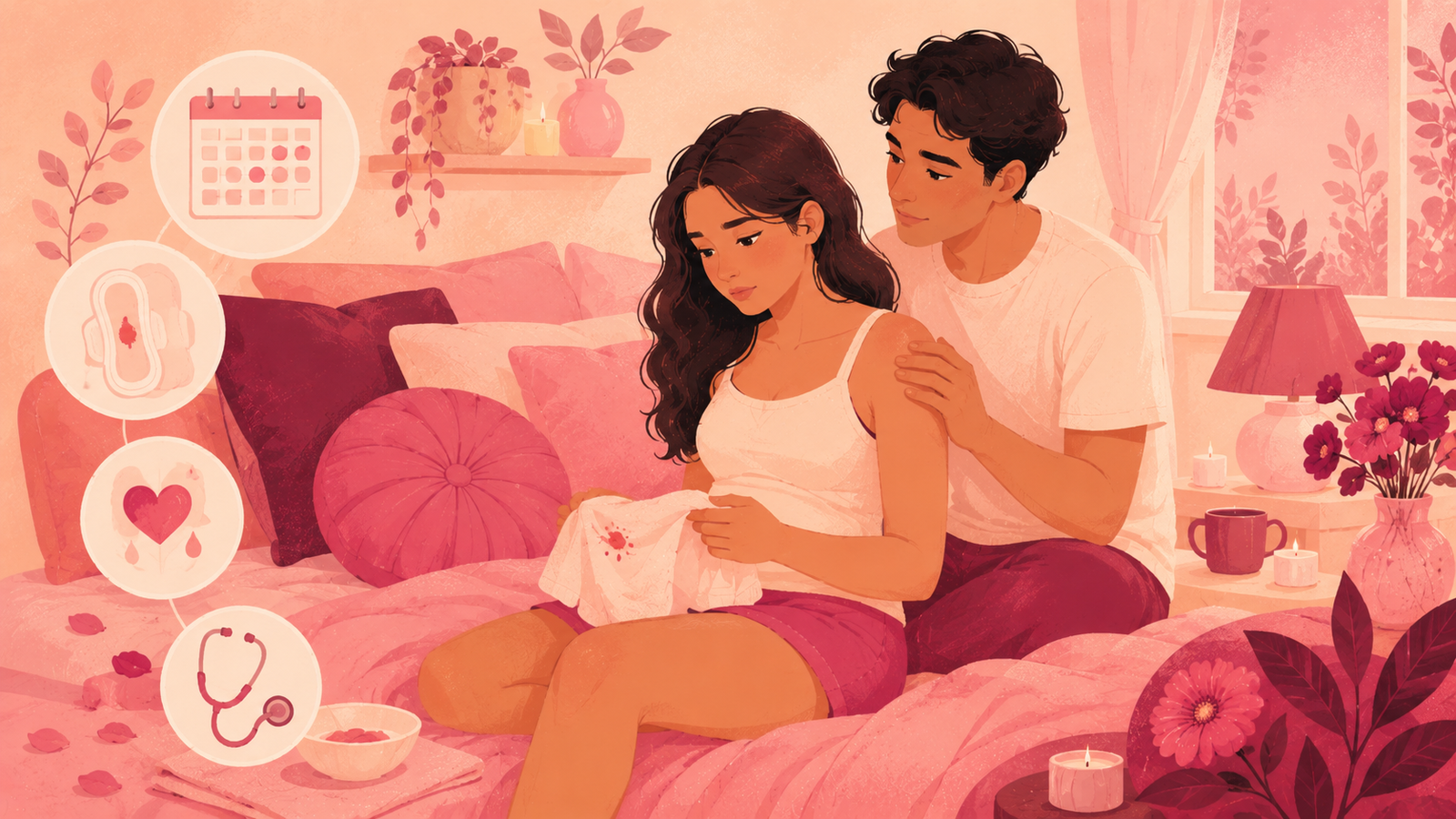
Bleeding after sex, sometimes called postcoital bleeding, is any bleeding or spotting that happens during or shortly after sexual activity. It can show up as a streak of pink on tissue, a small amount of bright red, a brownish smudge, or in rarer situations a flow that fills a pad. The bleeding can stop right away or trickle for a few hours. None of those patterns are automatically dangerous on their own, but each one carries different information about what may be going on inside the body.
What Bleeding After Sex Actually Means
The reproductive tract is built from delicate tissues that sit very close to each other. The cervix, which is the lower opening of the uterus, has a thin surface that can be touched directly during sex. The vaginal walls are stretchy and rich with small blood vessels. The vulva and the area right inside the vaginal opening can also be a source. Any of these tissues can bleed a little if they get scraped, stretched, irritated, or inflamed. That is part of why one episode of light bleeding after sex is so common and usually not a sign of anything serious.
Where it gets more interesting is when the bleeding repeats, appears alongside pain or unusual discharge, or shows up after a known life change like starting a new birth control method. Those patterns are what a clinician listens for. The article below walks through the most common reasons, the details worth noticing, and the clear moments when an appointment matters.
If this is your first time logging this kind of symptom, you can capture it privately in Flow & Glow so the details stay accurate while you decide on next steps.
Why the Cervix and Vagina Bleed Easily
To understand bleeding after sex, it helps to picture what those tissues look like up close. The cervix is small, about the size of a doughnut, and the cells on its surface are arranged in two zones. One zone is smooth and tough. The other is softer and more fragile, often a little glossier looking. Where these two zones meet is the area most likely to bleed when something brushes against it. That meeting point shifts over a lifetime and can sit more visibly on the outer cervix in younger people, in pregnancy, and during certain phases of hormonal birth control use. When sex happens in those windows, light contact bleeding becomes more likely.
The vagina has a different setup. Its walls fold and unfold and are designed to stretch. Natural lubrication softens the tissue and reduces friction. When lubrication is low, when arousal is rushed, or when the angle or pressure is harder than usual, the surface can develop tiny tears that bleed for a short time and heal on their own. The same can happen in the vulvar skin near the opening. None of that means sex was done wrong or that something is broken. Bodies vary day to day, and the tissue response varies with them.
Knowing this helps put one-time bleeding in perspective. It also clarifies why pattern matters more than any single event. A clinician will care less about one streak of pink and more about whether that streak keeps reappearing.
What to Notice in the Moment
The most useful thing you can do when bleeding shows up is observe quietly without panicking. A small notebook moment now saves a lot of guesswork later. The details that matter most are simple and easy to capture.
Start with the timing. Was it during sex itself, right after, an hour later, or the next morning. Each window points to slightly different possibilities.
Next, look at color. Bright red usually means fresh bleeding from a recent contact point. Pink suggests blood mixed with vaginal moisture or cervical mucus. Brown is older blood that has been on its way out for a while. Each color tells your clinician something different.
Then check amount. A streak on toilet paper is very different from a stained underwear lining, which is again very different from a soaked pad. Use whatever language is honest to you, including comparing it to the lightest day of your period.
Consider any other body signals. Was there cramping. A sharp pulling sensation. Burning. New discharge. Itching. Tenderness that lingered after sex. Each of these adds a layer to the picture.
Finally, look at the context. Was this the first time with a new partner. A particularly long session. A day with lower arousal. A day when you noticed dryness. Were you mid-cycle, late in your cycle, or close to your period. Did you recently start, stop, or switch birth control. Have you had a baby in the last several months. All of these threads matter.
A simple list in a notes app or in your tracker keeps everything in one place. If you want a structure to lean on, this guide to period tracker notes shows how to log specifics that clinicians can use.
Common Causes Worth Knowing
The list of possible reasons for bleeding after sex is short and most of the entries are common. Knowing the broad categories helps reduce the fear that comes with seeing blood unexpectedly.
Friction and Low Lubrication
When the vaginal walls do not have enough natural lubrication, the surface can develop micro-tears during sex. This is the most common reason for a single, small spot of bleeding. It can happen with stress, dehydration, a busy day, certain medications, antihistamines, or simply not enough time for arousal to build. Adding a water-based lubricant is often enough to prevent a repeat episode. If this keeps happening, that is a useful detail to share at a visit, especially if dryness is also affecting daily comfort.
Contact with the Cervix
The cervix is the most touched part of the upper reproductive tract during sex. Certain positions bring more contact. If the cervix has a small soft area on its surface, even gentle contact can cause a streak of bleeding. This is sometimes called cervical bleeding. It is usually painless. The bleeding stops quickly. It is not dangerous in itself, though if it repeats it is worth a look so the cause is identified.
Birth Control Effects
Hormonal birth control can change the cervix and uterine lining in ways that make light bleeding more likely. New methods, missed doses, certain progestin-only pills, hormonal IUDs in their early months, and the implant can all be associated with breakthrough bleeding, including after sex. This often settles within the first three to six months. If you want to understand more about how a healthy pattern shifts when methods change, this overview of cycle changes is a calmer place to start than a search engine.
Infections
Some infections inflame the cervix or vaginal walls and make them bleed more easily. Common ones include certain sexually transmitted infections and some non-sexually transmitted ones like bacterial vaginosis or yeast in flares. Signs to look for include unusual discharge, color changes in discharge, odor, burning during urination, pelvic pain, fever, or itching. If any of these show up with post-sex bleeding, an appointment is the right next step. A simple swab usually answers the question.
Cervical Polyps or Ectropion
A polyp is a small, soft growth on the cervix. An ectropion is a soft patch on the cervix surface. Both are common, usually harmless, and easy to identify on exam. Both can be a source of bleeding after sex. Treatment is often unnecessary unless the bleeding is bothersome.
Hormonal Shifts
Estrogen and progesterone change across the cycle and across life. Times of lower estrogen, including after childbirth, while breastfeeding, in perimenopause, or while on certain methods, can leave vaginal tissue thinner and more prone to small tears. After childbirth especially, the tissue takes time to return to a steady baseline. If this is your situation, the read on sex after baby covers the pacing that many people forget to expect.
Pregnancy and Early Pregnancy
Bleeding after sex during pregnancy can be normal in the first trimester because of increased blood flow to the cervix. It can also be a sign that something needs evaluation. If there is any chance you could be pregnant, bleeding after sex is a reason to contact a clinician rather than wait.
Cervix Changes That Need a Closer Look
In a smaller share of cases, repeated bleeding after sex can be related to changes in cervical cells that are picked up on screening. This is one of the reasons cervical screening exists. Catching changes early gives a person more, simpler options. This is not a reason to panic, but it is a strong reason to keep up with screening and to get checked when bleeding is repeated.
Confusing Spotting with Your Period
One of the trickier parts of bleeding after sex is when it lines up with the days around your period. A drop or two right before bleeding starts can be normal cycle activity and not directly caused by sex. The opposite can also happen, where sex pulls a period that was about to start anyway. Sorting this out is much easier when you have your cycle written down.
A short, daily log of flow level, symptoms, and any sex makes the after-the-fact analysis simple. If you ever wondered whether a few spots between periods are part of the same conversation, this read on spotting between periods gives a useful baseline.
When One Episode Is Likely Fine
There are situations where one light bleed after sex tends to be low concern. None of these are guarantees, but they form a pattern that clinicians see often.
The bleed was light, ended in less than a day, and was not painful. There was a clear trigger that made sense, like dryness, a new position, a long session, or sex during a less aroused moment. There were no other symptoms before, during, or after. The next period showed up on schedule and looked like a usual period. Pregnancy is not possible, or pregnancy has already been ruled out.
When all of those fit together, the safest plan is to keep notes, take a gentle approach next time, use lubrication as needed, and watch to see if it happens again. If it does not, you have your answer.
When to Get Checked
There are clear moments where waiting is not the right call. Each of these is a reason to call a clinician.
Bleeding after sex that repeats more than once, even if light. Heavy bleeding that fills a pad or has clots. Pain during sex that is new or sharper than before. Pelvic pain that lingers for hours or days. Fever. Foul-smelling discharge. Burning during urination that does not settle. Bleeding after sex during pregnancy, or with any chance of pregnancy. Bleeding after sex after menopause. New bleeding after sex while on a hormonal method you have used without issues for a long time. Bleeding after sex with weight loss, fatigue, or other broader symptoms.
In any of these situations, the visit is usually quick. A pelvic exam looks at the cervix and vaginal walls. A swab can check for infection. A Pap or cervical screening test can check for cell changes. An ultrasound is sometimes added if needed. Most people leave with a clearer picture and either reassurance or a simple next step.
The Mental Side
Seeing blood when you were not expecting it is unsettling. It can pull old worries forward or stir new ones. There is also the embarrassment that can come from talking about sex with a clinician, especially if your partner is new, if you are queer, if your partner is the same sex, or if you have had bad experiences with care before. None of that is small, and none of it should keep you from getting checked.
A few small things help. Write the details down so the conversation focuses on facts. Bring your tracker if you have one. Ask for a clinician you feel safe with. If a clinician dismisses or rushes you, that is information about the clinician, not about your symptoms. You are allowed to ask for another visit, another doctor, or a longer conversation. Your body deserves answers that match what it is showing you.
How a Visit Usually Goes
If you go in for bleeding after sex, the visit is shorter than people often expect. The clinician will ask about the timing, the color, the amount, the context, your cycle, your method of birth control, your sexual history in basic terms, and any other symptoms. They will often do a brief exam to look at the cervix and vaginal walls. They may take a swab, do a Pap if you are due, or order a test for pregnancy. In some cases, they may order an ultrasound or recommend a follow-up exam after the next period.
You can ask any question you want during this visit. You can ask what they saw. You can ask what they think is most likely. You can ask what would change their thinking. You can ask what to track and when to come back. The visit goes faster when you arrive prepared, which is why a calm, written record is so useful.
Caring for Yourself in the Days After
After bleeding from sex, the body usually does well with rest, hydration, and a soft approach. Pads tend to be more comfortable than tampons for the first day, because they avoid placing anything inside the vagina while the tissue settles. Skipping sex for a day or two while you watch what happens is sensible. If you decide to have sex again sooner, take more time at the start, use lubrication, and pay attention to any signs the tissue is still tender.
If the bleeding stops and nothing else feels off, your job is mostly to observe. If you want a place to keep that observation honest, your tracker is the simplest tool you already have. A clean, accurate log helps you and any clinician see what is real and what is noise.
What If It Keeps Happening
When bleeding after sex repeats over weeks, the right move is to keep collecting data and book a visit. Try to capture the date and time, the type of activity, whether lubrication was used, the amount and color of the bleeding, any pain, any discharge, and where you were in your cycle. Even three or four entries make a meaningful difference.
This is also the time to ask whether anything in daily life has shifted. New medication. A switch in birth control. Recent illness. Significant stress. Pregnancy or postpartum. New partner. Different intensity. Different products. None of these are causes by themselves, but they are clues a clinician can use.
If you feel unsure whether to act, the simple rule is this. If it happens twice within a couple of months, book a visit. If it happens once but is heavy, painful, or alarming in any way, book a visit. If there is any chance of pregnancy, book a visit. There is no version of this where calling your clinician is the wrong call.
Final Thoughts
Bleeding after sex is one of those quiet symptoms that can feel scarier than it usually is. The body has many reasons to spot a little, and most of them are minor and self-limited. The cervix and the vaginal walls are designed to stretch and respond, and a small bleed is often their way of saying take it slower, add some lubrication, or pay attention to a small change.
At the same time, repeating patterns are signals worth listening to. A clinician can usually find the cause quickly. Tracking what you see, even in basic detail, makes that conversation easier and faster. Trust your body when it tells you something has shifted. You are not overreacting. You are showing up for yourself.
Article information
- Written by Jessica Morrison, MS in Health Communication, CHES
- Medically reviewed by Dr. Nadia Chen, MSN, FNP-C, WHNP-BC
- Published on June 11, 2026
- Updated on August 7, 2026
Key takeaways
- A single light episode of bleeding after sex is common and often linked to friction, dryness, or contact with the cervix.
- Repeated bleeding after sex deserves a clinician visit even if it feels minor.
- The color, amount, and timing of the bleeding all tell a story your clinician will want.
- Hormonal birth control, recent childbirth, infections, and cervix changes are some of the most common causes.
- Severe pain, heavy bleeding, fever, foul discharge, or possible pregnancy means do not wait.
- A pelvic exam, a swab, or a Pap is often enough to find the answer.
- Keeping calm notes in a tracker beats trying to remember everything at the visit.
Frequently asked questions
Is one light bleed after sex something to worry about?
Usually not. A streak of pink or a small spot that goes away the same day, especially when sex was rough, dry, or extra long, is often friction or light cervix contact. If it does not repeat and you have no other symptoms, watching is reasonable. If it happens again or anything else feels off, get checked.
Why am I bleeding after sex if my period is not due?
The most common reasons are friction, low lubrication, brief contact with a soft area of the cervix, a new birth control method, or a small infection. Bleeding that lines up with a recent change in lubrication or position usually settles on its own. Bleeding that keeps showing up between periods, with or without sex, is worth a visit.
Could this mean I am pregnant?
Possibly. Light bleeding after sex can happen in early pregnancy because of increased blood flow to the cervix. It can also be a sign that something needs evaluation. If pregnancy is possible at all, take a test and call a clinician, even if the bleeding stops on its own.
Can birth control make me bleed after sex?
Yes. Hormonal methods can soften the cervix and change the uterine lining, which can lead to spotting in the first months and after sex on any cycle day. This usually settles within three to six months. If it does not, or if other symptoms appear, ask your clinician whether the method still fits.
When is bleeding after sex an emergency?
Go in right away if the bleeding is heavy, has clots, comes with severe pelvic pain, fever, dizziness, or fainting, or if there is any chance of pregnancy. These are signs your body needs hands on care, not a wait and see plan.
Could it be something serious like cancer?
In a small share of cases, repeated bleeding after sex can be linked to cell changes on the cervix that show up on routine screening. This is one of the main reasons cervical screening exists. Catching changes early gives more, simpler choices. Keep up with screening at the intervals your clinician suggests, and do not skip visits if bleeding repeats.
What should I write down before my appointment?
Write the date and time the bleeding happened, what sex looked like that day, whether you used lubrication, the color of the blood, how much there was, how long it lasted, any other symptoms like pain or discharge, your cycle day, and any recent changes in birth control or daily life. A short, honest list saves time and gives your clinician a real picture to work with.
References
- Tarney, C. M., and Han, J. (2014). Postcoital bleeding: A review. Obstetrics and Gynecology International Source
- National Health Service. (n.d.). Vaginal bleeding between periods or after sex Source
- Cleveland Clinic. (n.d.). Postcoital bleeding Source
- Mayo Clinic. (n.d.). Vaginal bleeding causes Source
- American College of Obstetricians and Gynecologists. (n.d.). Cervical cancer screening Source
- Centers for Disease Control and Prevention. (n.d.). Sexually transmitted infections treatment guidelines Source
Editorial and medical disclaimer
Flow & Glow health content is educational and is not a substitute for diagnosis, treatment, or personal medical advice from a qualified clinician.
Our editorial standards, reviewer process, sourcing approach, and correction process are explained in the Editorial Policy. You can also review our authors and medical reviewers, healthcare professional information, contact page, and privacy policy.