Big Blood Clots During Period: What Size Matters?
Big blood clots during a period can be scary. Learn what clot size can mean, what to track, and when heavy bleeding deserves care.
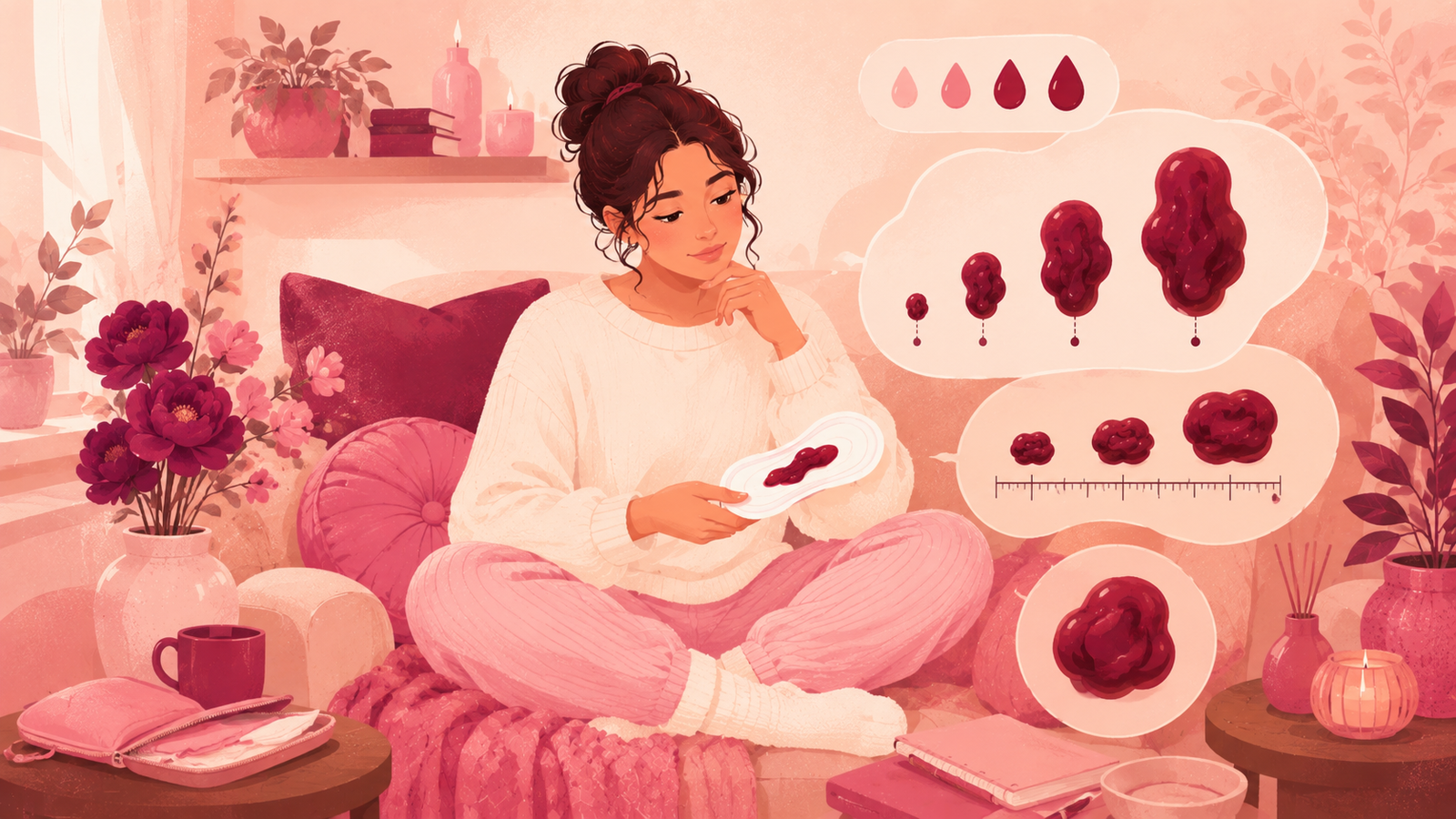
A menstrual clot is a gel-like clump made up of blood, uterine lining, and proteins your body releases to slow bleeding. When flow is light and steady, the body releases anticoagulants that keep the blood loose enough to pass without lumps. On heavier days, when blood arrives faster than those anticoagulants can keep up, small clumps can form before the blood leaves the body. That is why clots tend to show up on day one or day two for many people, and almost never on the lightest spotting days.
What A Period Clot Actually Is
Clot texture can vary too. Some are soft and jelly-like. Others feel firmer. If you would rather understand the whole pattern in a calm, daily way, a cycle wellness companion like Flow & Glow pairs simple period tracking with phase-based movement and gentle daily guidance instead of charts that feel clinical. Color often runs from bright red to deep maroon, and on slower-flow moments you may see darker, almost brown clots. Color is mostly about how long the blood has been sitting in the uterus or vagina before it leaves. The cycle has a small language of its own, and clots are part of it.
Small clots are very common. They do not automatically mean something is wrong. The more useful question is whether the size, frequency, and overall flow pattern have changed.
Why Size Comes Up Online
Search results for clots during periods are full of one phrase: bigger than a quarter. That comes from clinical guidance that uses everyday object comparisons because a quarter coin is roughly an inch across and most people can picture it. The size cutoff is not magical. It is a friendly reference point that helps separate small clots, which are extremely common, from larger clots, which can suggest heavier-than-average bleeding.
A quick mental map of common size comparisons:
- Pea or smaller: very common, usually unremarkable on heavier days.
- Dime to nickel: still common during peak flow.
- Quarter: the size where clinical guidance starts to take more notice.
- Larger than a quarter: worth tracking and worth mentioning to a clinician if it happens often.
- Egg-sized or larger: a stronger signal that deserves prompt evaluation.
This is not a rigid scale. A single larger clot on a heavy day, especially after a long sit or sleep, does not mean trouble on its own. The pattern matters more than any one moment.
When Clot Size Starts To Matter
Clot size becomes more meaningful when it shows up with other signs of heavy menstrual bleeding. Clinical guidance commonly defines heavy bleeding as soaking through one or more pads or tampons every hour for several hours in a row, periods that last longer than seven days, or bleeding that interferes with daily life. Clots larger than a quarter that appear often inside that picture point toward heavier flow rather than typical menstrual variability.
Three patterns that usually deserve attention together:
- Repeated clots bigger than a quarter across more than one cycle.
- Pad or tampon changes needed every one to two hours for several hours in a row.
- Periods lasting longer than seven days, or shorter periods that feel oddly intense.
Any one of these in isolation may not be a problem. Stacked together, they shift the conversation from is this normal to what is going on. If your period length itself feels off, a separate look at how long a period should last and when it is too long can help you place that piece of the puzzle.
Symptoms That Travel With Heavy Bleeding
Clot size is easier to read when you also notice how your body feels overall. Heavier bleeding can lead to lower iron stores over time, and that shows up as more than just a heavy pad. Common signals to keep an eye on:
- Tiredness that is heavier than usual, especially during and just after your period.
- Lightheadedness or dizziness when standing.
- Shortness of breath during everyday activity such as climbing stairs.
- Pale skin, brittle nails, or hair that sheds more than usual.
- Mood dips that feel out of step with your normal pattern.
- Strong cramps that interfere with sleep, work, or movement.
These signs do not always mean iron is low, but they are part of the picture. Bleeding heavily for years without realizing it is heavier than it should be is a common quiet thread behind low iron and tired-all-the-time complaints. The body adapts to slow change, which can make heavy flow feel normal even when it is not.
Possible Causes Worth Knowing About
Larger or more frequent clots can have many possible explanations. Most are not emergencies, but they are worth knowing so you can have an informed conversation if you need one.
Hormonal shifts
When the body produces more estrogen relative to progesterone, the uterine lining can build up thicker than usual. A thicker lining can mean heavier bleeding and bigger clots when it sheds. This is a common explanation in adolescents whose cycles are still settling, in the years approaching menopause, and during stretches of stress, sleep loss, or weight change.
Fibroids and polyps
Fibroids are non-cancerous growths in the muscle of the uterus. Polyps are small growths from the lining itself. Both can increase bleeding and clot size. They are common, often manageable, and sometimes do not need treatment unless they cause symptoms.
Adenomyosis and endometriosis
Adenomyosis happens when the uterine lining grows into the muscle wall of the uterus. Endometriosis involves similar tissue growing outside the uterus. Both can lead to heavier, more painful periods and larger clots, especially when paired with cramps that feel deeper or more intense than usual.
Bleeding disorders
In a smaller number of cases, inherited bleeding conditions like von Willebrand disease can cause heavier menstrual bleeding from the very first period onward. This is more likely if heavy bleeding has been lifelong, runs in the family, or comes alongside easy bruising, frequent nosebleeds, or heavy bleeding after dental work.
IUDs and other contraception
A copper IUD often makes periods heavier and may bring more clots, at least in the first few months. Hormonal IUDs usually do the opposite, but a small number of people see different patterns. Recent changes in contraception are worth noting on your tracker.
Thyroid and other systemic factors
The thyroid quietly influences cycle behavior. An underactive thyroid can lead to heavier or longer periods. Recent illness, very intense exercise, big weight changes, or new medications can also shift menstrual flow.
Pregnancy-related considerations
Heavy bleeding or large clots during pregnancy, or shortly after pregnancy, is a different situation and needs prompt medical guidance rather than at-home interpretation. The same goes for very heavy bleeding after a miscarriage or in the early postpartum window.
A bigger guide that walks through normal vs concerning patterns lives in our piece on period blood clots when they are normal vs concerning. It is a good companion read if you want to zoom out from clot size to the whole pattern.
What To Log So You Have A Useful Record
If something feels off, a clear log makes the picture sharper for you, and far more useful if you see a clinician. You do not need fancy tools. A simple list works, and a tracking app can save time.
A practical clot-and-flow checklist:
- Day of cycle the clot appeared, for example day 1, day 2, day 3.
- Approximate size compared to a coin or fruit, such as pea, dime, nickel, quarter, golf ball.
- Color, such as bright red, dark red, deep maroon, almost brown.
- Texture, such as soft and jelly-like, firmer, stringy.
- How heavy the flow was that hour, in pad or tampon changes.
- How heavy that day was overall, in soaked products.
- Pain level and where the pain sat, such as lower belly, lower back, one side.
- Energy and mood that day.
- Sleep and stress in the week before your period.
- Any new medication, supplement, contraception change, or recent illness.
- Whether it has happened in earlier cycles or feels new.
Most cycle trackers let you note this kind of detail in a private way. Our walkthrough on period tracker notes goes through what to log and how to spot patterns without turning your phone into a medical chart.
A few months of clear notes often tells a clearer story than a single appointment description ever can.
When To Reach Out For Care
Most period clots do not need urgent attention. A short list of patterns that do:
- Soaking through one or more pads or tampons every hour for two hours or more in a row.
- Passing clots larger than a quarter often, or one egg-sized clot in a single cycle.
- Bleeding that lasts longer than seven days regularly.
- Periods that come more often than every twenty one days or less often than every thirty five days.
- Sudden, severe one-sided lower belly pain.
- Feeling faint, breathless, or unusually weak during or after your period.
- Bleeding or clots during pregnancy or shortly after.
- Bleeding between periods, after sex, or after menopause.
- Heavy bleeding starting suddenly after months or years of lighter flow.
- Heavy bleeding from your first period that has continued, especially with easy bruising or nosebleeds.
This is not a panic list. It is a noticing list. If one of these matches your experience, calling a clinician sooner rather than later is reasonable. If symptoms feel urgent, such as severe pain, fainting, or rapid heavy bleeding, urgent care is the safer choice over waiting.
A gentle reminder: doctors take heavy bleeding more seriously now than they did a generation ago. If you have been told in the past that heavy bleeding is just your normal, but the picture has grown harder to live with, a fresh conversation is fair.
Gentle Daily Support During Heavier Days
While you work out the bigger picture, a few simple supports can make heavier flow more comfortable. None of these treat the underlying cause, but they can ease the day-to-day:
- Heat on the lower belly or lower back, such as a warm pack or hot water bottle, can ease cramps that travel with heavy flow.
- Iron-conscious meals during and after your period help replenish what is lost. Lentils, beans, dark leafy greens, eggs, fish, and red meat all contribute. Pairing plant iron with a vitamin C source improves absorption.
- Hydration matters more than people think during heavy days. Mild dehydration can make light-headedness worse.
- Gentle movement helps for many people. Walking, light yoga, and stretching can ease cramps. High-intensity training on a heavy bleeding day is usually not the gift it sounds like.
- Sleep buffers a lot. The body recovers more from the menstrual phase when sleep is steady.
- Caffeine and alcohol can intensify cramps and dehydration for some people. Watching how your body reacts is more useful than strict rules.
Color also tells a small story while you are paying closer attention to clots and flow. If you have ever wondered what each shade may be hinting at, what your period color actually tells you is a good companion read.
How To Tell A Routine Heavy Day From A Pattern
It is easy to mix up a single rough cycle with a real pattern. The simplest sorting question: is this new, or has it been happening?
A few framing prompts:
- Has the size of your clots changed over the last three to six cycles?
- Has overall flow gotten heavier, longer, or more painful?
- Has anything else changed in life, such as a new IUD, a new medication, big stress, big weight changes, or recent illness?
- Are you feeling more tired, dizzy, or breathless than in previous cycles?
- Are friends or family noticing changes in how you feel through your period?
A single difficult cycle is often just that. A repeated pattern is a stronger signal and is what clinicians find most useful when sorting out causes.
What Conversations With A Clinician Often Look Like
Walking in with a few months of notes makes appointments easier. Most clinicians will ask about:
- Cycle length and bleeding length.
- Heaviness, including pad and tampon changes per hour and how often clots show up.
- Clot size and how often you see clots bigger than a quarter.
- Pain level, location, and timing.
- Other symptoms, such as fatigue, dizziness, headaches, or hair changes.
- Family history of heavy bleeding or clotting disorders.
- Current contraception, medications, supplements, and recent health changes.
Common next steps may include blood tests, sometimes a pelvic ultrasound, sometimes a referral. Treatment options range from watchful waiting to hormonal contraception adjustments, non-hormonal medications that reduce bleeding, iron support, or procedures that target fibroids or polyps. The path depends on the cause and what fits your life.
Going in with the question what is making my flow this heavy is more useful than going in just to talk about clots. Clots are usually the headline, but they are rarely the whole story.
Common Myths Worth Letting Go
A few ideas are still in circulation that are worth gently retiring:
- Clots always mean something is wrong. They do not. Small clots are extremely common and usually harmless.
- Big clots always mean a miscarriage. They do not. Most large clots happen outside any pregnancy at all.
- Heavy bleeding is just bad luck. Sometimes it is genetics, sometimes it is hormonal, sometimes it is a treatable condition. It is rarely just luck.
- You should not bring it up unless it is dangerous. Heavy bleeding is worth talking about long before it gets to a dangerous point. Quality of life counts.
- Clot size only matters if you bleed for two weeks. Size and pattern can matter even in shorter periods.
The goal here is not to alarm and not to dismiss. It is to take heavy flow seriously the way you would any other body signal you care about.
A Calmer Way To Read The Signal
Clot size is one cue inside a larger pattern. Small clots on day one are usually fine. Larger clots that happen often, especially with very heavy flow, deep tiredness, faintness, or pain that feels new, are worth paying attention to. Tracking the details for a few cycles, and asking for care when the pattern asks for it, is a kind and grounded way to handle this without panic.
If you do nothing else after reading this:
- Note the size and timing of any larger clots in the next two or three cycles.
- Count pad or tampon changes on your heaviest day.
- Notice how you feel, not just how you bleed.
- Bring questions to a clinician early rather than waiting for an emergency.
Bodies change. Cycles change. The earlier you can read the signal, the more options you have when something feels off.
Article information
- Written by Jessica Morrison, MS in Health Communication, CHES
- Medically reviewed by Dr. Sofia Reyes, MD, FACOG
- Published on June 21, 2026
- Updated on October 7, 2026
Key takeaways
- Small clots smaller than a coin are usually a normal part of heavier flow days.
- Clots bigger than a quarter coin, especially when they happen often, deserve a closer look.
- Clot size on its own is not a diagnosis, it is one cue among several.
- Soaking through a pad or tampon every hour or two for more than a couple of hours is a stronger signal than clot size alone.
- Severe pain, faintness, breathlessness, pale skin, or heavy bleeding during pregnancy needs prompt care.
- Tracking the size, color, frequency, and timing of clots helps you and a clinician spot patterns faster.
Frequently asked questions
Are big period clots normal?
Small clots are common and usually nothing to worry about, especially on heavier flow days. Clots bigger than a quarter coin, especially when they happen often or come with very heavy bleeding, deserve a closer look. Size by itself is not a diagnosis, but it is a useful clue when read alongside flow heaviness, period length, pain, and how you feel overall.
What does it mean if a clot is bigger than a quarter?
A clot bigger than a quarter is the size where clinical guidance starts to take more notice. It may simply reflect a heavier-than-average day, especially after lying down for a while. If it happens often across multiple cycles, or comes with soaking through pads or tampons every hour or two for several hours, it is worth raising with a clinician.
Why do clots show up only on heavy days?
The body releases anticoagulants that keep menstrual blood loose enough to pass without clumping. On heavier days, blood can arrive faster than those anticoagulants can keep up, so small clumps form before the blood leaves the body. That is why clots are common on day one or two and almost never on the lightest spotting days.
Can stress or sleep loss change clot size?
Stress and sleep loss can shift hormones, which can affect the thickness of the uterine lining and the heaviness of bleeding. Some people notice slightly bigger or more frequent clots during very stressful months or after long stretches of poor sleep. If the pattern keeps coming back, it is worth tracking and discussing with a clinician.
When should I worry about clots during pregnancy?
Bleeding or clots during pregnancy is a different situation than menstrual clots and is best handled with prompt medical guidance rather than at-home interpretation. The same goes for very heavy bleeding after a miscarriage or in the early postpartum window. When in doubt, calling sooner is the kinder choice.
Do birth control changes affect clot size?
Yes, contraception can change clot size and frequency in both directions. Copper IUDs often make periods heavier and may bring more clots, especially in the first few months. Hormonal IUDs and combined hormonal contraception usually reduce bleeding for many people, though responses vary. Recent changes are worth logging on your tracker.
Can heavy clots cause low iron?
Heavy bleeding over months or years can lower iron stores and lead to iron-deficiency anemia. Common signs include tiredness that feels heavier than usual, dizziness when standing, shortness of breath during light activity, pale skin, and unusual hair shedding. A simple blood test can confirm iron levels, and most cases respond to dietary changes, supplements, or treating the underlying cause of heavy flow.
References
- American College of Obstetricians and Gynecologists. (2024). Heavy menstrual bleeding Source
- Bofill Rodriguez, M., Lethaby, A., & Farquhar, C. (2018). Heavy menstrual bleeding review. PMC Source
- Centers for Disease Control and Prevention. (2024). About heavy menstrual bleeding Source
- Cleveland Clinic. (2023). Menorrhagia (heavy menstrual bleeding) Source
- Mayo Clinic. (2023). Blood clots during menstruation: A concern? Source
- Mayo Clinic. (2023). Heavy menstrual bleeding: Diagnosis and treatment Source
- National Health Service. (2024). Heavy periods Source
Editorial and medical disclaimer
Flow & Glow health content is educational and is not a substitute for diagnosis, treatment, or personal medical advice from a qualified clinician.
Our editorial standards, reviewer process, sourcing approach, and correction process are explained in the Editorial Policy. You can also review our authors and medical reviewers, healthcare professional information, contact page, and privacy policy.