20 Tiny Things That Help You Feel Like Yourself Again
Small things that help you feel like yourself can support rest, connection, movement, and emotional steadiness without turning wellness into another job.
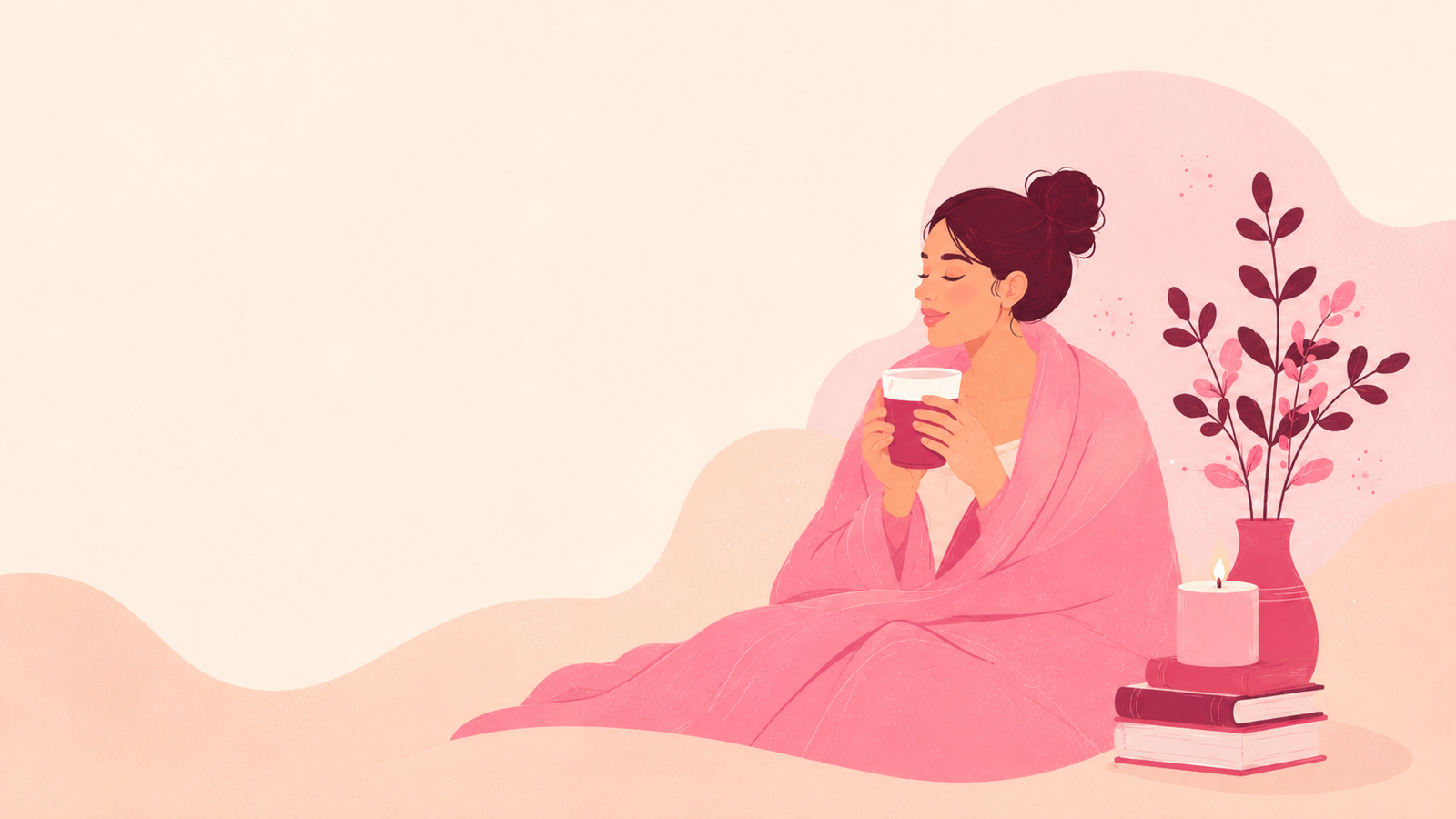
Some days, you do not feel broken. You just do not feel quite like you.
You may be getting through work, replying to messages, feeding people, keeping plans, paying bills, and still feeling strangely distant from your own life. The music you usually love feels flat. Your clothes feel wrong. Your patience is thin. Your body feels like background noise. You know you are there, but you do not feel fully present.
That feeling can be unsettling, especially when nothing dramatic has happened. But it is also common. Stress, poor sleep, hormonal shifts, caregiving, busy seasons, grief, boredom, overstimulation, under stimulation, and too many tiny compromises can all make your inner life feel quieter than usual.
This article is about small, practical things that help you feel like yourself. Not a total reset. Not a personality makeover. Not a perfect morning routine that requires a new notebook, a green smoothie, and three uninterrupted hours.
Just tiny things. The kind you can do on a normal day, in a real body, with real responsibilities.
If you use or are considering Flow & Glow, you can use some of these ideas as simple notes in your cycle, mood, energy, or symptom patterns. But you do not need an app to begin. You only need one small point of contact with yourself.
Why Tiny Works
When you feel disconnected from yourself, big plans can backfire.
A full life overhaul may sound motivating for about ten minutes. Then your brain remembers laundry, work, messages, hormones, family needs, money worries, sleep debt, and the fact that you are already tired. Suddenly the overhaul feels like another job.
Tiny actions are different. They do not ask you to become a new person. They help you make contact with the person already there.
A tiny action can interrupt autopilot. It can remind your body that you are safe enough to pause. It can give your mind one clear point of focus. It can help you notice what you need before you reach the point of snapping, shutting down, or disappearing into your phone for an hour.
Tiny does not mean meaningless. A glass of water will not solve a difficult season, but it can tell your body, I am paying attention. A five minute walk will not erase stress, but it can change the texture of the next hour. Writing down one feeling will not answer every question, but it can make the fog less shapeless.
The goal is not to feel amazing immediately. The goal is to feel a little more here.
If you want a broader foundation for everyday wellbeing, Flow & Glow also has a simple guide to women wellness basics that pairs well with the ideas below.
Start With Your Body
Your body is often the first place disconnection shows up. You might feel heavy, restless, buzzy, numb, achy, hungry, wired, low, or oddly separate from yourself.
These tiny things are not about forcing your body to perform. They are about listening without making it a project.
- Drink water slowly
Not chugging. Not as punishment for forgetting all morning. Just one glass, slowly enough to notice the temperature, the swallowing, the pause.
When you feel unlike yourself, basic body signals can get muted. Thirst, hunger, fatigue, and tension all blur into one vague feeling of off. Drinking water is not a cure for emotional strain, but it is a clean, low effort way to check in.
Try it today: Fill a glass. Before drinking, ask, what does my body feel like right now? Then drink slowly. Afterward, ask the same question again. You are not looking for a dramatic shift. You are practicing noticing.
- Eat something with staying power
When life is busy or emotions are messy, food can become random. You may snack without feeling fed, skip meals until you crash, or eat only what is fastest.
A small meal or snack with protein, fiber, fat, or slow energy can help your body feel less scrambled. This is not about dieting or perfection. It is about giving your nervous system one less problem to solve.
Try it today: Choose one simple option, such as yogurt with fruit, eggs on toast, soup, rice and beans, peanut butter on toast, a tuna sandwich, hummus with crackers, or leftovers. Sit down for the first three bites if you can.
- Change one sensory input
Sometimes you feel unlike yourself because your environment is too much or not enough. The lights are harsh. Your clothes itch. The room is stale. Your phone is loud. Your hair is bothering you. The background noise has been going for hours.
Changing one sensory input can make your body feel more settled.
Try it today: Put on socks, take off socks, lower the lights, open a window, brush your hair, wash your face, change your shirt, light a candle if safe, switch off a buzzing sound, or step into a quieter room for two minutes. Pick the thing your body reacts to first.
- Do a body scan
A body scan is a simple attention practice. You move your awareness through your body, noticing without trying to fix every sensation.
This can be useful when you are stuck in your head. It brings you back to physical reality: jaw, shoulders, chest, stomach, hips, hands, feet. You may notice tension you did not know you were carrying.
Try it today: Sit or lie down. Start at your forehead and move down to your toes. At each area, ask, tight, soft, numb, warm, cold, heavy, or okay? If you find tension, exhale once and let that area be ten percent softer. Ten percent is enough.
- Step outside briefly
You do not need a full nature walk to benefit from stepping outside. Light, air, temperature, and distance from your usual room can all help mark a transition.
This matters because feeling unlike yourself often comes with feeling trapped in one mental loop. A doorway, balcony, garden, front step, or pavement outside your building can become a tiny reset point.
Try it today: Go outside for three minutes. Look for five colors. Feel the air on your face. Notice whether your shoulders want to drop. If you cannot go outside, stand by a window and look farther away than your screen.
Rebuild Small Rhythms
You do not need a perfect routine to reconnect with yourself. In fact, perfect routines often collapse under real life.
Small rhythms work better. They create gentle signals: morning has started, work is ending, I am allowed to rest, I am not just reacting all day.
- Make one corner calmer
Your whole home does not need to be clean for you to feel a little more grounded. One clear corner can still help.
Choose a surface you see often: bedside table, bathroom sink, desk corner, kitchen counter, passenger seat, or the chair that collects clothes. Clear only that spot. A small visible win can make your space feel less hostile.
Try it today: Set a timer for five minutes. Remove trash, cups, old tissues, receipts, or random objects from one tiny area. Do not start a full cleaning spiral. Stop when the timer ends, even if the rest of the room is messy.
- Choose a start cue
A start cue is a small action that tells your brain, we are beginning. It can help when your day feels shapeless, especially if you work from home, care for others, study, freelance, or move between many roles.
Your cue should be easy and repeatable. It should not depend on motivation.
Try it today: Open curtains, put on earrings, make tea, play one song, write the date, apply lip balm, step outside, or make the bed badly but enough. Use the same cue tomorrow if it helps.
- Create an ending
Many women are overloaded not only because they do too much, but because nothing officially ends. Work bleeds into dinner. Messages bleed into bed. Worry bleeds into sleep.
An ending cue gives your body permission to shift state. It does not mean every task is done. It means this part of the day is closing.
Try it today: At the end of work or chores, write tomorrow on a note and list three things for later. Close the laptop, turn off one light, wash your hands, change into softer clothes, or say out loud, that is enough for today. It may feel silly. It still counts.
- Put one thing back
When you feel scattered, a tiny act of order can help you feel capable again. Not because mess is a moral failure, but because small completion feels good.
Putting one thing back is intentionally modest. It avoids the trap of turning self care into a cleaning marathon.
Try it today: Put one mug in the sink, one book on the shelf, one pair of shoes by the door, one charger in its place, one product back in the cabinet. Then stop and notice the completion.
- Make tomorrow easier
Future you is still you. Helping her is a quiet way to reconnect with yourself.
This does not require a full reset. One prepared item can soften tomorrow morning, especially if you wake up tired, rushed, or emotionally flat.
Try it today: Put water by your bed, choose underwear, charge your phone away from your pillow, pack one snack, write the first task of the day, set out medication or supplements if you use them, or place your keys where you can find them.
Notice Your Patterns
Feeling like yourself is easier when your life has some feedback. Without feedback, every low mood can feel random. Every tired day can feel like a personal flaw. Every irritable afternoon can feel like proof that you are failing.
Patterns do not explain everything, but they can reduce shame.
- Name the feeling
A vague mood can take over the whole room. Naming it makes it more specific.
You do not need perfect emotional vocabulary. Start with plain words: sad, flat, tense, lonely, angry, foggy, bored, jealous, tender, overstimulated, disappointed, tired, numb, worried, restless.
Try it today: Write one sentence: I feel blank because maybe I need rest. Or, I feel sharp because I have had no quiet. Or, I feel sad and I do not know why yet. The point is honesty, not poetry.
- Track one body clue
Your mood and body are connected in practical ways. Sleep, appetite, cramps, headaches, digestion, libido, soreness, skin changes, energy, and tension can all shape how you experience your day.
Tracking one body clue can help you understand yourself without spiraling into over analysis. If mood swings are part of what makes you feel unlike yourself, a simple note can help you see whether there are repeated triggers or timing patterns. Flow & Glow has a guide on using a cycle tracker app for mood swings if you want a more structured way to observe this.
Try it today: Choose one clue only. Energy, sleep, appetite, cramps, anxiety, patience, libido, or mood. Rate it from 1 to 5 or describe it in three words. Do not track everything unless that feels genuinely helpful.
- Check your cycle day
For some women, certain feelings show up more often at certain times in the menstrual cycle. For others, the pattern is less clear. Either way, knowing where you are in your cycle can add context.
This does not mean blaming every emotion on hormones. Your feelings can be real and still be influenced by sleep, stress, relationships, pain, workload, and cycle timing.
Try it today: Note your cycle day, bleeding status, or where you think you are in your cycle. Add one mood word and one body word. Over time, you may see useful patterns. If tracking mood, libido, and period changes feels relevant, this Flow & Glow article on a period mood libido tracker app may help you think about what to record.
- Ask what changed
When you feel off, it is tempting to ask, what is wrong with me? A kinder and often more useful question is, what changed?
Maybe your sleep changed. Maybe you stopped walking. Maybe someone disappointed you. Maybe your workload increased. Maybe your social life got quieter. Maybe your period is due. Maybe you have been pretending something does not bother you.
Try it today: Write three possible changes from the past two weeks. They do not need to be dramatic. Then circle the one that feels most connected to how you feel now.
- Watch low energy
Low energy can make you feel unlike yourself quickly. It can flatten your humor, patience, desire, focus, and confidence.
Sometimes low energy has obvious causes: poor sleep, illness, long hours, stress, heavy bleeding, not eating enough, or doing too much for too long. Sometimes it is less obvious and worth paying attention to.
Try it today: Choose the lowest effort version of your day. If you usually do a full workout, stretch for five minutes. If cooking feels impossible, assemble food. If texting everyone feels hard, reply to one safe person. If tiredness often shows up before your period, this guide to feeling tired before your period may give you more context.
Come Back Socially
Feeling like yourself is not only an inside job. We often remember who we are through safe, ordinary contact with other people.
That does not mean forcing yourself into big plans when you are depleted. It means choosing connection that does not require performance.
- Text one safe person
A safe person is someone you do not have to impress. Someone who can receive a small truth without turning it into a drama or a lecture.
You do not need to explain everything. You can send a low pressure message that opens a door.
Try it today: Text, I have been a bit quiet, but I am thinking of you. Or, I feel off today, can you send me something funny? Or, no need to fix it, I just wanted to say I miss you. If even that feels like too much, send a heart or a photo from your day.
- Borrow your old self
Sometimes the fastest way to feel like yourself is to revisit a small identity cue from a previous version of you.
This is not about living in the past. It is about remembering continuity. You are not only today’s stress. You are also the person who loved that song, wore that color, cooked that meal, saved that quote, laughed at that show, walked that route, or had that dream.
Try it today: Play a song you loved five years ago. Wear a color that feels like you. Cook something from a time you miss. Look at old photos without judging your body. Revisit a hobby for ten minutes, with no pressure to be good at it.
- Do one generous thing
When you feel disconnected, it is easy to become trapped in self monitoring. A small generous act can widen the frame.
This does not mean over giving, people pleasing, or ignoring your own needs. It means choosing one clean act of kindness that does not drain you.
Try it today: Send a compliment. Leave a kind comment. Make tea for someone. Let a driver merge. Share a useful link with a friend. Thank someone specifically. Keep it small enough that you do not resent it.
Choose Gentle Power
Reconnection is not only softness. Sometimes feeling like yourself again means remembering that you have choices.
Not unlimited choices. Not magical control over everything. But enough agency to choose one boundary, one movement, one no, one yes, one tiny act of direction.
- Move for mood
Movement can support mood, energy, sleep, and body awareness. But when you already feel low or unlike yourself, the word exercise can sound like another demand.
So make it smaller. Think movement, not workout.
Try it today: Walk around the block, stretch your calves, dance to one song, do ten slow squats, roll your shoulders, take stairs once, or lie on the floor with your legs up the wall. Stop before it becomes a punishment. The goal is to feel your body, not prove your discipline.
- Set one boundary
A boundary is not always a dramatic conversation. Often it is a small adjustment that protects your energy, time, body, or attention.
If you feel unlike yourself, look for where you keep abandoning your own signals. Are you saying yes too fast? Replying when you need rest? Letting every notification interrupt you? Staying in conversations that leave you smaller?
Try it today: Delay one reply. Say, I cannot tonight. Put your phone in another room for thirty minutes. Leave a little earlier. Ask for clarification before agreeing. Turn down one optional task. Choose the boundary that gives you a quiet sense of relief.
A Tiny Reset Menu
If the list above feels like too much, use this simple menu. Pick one from each line, or just pick one total.
For your body: water, food, shower, stretch, outside air.
For your mind: write three sentences, name one feeling, lower one expectation, choose one next step.
For your space: clear one surface, open one window, put one thing back, change one light.
For connection: text one person, ask for a hug if safe, send a voice note, sit near someone without performing.
For identity: play one old song, wear one familiar scent, cook one favorite meal, revisit one hobby for ten minutes.
For power: say no once, pause before answering, move your body, stop doing the thing that can wait.
You are allowed to choose the easiest thing. In fact, that is often the point.
When It Is More
Most people have seasons where they feel off, flat, disconnected, overwhelmed, or unlike themselves. A difficult week does not automatically mean something is seriously wrong.
Still, it is important to be medically cautious.
Consider reaching out to a healthcare professional, therapist, counselor, or trusted support service if the feeling lasts for more than a couple of weeks, keeps getting worse, affects work or relationships, disrupts sleep or appetite in a significant way, makes daily tasks feel unmanageable, or comes with intense anxiety, hopelessness, panic, or emotional swings that feel out of control.
Seek urgent help right away if you feel at risk of harming yourself or someone else, or if you do not feel safe. If you are in immediate danger, contact emergency services in your country or go to the nearest emergency department.
You do not need to wait until things are unbearable to ask for help. Support is not only for crisis. It can also be for understanding what is happening and building a safer plan.
How Flow & Glow Helps
Flow & Glow is not a replacement for medical care, therapy, or urgent support. It is a simple way to notice your own patterns.
That can matter because feeling unlike yourself often becomes scarier when it feels random. If you can see that low energy tends to show up after poor sleep, before bleeding, during heavy work weeks, after conflict, or when you skip meals, you get information. Information can reduce self blame.
You might use Flow & Glow to note mood, energy, sleep, symptoms, period timing, libido, or small self care habits. Over time, those notes can help you ask better questions, prepare for tender days, and explain patterns more clearly if you ever choose to speak with a professional.
Keep tracking light. If it starts making you anxious, simplify. One note is enough. One word is enough. The goal is not to monitor yourself perfectly. The goal is to understand yourself more kindly.
Article information
- Written by Flow & Glow Editorial
- Medically reviewed by Dr. Jennifer Martinez, MD, FACOG
- Published on July 27, 2026
- Updated on July 30, 2026
Key takeaways
- The best things that help you feel like yourself are usually small, repeatable, and realistic.
- You do not need to earn care by being productive first.
- Body awareness, sleep, food, movement, social connection, and boundaries can all support reconnection.
- Mood and energy changes can sometimes follow patterns, including around your cycle, but not every feeling is hormonal.
- Tracking can help you notice patterns without judging yourself.
- Feeling unlike yourself for a short season is common. Feeling unsafe, stuck, or unable to function deserves support.
- Start with the smallest action that feels possible today.
Frequently asked questions
Why do I not feel like myself?
You may feel unlike yourself for many reasons, including stress, poor sleep, low energy, hormonal shifts, illness, grief, loneliness, overstimulation, boredom, relationship strain, or too many responsibilities without enough recovery. Sometimes there is no single clear reason. Start by noticing basic body needs, recent changes, and how long the feeling has been going on.
What helps fastest?
The fastest helpful step is usually the smallest body based one: drink water, eat something steady, step outside, shower, change clothes, breathe slowly, or text someone safe. These may not solve the bigger issue, but they can help you feel more present in the next few minutes.
Can my cycle affect this?
For some women, mood, energy, sleep, appetite, and body comfort shift at different points in the menstrual cycle. That can affect how connected or unlike yourself you feel. But not every mood change is hormonal. Stress, sleep, relationships, workload, pain, and mental health all matter too.
Should I track moods?
Mood tracking can be useful if it helps you notice patterns with sleep, cycle timing, energy, food, stress, or symptoms. Keep it simple. A word or 1 to 5 rating is enough. If tracking makes you feel more anxious or self critical, take a break or track less.
What if I feel numb?
Feeling numb can happen when you are overwhelmed, exhausted, stressed, or emotionally overloaded. Try gentle grounding: name five things you see, feel your feet on the floor, hold a warm drink, step outside, or contact someone safe. If numbness lasts, worsens, or makes daily life hard, consider professional support.
How long is normal?
A few off days can be part of normal life, especially during stressful seasons. If you feel unlike yourself for more than a couple of weeks, if it is getting worse, or if it affects your ability to function, it is worth speaking with a healthcare professional or mental health support provider.
When should I get help?
Get help if you feel unsafe, hopeless, unable to manage daily tasks, or at risk of harming yourself or someone else. Also reach out if your mood, sleep, appetite, anxiety, or energy changes are intense, persistent, or disruptive. You deserve support before things reach crisis point.
References
- NHS. Five steps to mental wellbeing Source
- National Institute of Mental Health. Caring for Your Mental Health Source
- Mayo Clinic. Mindfulness exercises Source
- Office on Women’s Health. Good mental health Source
- American College of Obstetricians and Gynecologists. Premenstrual syndrome Source
- Centers for Disease Control and Prevention. Adult physical activity guidelines Source
- Cleveland Clinic. Self-care Source
Editorial and medical disclaimer
Flow & Glow health content is educational and is not a substitute for diagnosis, treatment, or personal medical advice from a qualified clinician.
Our editorial standards, reviewer process, sourcing approach, and correction process are explained in the Editorial Policy. You can also review our authors and medical reviewers, healthcare professional information, contact page, and privacy policy.